
Who Is Jerry Westrom & Where Is He Now? 2026 Update & Profile
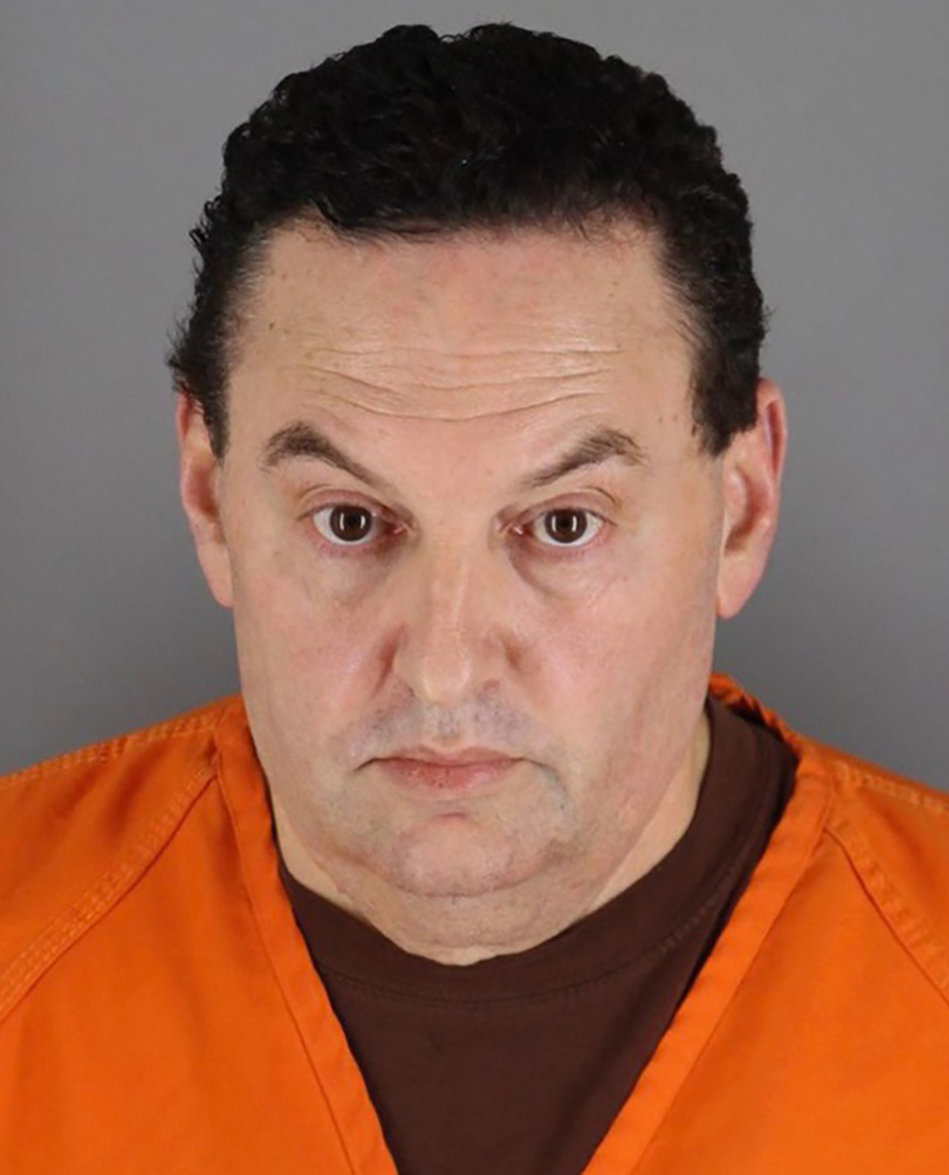
Jerry Westrom was an established Minnesota businessman and youth hockey father when investigators unexpectedly linked him to one of the state’s oldest unsolved murder cases. For more than 25 years, his name had never surfaced during the investigation into the brutal killing of Jeanie Childs. That changed after advances in DNA technology and forensic investigative genetic genealogy identified him as a suspect, leading to his arrest in 2019 and eventual conviction for first-degree murder.
Today, Westrom remains incarcerated, serving a life sentence for the killing of Jeanie Childs. Although he has pursued multiple appeals since his conviction, the courts have upheld the verdict, bringing an end to one of Minnesota’s most significant cold case prosecutions.
- “The Footprint”: 48 Hours Investigates the Jeanie Childs Homicide on August 1 2026
- Who Was Jeanie Childs & What Happened to Her? 2026 Update & Profile
A Businessman With No Initial Connection to the Investigation
At the time investigators identified him, Jerry Westrom was known as a successful businessman in Minnesota. He was involved in agricultural businesses and was active in youth hockey, where he regularly attended games involving his family.
For decades, Westrom had not been considered a suspect in Jeanie Childs’ murder. When Childs was found stabbed to death inside her Minneapolis apartment in June 1993, investigators examined numerous leads but were unable to identify the killer using the forensic technology available at the time.
Public records later revealed that Westrom had previous convictions for driving while intoxicated. He had also been arrested twice on allegations of soliciting a prostitute, although one of those cases was dismissed. Those incidents were unrelated to the Childs homicide investigation but became public after his arrest.
How Investigators Identified Jerry Westrom
The breakthrough came after Minneapolis police reopened the cold case in 2015 and began applying new forensic techniques to evidence collected from the crime scene more than two decades earlier.
Investigators used forensic investigative genetic genealogy, a method that compares crime scene DNA with publicly available genealogy databases to identify relatives of an unknown suspect. The technique gained national attention following its successful use in identifying California’s Golden State Killer.
The genealogy investigation eventually narrowed the search to Jerry Westrom. Detectives then began traditional surveillance to obtain a DNA sample that could either confirm or eliminate him as a suspect.
The Discarded Napkin That Changed the Case
In one of the most widely discussed moments of the investigation, FBI agents followed Westrom to a youth hockey game in Wisconsin.
While watching the game, investigators observed Westrom eat a hot dog before wiping his mouth with a paper napkin. After he discarded the napkin in a public trash container, agents legally recovered it for DNA testing.
Laboratory analysis found that DNA recovered from the napkin matched biological evidence collected from Jeanie Childs’ apartment in 1993. After Westrom was arrested in February 2019, investigators obtained a court-authorized DNA sample that confirmed the match.
Forensic scientists also identified Westrom’s DNA on multiple pieces of evidence recovered from the apartment, including semen found on bedding and towels, along with other biological evidence.
The Bloody Footprints Strengthened the Prosecution’s Case
Although the DNA evidence placed Westrom inside Childs’ apartment, prosecutors also relied heavily on another piece of forensic evidence that had remained preserved for decades.
Investigators compared Westrom’s feet with the bloody barefoot impressions left throughout the apartment after the murder. Minneapolis Police forensic experts concluded that the friction ridge patterns in the footprints matched Westrom’s feet.
During the trial, prosecutors argued that while DNA alone might not establish precisely when someone had been inside the apartment, the bloody footprints showed the killer walked barefoot through blood immediately after the fatal attack.
Jurors later said the combination of DNA evidence and the footprint analysis convinced them beyond reasonable doubt that Westrom was responsible for Childs’ murder.
Trial and Conviction
Westrom was initially charged with second-degree murder shortly after his arrest in 2019. A grand jury later indicted him on the more serious charge of first-degree premeditated murder.
His trial took place in Hennepin County in August 2022. Prosecutors presented extensive forensic testimony describing both the DNA evidence and the footprint comparisons, while the defense argued investigators had arrested the wrong person and challenged aspects of the forensic evidence.
After approximately two hours of deliberations, the jury found Westrom guilty of both first-degree premeditated murder and second-degree murder.
In September 2022, he was sentenced to life imprisonment with the possibility of parole after serving 30 years.
Appeals After the Conviction
Westrom appealed his conviction to the Minnesota Supreme Court, raising several legal arguments concerning the investigation and trial.
In May 2024, the court rejected six of his seven challenges and upheld his conviction for first-degree premeditated murder. The justices vacated the second-degree murder conviction because Minnesota law does not permit separate convictions for both first-degree and second-degree murder arising from the same killing.
The ruling did not affect Westrom’s sentence, as the life sentence was based on the first-degree murder conviction.
Westrom later asked the United States Supreme Court to review his case, but the Court declined to hear the appeal, leaving his conviction intact.
Where Is Jerry Westrom Now?
As of 2026, Jerry Westrom is serving his sentence at Minnesota Correctional Facility – St. Cloud, a state prison operated by the Minnesota Department of Corrections.
His sentence is life imprisonment with the possibility of parole after 30 years, making him eligible to seek parole in 2052. If released at the earliest possible opportunity, he would be in his mid-80s.
Westrom has continued to maintain his innocence. Following the conclusion of his direct appeals, reports indicate he sought assistance from the Great North Innocence Project in an effort to challenge his conviction. However, his first-degree murder conviction remains in force, and no court has overturned the verdict.
More than three decades after Jeanie Childs was killed, Jerry Westrom’s conviction stands as one of Minnesota’s most significant cold case successes, illustrating how preserved forensic evidence and modern DNA technology can solve crimes that once appeared impossible to prosecute.
More “The Footprint”
- “The Footprint”: 48 Hours Investigates the Jeanie Childs Homicide on August 1 2026
- Who Was Jeanie Childs & What Happened to Her? 2026 Update & Profile
- Who Is Jerry Westrom & Where Is He Now? 2026 Update & Profile
More Feature Articles
- “Where Monsters Hide”: 20/20 Revisits the Kelly Cochran Murder Pact That Led to Two Killings July 31 2026
- “The Day Dee Disappeared”: Dateline NBC Reports on Dee Warner Homicide July 31 2026
- “The Night of the Audition”: Dateline NBC Examines Shannon Madill Burgess Homicide August 1 2026
- “The Footprint”: 48 Hours Investigates the Jeanie Childs Homicide on August 1 2026