
Who Was Susan Vesey & What Happened to Her? 2026 Update & Profile
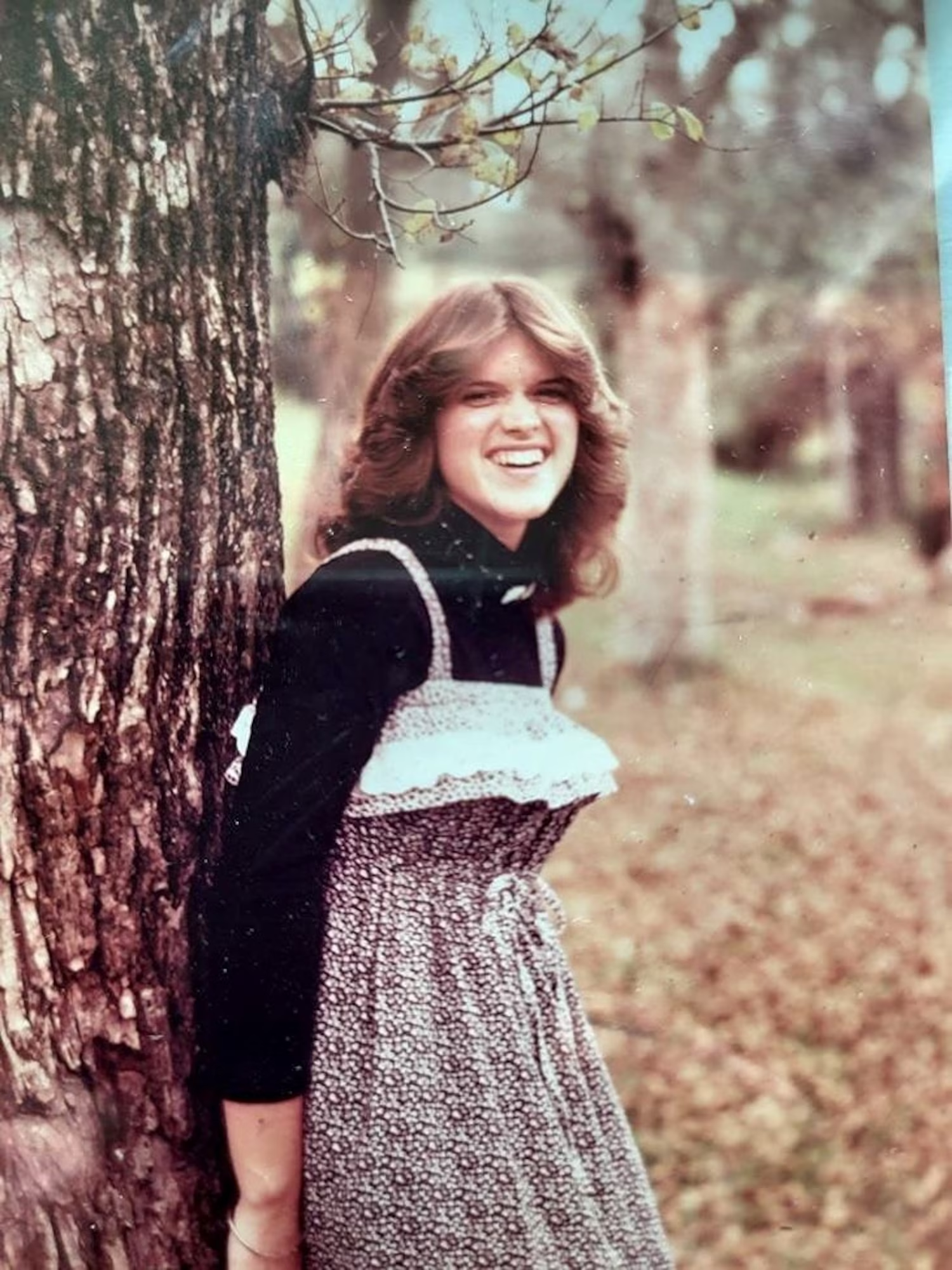
Susan Vesey was a 21-year-old mother of two whose life was cut short on July 12, 1980, when she was sexually assaulted and strangled inside her apartment in Everett, Washington. The attack occurred one day after her birthday, while her toddler daughter and infant son were inside the home. Her children survived, but they would grow up without their mother and without knowing who had killed her.
More than four decades later, investigators identified Mitchell Gaff, a convicted sex offender with a history of violence against women, as Susan’s killer. Advances in forensic DNA testing connected him to evidence preserved from the crime scene, following an investigation that began with another unsolved murder in Everett.
Susan’s case is featured in the CBS true-crime series 48 Hours, in the episode “The Detective & the Chewing Gum Sting,” airing Saturday, October 17, 2026, at 10/9c. Correspondent Peter Van Sant examines how Detective Susan Logothetti identified Gaff through an undercover operation involving chewing gum and connected him to the murders of Susan Vesey and Judith “Judy” Weaver.
On April 16, 2026, Gaff pleaded guilty to both murders. He was sentenced on May 13 to 50 years to life in prison, bringing a legal resolution to Susan’s case nearly 46 years after her death.
- “The Detective & the Chewing Gum Sting”: 48 Hours Reports on How Mitchell Gaff Was Caught for the Homicides of Judy Weaver and Susan Vesey October 17 2026
- Who Is Mitchell Gaff & Where Is He Now? 2026 Update & Profile
- Who Was Judith “Judy” Weaver & What Happened to Her? 2026 Update & Profile
Susan Vesey Was a Young Mother Living in Everett, Washington
Susan Vesey was 21 years old when she died. She lived in Everett, a city in Snohomish County north of Seattle, and was raising two young children.
Her daughter, Deborah Newton, was a toddler, while her son, Joshua Vesey, was an infant. Joshua was approximately three months old at the time of his mother’s death.
Susan was married to Ken Vesey, whose name would become part of the original murder investigation and the later effort to identify her killer.
The available public record contains limited information about Susan’s childhood, education, employment and interests. Most reporting has focused on the circumstances of her death and the consequences for her children.
What is established is that Susan was a young mother whose children were at the beginning of their lives. Her death deprived them of the opportunity to grow up with her.
Her daughter and son would spend more than four decades without knowing who was responsible for the attack that killed their mother.
Susan Vesey Was Murdered the Day After Her 21st Birthday
Susan celebrated her 21st birthday on July 11, 1980. The following day, she was found murdered inside her Everett apartment.
The timing became one of the most disturbing details of the case. Susan had reached a milestone birthday, but her life ended before she could begin another year.
Investigators determined that an intruder had entered the apartment and subjected her to a violent assault.
The attacker restrained Susan with electrical cords, sexually assaulted her and strangled her.
Her two children were inside the apartment during the attack. Neither suffered physical injuries, but both lost their mother.
The precise sequence of Susan’s activities before the attack has not been established in the available public reporting. Investigators would spend decades attempting to determine who had entered her home and committed the murder.
The case became one of Everett’s long-unsolved homicides, with Susan’s family left without answers about the identity of her killer.
What Happened to Susan Vesey Inside Her Apartment?
According to court records described in subsequent reporting, Mitchell Gaff entered Susan’s apartment on July 12, 1980, and attacked her.
He restrained her with electrical cords, sexually assaulted her and strangled her.
The attack took place while Susan’s children were in another room of the apartment.
Gaff later admitted that he did not know Susan before the attack. His admission established that the murder was not the result of a known personal relationship between the two.
The use of electrical cords became a significant part of the evidence. Investigators preserved material associated with Susan’s restraints, including a piece of white electrical cord.
That evidence would remain in police custody for decades before modern forensic DNA testing connected it to Gaff.
The available court reporting does not establish every movement inside the apartment or the precise duration of the attack.
What investigators established was that Susan had been the victim of sexual violence and homicide inside her own home.
Susan’s Two Children Were Inside the Apartment During the Murder
One of the most consequential aspects of Susan’s death was the presence of her children.
Her daughter Deborah was a toddler, and her son Joshua was approximately three months old. Both were inside the apartment when their mother was attacked.
Neither child was physically injured, but Susan’s death changed the course of their lives.
Joshua would grow up without memories of his mother. Deborah was too young to develop the relationship with Susan that she would have experienced had her mother survived.
The children also grew up without knowing who had killed her.
The unresolved murder created uncertainty for the wider family, as investigators examined possible suspects without identifying the person responsible.
At Gaff’s sentencing in May 2026, Joshua described the loss of his mother’s love and the effects of the murder on his family.
Deborah also submitted a statement describing the milestones she had been unable to share with Susan.
Their accounts demonstrated that the consequences of the crime extended far beyond the day of the attack.
The Original Investigation Focused on Several Possible Suspects
Everett police investigated Susan’s murder in 1980 but did not identify Mitchell Gaff as the killer.
Detectives questioned several men during the original inquiry, including Susan’s husband, Ken Vesey.
Ken’s brother Gerry was also questioned in connection with the case.
The investigation did not produce a murder conviction, and the case remained unresolved.
At the time, forensic DNA profiling was not available as an established investigative tool. Police relied on physical evidence, witness statements, interviews and other methods used in homicide investigations.
The absence of an identified suspect left Susan’s relatives confronting uncertainty about who had entered her apartment.
Over the years, the unresolved case contributed to suspicion and tensions within the family.
The evidence collected during the original investigation would become crucial decades later, when advances in forensic science allowed investigators to examine material preserved from the crime scene.
Why Susan Vesey’s Murder Remained Unsolved for Decades
Susan was murdered in 1980, before modern DNA profiling became part of routine criminal investigations.
Although investigators collected physical evidence, they could not use the technology that would become available in later decades to compare genetic material recovered from the crime scene with known offenders.
The investigation generated leads but did not establish the identity of the attacker.
Mitchell Gaff was not identified as a suspect, despite having committed a violent attack against another woman in Everett in November 1979.
In that earlier case, Gaff attacked Jacqueline O’Brien inside her garage, beat her and attempted to restrain her. O’Brien escaped and helped police identify him.
Gaff was prosecuted for assault and burglary, but his involvement in Susan’s murder remained unknown.
The absence of a forensic connection meant that the Vesey investigation remained separate from other violent crimes in Everett.
As the years passed, Susan’s murder became a cold case. The evidence preserved from her apartment remained the strongest opportunity for investigators to identify the killer.
Mitchell Gaff Had Attacked Another Woman Before Susan’s Murder
In November 1979, approximately eight months before Susan’s death, Mitchell Gaff attacked Jacqueline O’Brien in Everett.
According to court records, Gaff had noticed O’Brien while she was mowing a lawn and selected her as a target.
He attacked her inside her garage, beating her and attempting to restrain her wrists.
O’Brien fought back and escaped, allowing her to report the assault and help police identify him.
Gaff was charged with assault and burglary and received a sentence involving probation and work release.
During a psychological interview in 1994, Gaff acknowledged that he had intended to rape O’Brien.
The attack demonstrated a pattern of sexual violence that preceded Susan’s murder.
Although Gaff was known to authorities because of the 1979 offense, investigators did not connect him to Susan’s death during the original inquiry.
Gaff Murdered Judy Weaver Four Years After Susan Vesey
In June 1984, Judith “Judy” Weaver, a 42-year-old woman living on Rucker Avenue in Everett, was murdered inside her home.
According to court records, Gaff beat Weaver, restrained her, sexually assaulted her and strangled her.
Her wrists were bound with ligatures, and the attacker set a fire in her bedroom in an apparent attempt to destroy evidence.
Firefighters responding to the blaze discovered Weaver’s body.
The murder investigation did not identify Gaff as the killer, and the case remained unsolved for decades.
Although Weaver’s death occurred four years after Susan’s, the two murders shared significant characteristics.
Both women were attacked inside their homes, restrained with cords, sexually assaulted and strangled.
The similarities would become important when Detective Susan Logothetti examined Susan’s case after identifying Gaff through evidence recovered from Weaver’s murder.
Gaff Was Convicted of Raping Two Teenage Sisters in 1984
Approximately three months after Weaver’s murder, Gaff committed another violent sexual offense in Everett.
He broke into a home and raped two teenage sisters.
The attack resulted in criminal charges and convictions, and Gaff served approximately 21 years in prison in connection with the offenses.
His criminal history also led to psychological assessments and legal proceedings concerning the risk that he would commit further sexual violence.
In separate proceedings in 1994 and 2000, juries determined that Gaff met Washington state’s legal criteria for classification as a sexually violent predator.
He was confined at the McNeil Island facility, which houses people subject to Washington’s civil commitment system for sexually violent predators.
Gaff’s previous convictions meant that his DNA profile became available through the criminal justice system.
That profile would become essential when investigators tested preserved evidence from Weaver’s murder in 2023.
The Judy Weaver Investigation Led Police to Mitchell Gaff
Everett Police Department Detective Susan Logothetti examined evidence preserved from the 1984 murder of Judy Weaver.
The materials included ligatures used to bind Weaver’s wrists during the attack.
Investigators submitted the evidence for DNA testing, using forensic methods that had not been available when Weaver was killed.
In November 2023, a DNA profile recovered from the ligatures produced a match through the FBI’s Combined DNA Index System, known as CODIS.
The result identified Mitchell Gaff as a potential contributor to the biological evidence.
Detectives wanted a fresh sample from Gaff to confirm the finding and strengthen the murder case.
Rather than confront him, investigators developed an undercover operation designed to obtain DNA from chewing gum.
The operation would become the defining feature of the case and provide the evidence needed to connect Gaff to Weaver’s murder.
The Chewing Gum Sting Helped Confirm Gaff’s Identity
In January 2024, undercover detectives approached Gaff while posing as representatives conducting a chewing gum flavor survey.
The operation was presented as a consumer taste test connected to a proposed product for Safeway.
Gaff agreed to participate and chewed the gum samples supplied by the undercover team.
After tasting the flavors, he discarded the gum into a dish provided by the investigators.
The officers collected the discarded pieces and submitted them for forensic analysis.
Chewing gum can retain saliva and cells from the mouth, providing biological material suitable for DNA testing.
The analysis confirmed that Gaff’s DNA matched evidence associated with Weaver’s murder.
The result supported the earlier CODIS finding and provided investigators with a direct comparison.
Gaff was arrested in May 2024 and charged with Weaver’s murder, approximately 40 years after her death.
A Call From Susan’s Husband Helped Reopen Her Case
The investigation into Susan Vesey’s murder received renewed attention in January 2025.
Ken Vesey contacted Detective Susan Logothetti after the death of his brother Gerry, who had been questioned during the original murder investigation.
According to court records, Logothetti had not been familiar with Susan’s case before receiving the call.
She began examining the original investigative file and reviewing the circumstances of Susan’s death.
The similarities between Susan’s murder and the killing of Judy Weaver attracted her attention.
Both women had been restrained with electrical cords, sexually assaulted and strangled inside their homes.
Logothetti arranged for evidence from Susan’s murder investigation to be submitted to the state crime laboratory.
The material included a piece of white electrical cord used to bind Susan during the attack.
The decision to test that evidence produced a significant breakthrough.
DNA Evidence Connected Gaff to Susan Vesey’s Murder
In April 2025, Detective Logothetti received information from forensic specialists concerning DNA recovered from the electrical cord used to restrain Susan.
The laboratory reported strong support for the proposition that Mitchell Gaff had contributed DNA to the evidence.
The finding connected a man already charged with Weaver’s murder to Susan’s killing in 1980.
Investigators continued examining the evidence and developing the case.
In March 2026, Logothetti received further confirmation that the DNA profile from Susan’s evidence matched Gaff.
The result established a forensic connection between Gaff and both murders.
For Susan’s family, the finding represented the first major identification of a suspect after more than 45 years.
It also resolved the question of whether the same offender had committed the two attacks.
The evidence provided the foundation for criminal proceedings concerning Susan’s death.
Mitchell Gaff Admitted Murdering Susan Vesey
On April 16, 2026, Mitchell Gaff pleaded guilty to two counts of first-degree murder in Snohomish County Superior Court.
The charges concerned the deaths of Susan Vesey in 1980 and Judith Weaver in 1984.
Gaff admitted responsibility for both killings in open court.
According to the Everett Police Department, he provided details that were consistent with investigators’ findings.
He acknowledged that he had not known Susan or Judy before attacking them.
The guilty pleas established his criminal responsibility and eliminated the need for contested jury trials.
For Susan’s family, the admissions brought an answer to the question that had remained unresolved since July 1980.
The case then proceeded to sentencing, where the court would consider the circumstances of the murders and the effects on the victims’ relatives.
Susan’s Children Addressed the Court at Gaff’s Sentencing
On May 13, 2026, Gaff appeared in Snohomish County Superior Court for sentencing.
Relatives of Susan Vesey and Judy Weaver attended the hearing, which included statements describing the effects of the murders.
Susan’s son, Joshua Vesey, addressed the court through a remote appearance.
He described growing up without his mother and the consequences of losing her when he was approximately three months old.
Joshua also spoke about the uncertainty that had affected his family during the decades when the murder remained unsolved.
He explained that Gaff could have ended the confusion and suspicion by admitting responsibility for the crime.
Susan’s daughter, Deborah Newton, submitted a statement describing the events in her life that she had wished to share with her mother.
Her account reflected the loss of a relationship that had been taken from her during childhood.
The statements gave the court an understanding of the consequences of Susan’s murder beyond the physical violence of the attack.
Gaff Was Sentenced to 50 Years to Life in Prison
Following the guilty pleas and sentencing hearing, the court imposed a sentence of 50 years to life in prison.
The judge considered the circumstances of the murders, Gaff’s history of sexual violence and the impact on the victims’ families.
Prosecutors sought a substantial sentence based on the seriousness of the crimes and Gaff’s criminal record.
Defense attorneys requested the minimum sentence permitted under the older Washington sentencing laws applicable to offenses committed during the 1980s.
The judge rejected that request.
Gaff acknowledged responsibility for the murders and expressed regret during the hearing.
The court determined that a minimum term of 50 years was appropriate.
Given Gaff’s age at sentencing, the punishment is expected to keep him incarcerated for the remainder of his life.
The sentence brought a legal resolution to Susan’s murder nearly 46 years after her death.
Remembering Susan Vesey Beyond the Murder Investigation
Much of the public record concerning Susan Vesey focuses on the circumstances of her murder and the investigation that identified her killer.
Those details represent only the final chapter of her life.
Susan was a young mother raising two children when she died. Her daughter and son were at an age when they depended on her for care, affection and security.
Her death deprived them of the opportunity to grow up with their mother and build memories with her.
The statements delivered during Gaff’s sentencing demonstrated the lasting consequences of that loss.
Joshua described the effect of growing up without his mother’s love, while Deborah spoke about the milestones she had been unable to share with Susan.
Their experiences reflected the consequences of a murder that affected an entire family across generations.
Although the conviction established who killed Susan, it could not restore the relationship her children had lost.
48 Hours Revisits Susan Vesey’s Murder in The Detective & the Chewing Gum Sting
The CBS true-crime series 48 Hours examines Susan Vesey’s murder in “The Detective & the Chewing Gum Sting,” reported by Peter Van Sant.
The episode explores the investigation that identified Mitchell Gaff through evidence preserved from Judy Weaver’s murder and the undercover chewing gum operation that confirmed his DNA.
It also examines how Detective Susan Logothetti connected Gaff to Susan’s death after reviewing the 1980 case and arranging for forensic testing of the electrical cord used to restrain her.
The investigation led to Gaff’s guilty pleas in April 2026 and his sentence of 50 years to life in May.
For Susan’s children and extended family, the outcome ended decades of uncertainty about the identity of her killer.
48 Hours: “The Detective & the Chewing Gum Sting” airs Saturday, October 17, 2026, at 10/9c on CBS, with streaming availability on Paramount+.
More “The Detective & the Chewing Gum Sting”
- “The Detective & the Chewing Gum Sting”: 48 Hours Reports on How Mitchell Gaff Was Caught for the Homicides of Judy Weaver and Susan Vesey October 17 2026
- Who Is Mitchell Gaff & Where Is He Now? 2026 Update & Profile
- Who Was Judith “Judy” Weaver & What Happened to Her? 2026 Update & Profile
- Who Was Susan Vesey & What Happened to Her? 2026 Update & Profile
More Feature Articles
- “The Suitcase Murders”: 20/20 Reports on Steven Zelich Case & Jenny Gamez and Laura Simonson Homicides October 16 2026
- “The Betrayal of Kirby Carpenter”: Dateline NBC Reports October 16 2026
- “The Corn Rake Witness”: 48 Hours Reports on Amy Mullis Homicide October 17 2026
- “The Detective & the Chewing Gum Sting”: 48 Hours Reports on How Mitchell Gaff Was Caught for the Homicides of Judy Weaver and Susan Vesey October 17 2026
- 60 Minutes Reports on “The Vote”, “Up in the Air” & “Sacha Baron Cohen” October 18 2026