
Who Was Judith “Judy” Weaver & What Happened to Her? 2026 Update & Profile
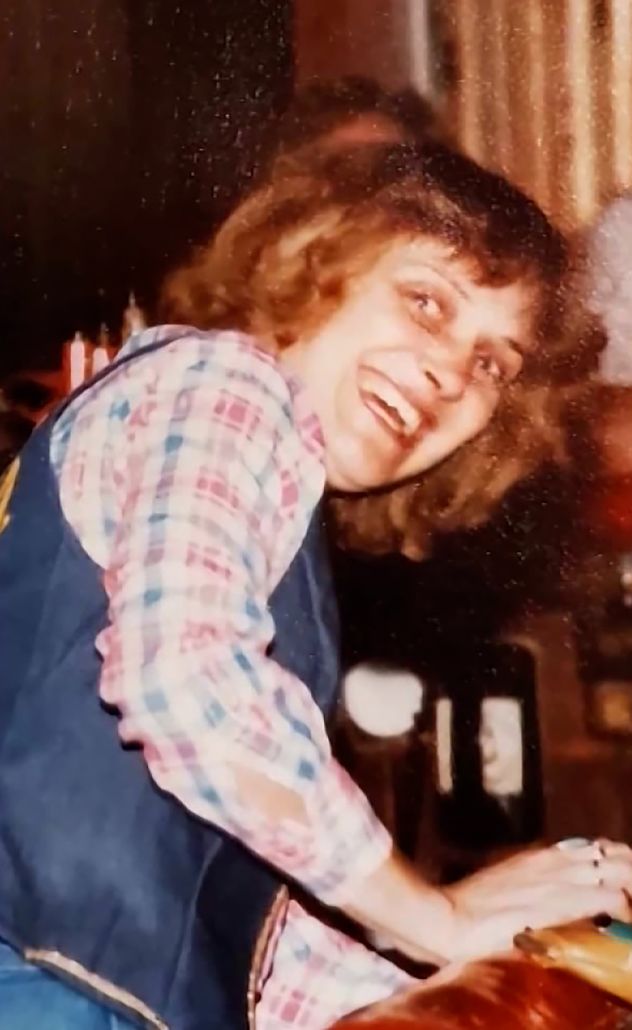
Judith “Judy” Weaver was a 42-year-old mother from Everett, Washington, whose life ended in June 1984 when she was sexually assaulted, restrained and murdered inside her home. Her killer set a fire in the residence in an apparent attempt to destroy evidence, leaving investigators with a complex crime scene and a case that would remain unsolved for nearly four decades.
Weaver’s murder is featured in the CBS true-crime series 48 Hours, in the episode “The Detective & the Chewing Gum Sting,” airing Saturday, October 17, 2026, at 10/9c. Correspondent Peter Van Sant examines how Everett Police Department Detective Susan Logothetti used preserved evidence and an undercover chewing gum operation to identify Mitchell Gaff, a convicted sex offender with a history of violence against women.
In April 2026, Gaff pleaded guilty to Weaver’s murder and the 1980 killing of Susan Vesey, another Everett woman. He was sentenced on May 13, 2026, to 50 years to life in prison. The conviction brought answers to Weaver’s children, siblings and extended family, many of whom had spent more than 40 years wondering who had killed her.
- “The Detective & the Chewing Gum Sting”: 48 Hours Reports on How Mitchell Gaff Was Caught for the Homicides of Judy Weaver and Susan Vesey October 17 2026
- Who Is Mitchell Gaff & Where Is He Now? 2026 Update & Profile
- Who Was Susan Vesey & What Happened to Her? 2026 Update & Profile
Judy Weaver Was a Mother Living in Everett, Washington
Judith Weaver, known as Judy to her family and friends, was 42 years old when she was murdered in June 1984. She lived on Rucker Avenue in Everett, a city in Snohomish County north of Seattle.
Weaver was a working woman and mother whose life revolved around her family and responsibilities. She had adult children, including daughters Kathy Myers and Colleen Kayser, who would spend much of their lives dealing with the consequences of her death.
Kathy was 20 years old when her mother was killed. At an age when many young adults continue to rely on their parents for support and guidance, she lost the opportunity to share the next stages of her life with Judy.
Weaver also had siblings and extended relatives who remained affected by her death. Her brother, Leon Gregory, would speak about the loss during the sentencing proceedings more than four decades later.
Public reporting about Weaver has focused on the circumstances of her murder and the investigation that identified her killer. Fewer details have been published about her childhood, education, career and personal interests.
What is established is that she was a mother, sister and member of the Everett community whose death affected several generations of her family.
Judy Weaver Was Returning Home From Work Before Her Murder
In June 1984, Judy Weaver returned to her home on Rucker Avenue after work. The precise sequence of her movements before the attack has not been established in the available public accounts.
Investigators concluded that an intruder entered the residence and subjected her to a violent assault.
The man responsible was Mitchell Gaff, who had a criminal history involving attacks against women but was not identified as Weaver’s killer during the original investigation.
According to court records described in subsequent reporting, Gaff attacked Weaver inside her home, beat her and restrained her.
The assault included sexual violence. Weaver was raped and strangled, and her wrists were bound with ligatures.
The evidence indicated that her attacker had taken steps to control her movements during the crime. The materials used to restrain her would become significant decades later because they retained biological evidence.
The attack ended Weaver’s life at 42 and left her family facing a murder investigation without an identified suspect.
What Happened to Judy Weaver Inside Her Home?
The investigation established that Weaver had been subjected to a violent attack involving restraint, sexual assault and strangulation.
Court records indicate that Gaff bound her wrists and used force against her before killing her.
The precise duration of the attack and the complete sequence of events inside the residence have not been established in the available reporting.
After killing Weaver, Gaff set a fire in her bedroom. Prosecutors described the fire as an attempt to conceal the murder and destroy evidence that might identify him.
The blaze brought emergency personnel to the property. Firefighters entered the residence and discovered Weaver’s body.
Investigators determined that she had been murdered before the fire, rather than dying as a result of an accidental household blaze.
The scene presented several investigative challenges. Fire damage can alter physical evidence, complicate reconstruction and affect the condition of materials recovered from a residence.
Despite those difficulties, investigators preserved evidence associated with Weaver’s restraints. That decision would prove essential to identifying her killer decades later.
Firefighters Discovered Judy Weaver’s Body After a House Fire
The discovery of Weaver’s body followed a fire at her home on Rucker Avenue.
Emergency personnel responding to the blaze encountered evidence of a violent crime. The circumstances indicated that the fire was connected to an attempt to conceal what had happened inside the residence.
Police began investigating Weaver’s death as a homicide.
The presence of ligatures, evidence of sexual assault and signs of violence shaped the original inquiry.
Investigators examined the crime scene, collected physical evidence and questioned people who might have information about Weaver’s activities or potential suspects.
The fire added another element to the investigation because detectives had to determine whether it had been set by the killer and whether it had destroyed evidence.
The case did not produce an arrest for murder during the original investigation.
Although police retained materials from the crime scene, the forensic techniques available in 1984 could not establish the DNA connection that would identify Gaff in 2023.
The Original Investigation Failed to Identify Judy Weaver’s Killer
Following Weaver’s death, Everett police investigated several possible suspects.
Detectives interviewed people connected to the victim and examined leads that might explain who had entered her home.
The investigation established that Weaver had been restrained, sexually assaulted and strangled, but it did not identify the person responsible.
Gaff was not considered a suspect in the original murder inquiry, despite his history of violent offenses against women.
The limitations of forensic science at the time contributed to the difficulty of solving the case. Modern DNA profiling had not become an established tool for criminal investigations in 1984.
Evidence collected from the residence included the ligatures used to bind Weaver’s wrists. Those materials could contain biological evidence from the attacker, but investigators could not use them to perform the DNA comparisons available in later decades.
As leads failed to produce a prosecution, Weaver’s murder became a cold case.
Her family was left without an answer about who had killed her or whether the person responsible would face justice.
Judy Weaver’s Family Spent Four Decades Without Answers
Weaver’s murder affected her children, siblings and extended family.
Her daughter Kathy Myers was 20 when Judy died. During Gaff’s sentencing in May 2026, Kathy described how the murder had changed her life.
She also spoke about the consequences for her own children, who never had the opportunity to know their grandmother.
Another daughter, Colleen Kayser, described the years she spent wondering who had raped and murdered her mother.
The uncertainty remained part of the family’s experience as the decades passed.
Weaver’s brother, Leon Gregory, told the court that relatives had died without learning who was responsible. His parents, brother and two sisters had passed away before the murder was solved.
The passage of time meant that some family members never witnessed the legal resolution of the case.
For those who survived, the eventual identification of Gaff provided answers to questions that had remained unresolved since 1984.
Mitchell Gaff Was Not Identified as a Suspect in 1984
Mitchell Gaff had committed violent offenses before Weaver’s murder, but the original investigation did not connect him to her death.
In November 1979, Gaff attacked a 29-year-old woman named Jacqueline O’Brien in Everett.
He beat her and attempted to restrain her inside her garage, but she escaped and helped police identify him.
Gaff was prosecuted for assault and burglary and received a sentence involving probation and work release.
In July 1980, he murdered Susan Vesey, a 21-year-old mother of two, inside her Everett apartment. That killing remained unsolved at the time of Weaver’s death.
Approximately three months after murdering Weaver, Gaff broke into another home and raped two teenage sisters.
He was convicted in connection with those offenses and served a substantial prison sentence.
His criminal history would become important when investigators examined Weaver’s murder through modern forensic methods.
Evidence From Judy Weaver’s Murder Was Preserved for Decades
One of the most significant developments in Weaver’s case involved evidence collected during the original investigation.
Detectives had preserved the ligatures used to bind her wrists during the attack.
Those materials remained available as forensic technology advanced and laboratories developed methods capable of examining small quantities of biological evidence.
DNA profiling became an established investigative tool after Weaver’s murder, allowing investigators to compare genetic material recovered from crime scenes with known profiles.
The development of national DNA databases expanded those capabilities by permitting comparisons with eligible profiles obtained from convicted offenders and other authorized sources.
Gaff’s previous criminal convictions meant that his DNA profile was available through the criminal justice system.
The preserved evidence from Weaver’s murder provided investigators with the opportunity to compare biological material associated with the crime against those records.
Without the original evidence, the later investigation would have faced a different set of challenges.
Detective Susan Logothetti Reopened Judy Weaver’s Murder Case
Everett Police Department Detective Susan Logothetti became central to the investigation that identified Weaver’s killer.
Logothetti reviewed the cold case and arranged for evidence associated with Weaver’s restraints to undergo forensic DNA testing.
The examination focused on materials collected from the crime scene in 1984.
In November 2023, investigators obtained a significant result through the FBI’s Combined DNA Index System, known as CODIS.
DNA recovered from the ligatures produced a database match pointing to Mitchell Gaff.
The finding connected a man with a history of sexual violence to physical evidence associated with Weaver’s murder.
The result transformed the investigation after nearly 40 years without an identified killer.
Detectives wanted to obtain a fresh biological sample from Gaff to confirm the connection before proceeding with the murder case.
The Chewing Gum Sting Helped Identify Judy Weaver’s Killer
In January 2024, undercover detectives developed a plan to obtain a DNA sample from Gaff without informing him that he was under investigation.
The officers posed as representatives conducting a chewing gum flavor survey connected to a proposed product for Safeway.
They approached Gaff and invited him to participate in the taste test.
Gaff accepted the invitation and chewed the gum samples provided by the undercover team.
After sampling the flavors, he discarded the gum into a dish supplied by investigators.
The officers recovered the discarded pieces and submitted them for forensic testing.
Chewing gum can retain saliva and cells from the mouth, allowing laboratories to extract DNA for comparison.
The analysis confirmed that the DNA recovered from the gum matched the evidence associated with Weaver’s murder.
The result strengthened the case against Gaff and gave investigators the direct comparison they had sought.
Mitchell Gaff Was Arrested for Judy Weaver’s Murder in May 2024
Following the DNA confirmation, police arrested Mitchell Gaff in May 2024 and charged him with Weaver’s murder.
The arrest came approximately four decades after firefighters had discovered her body inside her Everett home.
Investigators had linked Gaff to the crime through the preserved ligatures and the biological sample obtained during the undercover operation.
The evidence connected a man who had not been identified as a suspect during the original investigation to material recovered from the murder scene.
The arrest represented a major development for Weaver’s surviving relatives, who had waited decades for an answer.
The case also prompted further examination of Gaff’s history and other unsolved crimes involving similar methods of attack.
Detective Logothetti would go on to investigate the 1980 murder of Susan Vesey, identifying similarities that led to a second DNA connection.
That development established that Weaver and Vesey had been murdered by the same man.
Judy Weaver’s Murder Was Connected to the Death of Susan Vesey
Susan Vesey was murdered in Everett on July 12, 1980, the day after her 21st birthday.
She was found inside her apartment after being restrained with electrical cords, sexually assaulted and strangled.
Her toddler daughter and infant son were inside the home during the attack and survived.
The investigation remained unresolved for more than four decades.
In January 2025, Detective Logothetti began reviewing the Vesey case after receiving a call from Susan’s husband, Ken Vesey.
The detective identified similarities between the two murders, including the use of electrical cords to restrain the victims and the sexual violence involved.
Evidence from the Vesey investigation was submitted for DNA testing.
In April 2025, forensic specialists reported strong support for the presence of Gaff’s DNA on a piece of electrical cord used to bind Susan.
Further confirmation followed in March 2026, connecting Gaff to both killings.
The development established that Weaver’s murderer had also killed another woman in Everett four years earlier.
Gaff Pleaded Guilty to Judy Weaver’s Murder in April 2026
On April 16, 2026, Mitchell Gaff pleaded guilty to two counts of first-degree murder in Snohomish County Superior Court.
The charges concerned the deaths of Judith Weaver in 1984 and Susan Vesey in 1980.
Gaff admitted responsibility for both murders in open court.
According to the Everett Police Department, he provided details about the crimes that were consistent with investigators’ findings.
He acknowledged that he had not known the women before attacking them.
The guilty pleas brought the criminal cases toward resolution without contested jury trials.
For Weaver’s family, the admission established the identity of the man responsible for her death.
The court then proceeded to sentencing, where relatives of both victims were given the opportunity to describe the effects of the crimes.
Judy Weaver’s Relatives Spoke at the May 2026 Sentencing
On May 13, 2026, relatives of Judy Weaver attended Gaff’s sentencing in Snohomish County Superior Court.
The hearing included victim impact statements describing the consequences of the murder and the decades spent without answers.
Weaver’s brother, Leon Gregory, told the court that the family had waited more than 40 years for the case to be resolved.
He described how several relatives, including his parents and siblings, had died without knowing who had killed Judy.
Her daughter Kathy Myers submitted a statement explaining that she had been 20 years old when her mother was murdered.
Kathy described the effect on her life and the fact that her children had never known their grandmother.
Another daughter, Colleen Kayser, spoke about the uncertainty she had experienced while wondering who was responsible.
Weaver’s niece, Dawnyel Wilder Harris, urged the court to impose the maximum punishment available.
The statements demonstrated that the murder had affected several generations of Weaver’s family.
Mitchell Gaff Was Sentenced to 50 Years to Life
Following the guilty pleas and sentencing hearing, the court imposed a sentence of 50 years to life in prison.
The judge considered the circumstances of the murders, Gaff’s criminal history and the effect on the victims’ families.
Prosecutors sought a substantial sentence based on the severity of the crimes and Gaff’s history of sexual violence.
Defense attorneys requested the minimum sentence available under the Washington laws applicable to offenses committed during the 1980s.
The judge rejected that request.
Gaff had acknowledged responsibility for both murders and expressed regret during the sentencing proceedings.
The court determined that a minimum term of 50 years was appropriate.
Given Gaff’s age at sentencing, the punishment is expected to keep him incarcerated for the remainder of his life.
The outcome brought a legal conclusion to Weaver’s murder case approximately 42 years after her death.
Remembering Judy Weaver Beyond the Murder Investigation
Much of the public record concerning Judith Weaver focuses on the violence that ended her life and the investigation that identified her killer.
Those circumstances do not define the entirety of her life.
Judy was a mother whose children were entering adulthood when she died. Her death deprived them of her presence during the decades that followed.
She was also a sister and member of an extended family that continued to remember her while the case remained unsolved.
The statements made by her relatives during the 2026 sentencing proceedings demonstrated the lasting consequences of her absence.
Her daughter Kathy described the effect of losing her mother at 20, while her grandchildren grew up without the opportunity to know Judy.
Her brother Leon spoke about relatives who died before learning the identity of her killer.
The investigation brought an answer to the question of who murdered Weaver, but it could not restore the years her family had lost.
Her story remains one of a woman whose life was cut short and whose relatives continued seeking answers for more than four decades.
48 Hours Revisits Judy Weaver’s Murder in The Detective & the Chewing Gum Sting
The CBS true-crime series 48 Hours examines Weaver’s murder in “The Detective & the Chewing Gum Sting,” reported by Peter Van Sant.
The episode explores how Detective Susan Logothetti revisited evidence from the 1984 investigation and obtained a DNA database match identifying Mitchell Gaff.
It also examines the undercover operation in which detectives persuaded Gaff to participate in a chewing gum taste test and recovered a sample that confirmed the forensic connection.
The investigation expanded to Susan Vesey’s murder, establishing that the same man had killed both women.
Gaff’s guilty pleas in April 2026 and his sentence of 50 years to life in May brought the two cases to a legal conclusion.
For Weaver’s family, the outcome ended decades of uncertainty about the identity of her killer.
48 Hours: “The Detective & the Chewing Gum Sting” airs Saturday, October 17, 2026, at 10/9c on CBS, with streaming availability on Paramount+.
More “The Detective & the Chewing Gum Sting”
- “The Detective & the Chewing Gum Sting”: 48 Hours Reports on How Mitchell Gaff Was Caught for the Homicides of Judy Weaver and Susan Vesey October 17 2026
- Who Is Mitchell Gaff & Where Is He Now? 2026 Update & Profile
- Who Was Judith “Judy” Weaver & What Happened to Her? 2026 Update & Profile
- Who Was Susan Vesey & What Happened to Her? 2026 Update & Profile
More Feature Articles
- “The Suitcase Murders”: 20/20 Reports on Steven Zelich Case & Jenny Gamez and Laura Simonson Homicides October 16 2026
- “The Betrayal of Kirby Carpenter”: Dateline NBC Reports October 16 2026
- “The Corn Rake Witness”: 48 Hours Reports on Amy Mullis Homicide October 17 2026
- “The Detective & the Chewing Gum Sting”: 48 Hours Reports on How Mitchell Gaff Was Caught for the Homicides of Judy Weaver and Susan Vesey October 17 2026
- 60 Minutes Reports on “The Vote”, “Up in the Air” & “Sacha Baron Cohen” October 18 2026