


CBS’ 48 Hours returns to one of Iowa’s most disturbing murder cases in “The Corn Rake Witness,” airing Saturday, October 17, 2026, at 9/8c. Correspondent Erin Moriarty examines the death of Amy Mullis, a 39-year-old mother of three who was found with a corn rake embedded in her back on her family’s farm in November 2018. What first appeared to be a farming accident developed into a murder investigation involving allegations of infidelity, a troubled marriage, disputed forensic evidence and a teenage witness whose testimony became central to the prosecution.
The new episode introduces a significant development in the case. Amy’s son, Trysten Mullis, who was 13 when he discovered his mother and testified during his father’s murder trial, is speaking publicly about the events for the first time. Now 21, Trysten maintains that his father, Todd Mullis, was wrongfully convicted. His account comes months after an Iowa judge rejected more than 100 claims challenging Todd’s conviction, leaving him to serve a life sentence without the possibility of parole.
- Who Was Amy Mullis & What Happened to Her? 2026 Update & Profile
- Who Is Todd Mullis & Where Is He Now? 2026 Update & Profile
The Death of Amy Mullis on an Iowa Family Farm
On November 10, 2018, Amy Mullis was working alongside her husband, Todd, and their eldest son, Trysten, at the family’s hog farming operation near Earlville, Iowa. The couple had three children, Trysten, Taylor and Wyatt, and operated a substantial agricultural business. Todd was responsible for much of the farm’s physical work, while Amy had taken on bookkeeping and other responsibilities after leaving her nursing position at a local hospital.
Amy had undergone an outpatient medical procedure four days before her death. According to testimony presented at Todd’s trial, she was experiencing dizziness while helping clean light fixtures inside one of the farm’s hog barns. Trysten recalled seeing his mother struggle to maintain her balance while standing on a five-gallon bucket to reach the lights. Both he and Todd expressed concern about her condition.
Todd suggested that Amy return to the house to rest. Before leaving the barn, he asked her to retrieve a pet carrier from a red storage shed approximately 30 yards away. He said the carrier was needed to move a litter of kittens before machinery was used on the property. Amy left the barn while Todd and Trysten continued their work.
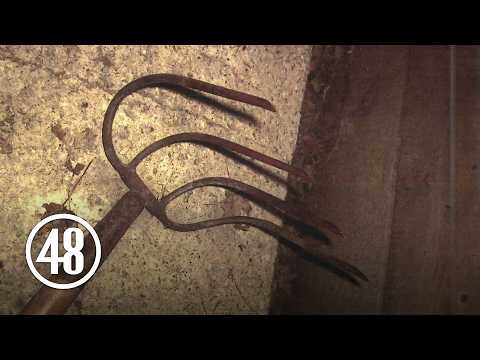
Approximately 90 minutes passed before Todd noticed that the carrier had not been placed where he expected it. He instructed Trysten to check the red shed and look for his mother. The teenager entered the building and discovered Amy on her hands and knees, facing the ground, with a corn rake protruding from her back.
Trysten checked his mother for a pulse and called for his father. Todd arrived, removed the rake and carried Amy to the family truck. He later explained that the narrow shed entrance prevented him from moving her without removing the implement. Trysten sat in the passenger seat while Todd placed Amy across him and drove toward the hospital.
During the journey, Todd called 911. A dispatcher directed him to stop so emergency responders could reach the family. Delaware County Deputy Luke Thomsen arrived and found Amy unresponsive, without a detectable pulse or breathing. He began chest compressions before she was transported for medical treatment.
Amy was pronounced dead at a hospital in Manchester, Iowa, where she had once worked as a nurse. Her death left three children without their mother and began an investigation that would expose the private difficulties within the Mullis marriage.
Why Investigators Rejected the Farming Accident Explanation
Todd Mullis initially suggested that his wife had fallen onto the corn rake after becoming dizzy inside the shed. Given Amy’s recent medical procedure and the balance problems witnessed by her family, investigators had to determine whether her injuries could have resulted from an accidental fall.
Dr. Craig Thompson, an emergency physician and medical examiner who knew Amy from her work at the hospital, examined her injuries. He identified six puncture wounds across her back. The corn rake recovered from the farm had four steel tines, creating an immediate discrepancy between the number of points on the implement and the wounds on Amy’s body.
Thompson questioned whether a single fall onto a four-tined rake could account for six separate punctures. The case was referred for a forensic autopsy, conducted by Dr. Kelly Kruse of the Iowa State Medical Examiner’s Office.
Kruse identified two different directions among the six wound tracks. She concluded that Amy had been impaled by the rake at least twice and possibly three times. She also documented blunt force injuries involving Amy’s face, hands and knees, which prosecutors interpreted as evidence consistent with an assault or struggle.
The medical findings changed the direction of the investigation. What had been presented as a possible accident was classified as a homicide, and the Delaware County Sheriff’s Office requested assistance from the Iowa Division of Criminal Investigation.
Investigators examined the red shed, the rake and the surrounding farm buildings. Deputy Travis Hemesath testified that he found a small number of blood drops on the shed floor but did not identify marks on nearby equipment that would explain how Amy might have fallen onto the rake.
The limited blood evidence would become an important issue at trial. Although prosecutors relied on the autopsy to establish that Amy had been attacked, the defense questioned why an assault involving repeated puncture wounds had left so little blood evidence in the shed.
Amy and Todd Mullis’ Marriage Before the Murder
Amy and Todd Mullis had built a family and farming business together, but testimony during the murder trial revealed substantial problems in their marriage. Friends described Amy as sociable and outgoing, while Todd devoted much of his time to agricultural work.
Investigators learned that Amy had an affair approximately five years before her death. The couple remained married and attended counseling, but the relationship changed. Amy left her nursing job and began working on the family farm, a decision that witnesses described as part of an agreement intended to repair the marriage.
Amy’s friend Terri Staner testified that Todd continued to struggle with trust after the earlier affair. According to Staner, Amy complained about restrictions on her activities, including which friends she could spend time with and how long she could remain away from home.
Another friend, Patricia Christopherson, testified that Amy had been unhappy in her marriage for years. The prosecution used these accounts to challenge Todd’s description of a stable relationship.
During a recorded interview with Iowa Division of Criminal Investigation Special Agent Jon Turbett, Todd described his marriage in positive terms. He maintained that he and Amy communicated well and spent considerable time together.
The competing accounts became central to the prosecution’s theory. Investigators believed the marriage had deteriorated to the point that Amy was considering leaving, while Todd faced the possibility of divorce, financial disruption and the loss of part of the farming operation.
Prosecutors argued that Todd’s concern about losing the farm supplied a motive for murder. The defense maintained that marital difficulties did not establish that Todd had killed his wife.
Amy Mullis’ Affair With Farm Manager Jerry Frasher
In May 2018, Amy began an affair with Jerry Frasher, a married father of two who managed the Mullis family’s hog operation. His professional responsibilities brought him into contact with Amy, who handled bookkeeping for the farm.
Frasher testified that their relationship became sexual and that they met at locations including the farm, rural roads and motel rooms. Their meetings continued over several months, although both were married to other people.
Amy developed strong feelings for Frasher, according to testimony from her friend Patricia Christopherson. She discussed the possibility of leaving Todd and building a future with Frasher, including the prospect of marriage.
Todd became suspicious during the summer of 2018 after examining phone records and discovering extensive communication between Amy and Frasher. Investigators identified 128 text messages between the pair. Todd confronted Frasher, who maintained that the communications concerned farm business and family activities.
Todd also contacted Frasher’s wife. The explanations he received appeared to ease his concerns, although the affair continued.
Frasher testified that he became concerned about Todd discovering the relationship and asked Amy to reduce their contact. By late summer, rumors about the affair had begun circulating. Amy told Staner that she intended to warn Todd about the rumors so he would dismiss them if he heard them from someone else.
The affair placed both Todd and Frasher under scrutiny after Amy’s death. Investigators considered whether either man had a motive to kill her, particularly given the potential consequences for their marriages and families.
Amy’s Fears About What Might Happen if She Left Todd
Some of the prosecution’s most significant testimony concerned statements Amy had made to friends before her death. These accounts suggested that she feared Todd’s reaction if he learned the full extent of her relationship with Frasher or discovered that she wanted a divorce.
Patricia Christopherson testified that Amy had expressed fear that Todd might kill her if he discovered the affair or her plans to leave. Frasher described a conversation in which Amy suggested that she might disappear if Todd learned the truth.
Terri Staner recalled Amy making a disturbing comment about where investigators should search if she went missing. Amy referred to a wooded area on the family property and suggested that her friend direct authorities there.
Staner also testified that she had warned Amy about the danger of continuing the affair. She described Todd as a person who should not be provoked and feared that the situation could turn violent.
These statements formed part of the prosecution’s effort to establish Todd’s alleged motive and Amy’s state of mind before her death. They were not eyewitness accounts of the attack, and they did not establish who had been present in the shed.
For investigators, however, the statements provided context for a marriage they believed was approaching a crisis. Prosecutors argued that Todd had reason to fear that a divorce would threaten his finances, his family and the farming business he had spent years developing.
Why Jerry Frasher Was Investigated as a Possible Suspect
Jerry Frasher’s relationship with Amy made him an important person of interest during the investigation. He was familiar with the Mullis property, had access to the farm through his work and faced the possibility that exposure of the affair could damage his marriage.
Investigators interviewed Frasher about his movements on November 10, 2018. He maintained that he had been at his home in Anamosa, approximately 45 minutes from the Mullis farm, spending time with his college-aged son.
Special Agent Jon Turbett described the son’s account as detailed. According to investigators, the pair had completed work around the house and watched college football during the period when Amy was believed to have been attacked.
Investigators examined Frasher’s phone records. The records showed activity associated with the Anamosa area at several points during the morning and early afternoon, including approximately 10:45 a.m., 11:45 a.m. and 12:45 p.m.
Defense-oriented legal experts consulted by 48 Hours questioned whether those records could establish Frasher’s physical location. They noted that phone activity establishes the location of a device rather than proving that its owner remained with it.
Investigators nevertheless concluded that the available evidence did not implicate Frasher in Amy’s murder. He was not charged in connection with her death, and the investigation focused on Todd Mullis.
At trial, the defense raised the possibility that another person could have been responsible. Prosecutors maintained that the evidence, including the couple’s marital problems and Todd’s opportunity to reach the shed, pointed to Amy’s husband.
Trysten Mullis Became the Central Witness in His Father’s Murder Trial
Trysten Mullis was 13 when his mother died and 14 when he testified at his father’s September 2019 murder trial. His account carried exceptional importance because he had been working alongside Todd during the period when Amy was believed to have been killed.
During the initial investigation, Trysten told authorities that he and his father had remained together in the hog barn. If Todd had been in his son’s sight throughout the relevant period, the account could have prevented prosecutors from establishing an opportunity for him to attack Amy.
Trysten described working on portable heaters while Todd prepared equipment used to provide water to the livestock pens. The barn was a substantial building, which Trysten compared in length to a football field.
He also described his relationship with his father. They spent time hunting, fishing, riding four-wheelers and completing farm work. The testimony illustrated the close connection between the two and the emotional difficulty of appearing as a witness in a trial concerning both parents.
Trysten testified through a closed-circuit television arrangement rather than appearing in the courtroom before the defendant and jury. His testimony was transmitted to the jurors, who had to assess his account alongside the physical evidence and statements from other witnesses.
The central question was whether Trysten could account for his father’s location throughout the period between Amy leaving the barn and her body being discovered.
The Gaps in Trysten’s Account That Changed the Prosecution’s Case
Shortly before the trial, investigators interviewed Trysten again. During that interview, he acknowledged that there had been occasions when he could not see his father while they were working inside the barn.
Trysten explained that he had gone to an office area to get water, leaving Todd outside his line of sight. He estimated during the interview that these interruptions had lasted less than a minute each.
At trial, prosecutor Maureen Hughes questioned him about those periods. Trysten acknowledged that he had lost sight of Todd and could not establish the precise length of time involved.
The admission weakened what had appeared to be Todd’s strongest alibi. Prosecutors argued that the gaps created an opportunity for Todd to leave the barn, enter the red shed and attack Amy without his son witnessing the incident.
The defense challenged whether the proposed sequence was physically possible. Attorney Gerald Feuerhelm argued that Todd would have needed time to leave the barn, reach the shed, attack Amy, return to his work and avoid detection.
Trysten testified that he had not seen blood on his father and had not noticed a change in Todd’s demeanor while they worked. The defense argued that a violent attack involving a farming implement should have left visible signs on Todd or his clothing.
The prosecution did not present an eyewitness who had seen Todd attack Amy. Its case depended on the medical evidence, Todd’s alleged motive, his conduct before and after the discovery, and the possibility that he had been outside Trysten’s view.
The dispute over the teenager’s testimony became one of the defining issues of the trial. His account supported the defense in some respects but also allowed prosecutors to challenge the assertion that Todd had been under observation throughout the morning.
The Internet Searches Found on the Mullis Family iPad
Investigators recovered electronic devices from the farm, including an iPad used by members of the Mullis family. The device contained internet searches that prosecutors considered significant evidence of Todd’s state of mind before Amy’s death.
Among the recorded searches were phrases concerning the historical treatment of people who committed adultery, the experience of killing and violence against unfaithful women. Prosecutors argued that the subjects reflected Todd’s anger about infidelity and supported their theory of a planned murder.
The searches became a major part of the prosecution’s circumstantial case. They did not depict the killing or establish that Todd had been inside the shed, but prosecutors contended that they revealed a motive and an interest in violence against an unfaithful spouse.
Todd denied conducting the searches when he testified in his defense. He told jurors that the iPad was accessible to other family members, including Amy, and maintained that he did not know who had entered the queries.
His attorney questioned him about other activity recorded on the device, including searches involving wedding dresses and Pinterest. Todd denied conducting those searches as well, using the examples to illustrate that the browsing history could not be attributed to him based on possession of the shared device.
Jurors had to determine how much weight to place on the searches and whether they could attribute them to Todd. The issue would return years later when his post-conviction attorneys challenged aspects of the original defense and its handling of electronic evidence.
The Missing Security Camera Footage
The Mullis property had a security camera system with views of parts of the farm. One camera covered an area near the red shed, although it did not record the interior of the building where Amy was found.
Investigators examined the system in search of recordings from November 10, 2018. They could not locate footage from the day Amy died, removing a potential source of evidence about movement around the farm.
The absence of recordings raised questions because the system contained footage from the following day. Prosecutors suggested that the missing recordings could indicate interference with the system, although they did not produce footage showing Todd entering the shed or attacking Amy.
Todd offered a different explanation during his testimony. He said cats seeking warmth near a window had knocked the camera antennas from their positions, interrupting the system’s operation.
He testified that he discovered the displaced equipment after family members asked whether the cameras had captured anything relevant to Amy’s death. He said he restored the equipment without knowing how long it had been disconnected.
The system lacked recordings for nearly two weeks before Amy’s death, a detail that supported the possibility of an existing equipment problem. Prosecutors nevertheless questioned the circumstances surrounding the missing footage.
The jury was left to assess whether the camera issue had an innocent explanation or formed part of the circumstantial evidence against Todd.
Todd Mullis Takes the Stand and Denies Killing His Wife
Todd Mullis testified in his own defense during the September 2019 trial. His decision allowed jurors to hear his explanation of the events on the farm, his response to finding Amy and the evidence prosecutors had presented about the marriage.
He maintained that he had not attacked his wife and did not know who had caused her injuries. He also disputed the prosecution’s account of his knowledge of Amy’s relationship with Frasher.
Todd addressed his decision to remove the corn rake and drive Amy toward the hospital rather than wait for an ambulance at the farm. He described his actions as an attempt to obtain medical help and said he had been focused on saving her life.
Prosecutors questioned why he had not called 911 before leaving the property. They argued that his conduct after the discovery was inconsistent with what might be expected from a husband who had found his wife suffering catastrophic injuries.
The defense maintained that emergency situations produce different reactions and that Todd’s decision to transport Amy could not establish guilt. His attorneys also emphasized the absence of physical evidence connecting him to the attack.
Todd addressed the missing security recordings and denied responsibility for the incriminating internet searches. He rejected the suggestion that he had planned to kill Amy because of an affair or the possibility of divorce.
During questioning by Feuerhelm, Todd denied ambushing his wife in the shed. His testimony placed his credibility before the jury, which had to evaluate his account against the medical findings, witness testimony and electronic evidence.
The September 2019 Murder Trial and the Jury’s Verdict
Todd Mullis stood trial for first-degree murder in Dubuque County in September 2019. Prosecutor Maureen Hughes argued that he had killed Amy because he feared losing his marriage, family and farm after learning or suspecting that she had been unfaithful.
The prosecution presented testimony from medical professionals, investigators, Amy’s friends, Jerry Frasher and Trysten Mullis. Its case relied on a combination of forensic findings and circumstantial evidence rather than a direct eyewitness account of the killing.
Defense attorney Gerald Feuerhelm agreed during his opening statement that Amy had been murdered but argued that Todd was not responsible. This decision narrowed the defense’s case by moving away from the possibility that Amy’s death had resulted from an accident.
The defense challenged the time available for Todd to commit the attack, the lack of blood or other physical evidence linking him to the shed, the attribution of the internet searches and the possibility that another person had killed Amy.
After approximately one week of testimony, the jury began deliberations. According to a juror interviewed by 48 Hours, the panel was divided when discussions began, with some members believing Todd was guilty and others uncertain whether the state had established its case beyond a reasonable doubt.
The jurors reviewed the evidence and considered alternative explanations. The juror interviewed by CBS said the panel returned to the combination of Todd’s conduct, the internet searches and other circumstances that prosecutors had presented.
After approximately seven hours of deliberations, the jury returned a guilty verdict for first-degree murder.
The verdict established Todd’s criminal responsibility for Amy’s death under Iowa law. He continued to maintain that he had not committed the crime.
Todd Mullis Receives a Life Sentence Without Parole
Following the guilty verdict, Todd Mullis retained new attorneys and sought a new trial. His legal team challenged aspects of the defense presented at trial, including Feuerhelm’s decision to concede that Amy’s death was a murder.
Todd maintained that the possibility of an accidental fall should have remained part of his defense. His new attorneys argued that removing that possibility from consideration had damaged his case and limited the jury’s options.
The trial judge rejected the motions for a new trial and in arrest of judgment. The court proceeded to sentencing, where Todd addressed the proceedings and maintained his innocence.
Todd argued that he had been placed in a position of having to prove he was innocent rather than requiring the state to prove his guilt. He described himself as a faithful and loving husband and denied killing Amy.
The court imposed the mandatory sentence for first-degree murder under Iowa law: life imprisonment without the possibility of parole. Todd was also ordered to pay $150,000 in victim restitution.
The sentence meant that Todd would remain incarcerated for the rest of his life unless his conviction or sentence was overturned through further legal proceedings or another form of lawful relief.
Amy and Todd’s three children were placed in the care of Amy’s family following the conviction. The murder and trial had left them facing the loss of their mother and the imprisonment of their father.
Todd Mullis Challenges His Conviction Through the Courts
Todd continued contesting his conviction after sentencing. His later legal proceedings focused on whether he had received constitutionally effective representation and whether failures in the original defense had undermined the fairness of his trial.
The post-conviction relief proceedings involved more than 100 allegations concerning his trial attorneys’ performance. These included complaints about the defense strategy, the investigation of alternative explanations, the treatment of forensic evidence and the handling of information recovered from the family iPad.
His attorneys argued that the original defense had failed to pursue evidence that might have supported an accidental-death explanation. They also questioned whether counsel had done enough to investigate other possible suspects and challenge the prosecution’s reconstruction of events.
The proceedings were distinct from the 2019 murder trial. Rather than asking a jury to determine guilt from the beginning, the court had to assess whether Todd had established legal grounds for overturning the existing conviction.
The case returned to court in 2025 for an extensive post-conviction relief hearing. Witnesses addressed the original investigation, trial preparation, medical evidence and decisions made by Todd’s attorneys.
The hearing gave Todd an opportunity to present evidence and arguments that had not formed part of the original jury trial. It also required the court to examine whether different legal representation could have produced a different result.
The 2025 Hearing Introduces a New Medical Opinion
In March 2025, Todd Mullis’ post-conviction case included a multi-day evidentiary hearing. His legal team presented testimony from 11 witnesses, along with deposition evidence from another 28 people.
One of the most significant witnesses was forensic pathologist Dr. Jennifer Hammers, who reviewed the medical evidence surrounding Amy’s death. Hammers agreed that the corn rake caused the fatal injuries but reached a different conclusion about how the wounds could have occurred.
Unlike the medical examiner who testified for the prosecution, Hammers concluded that Amy’s death could be explained by an accident. She proposed that Amy fell onto the rake, producing four puncture wounds, and then suffered two additional wounds when she attempted to free herself and fell against the implement again.
This interpretation addressed the discrepancy that had helped transform the investigation from an apparent accident into a homicide case. It offered a mechanism by which a four-tined implement could produce six puncture wounds without an intentional attack.
The opinion differed from Dr. Kelly Kruse’s original findings. Kruse had identified different wound directions and concluded that Amy had been impaled multiple times, supporting the prosecution’s position that she had been assaulted.
Hammers’ testimony did not establish that an accident had occurred. It supplied an alternative expert interpretation of the injuries, which Todd’s attorneys argued should have been explored during the original trial.
The new medical evidence became part of a broader challenge to the effectiveness of Todd’s legal representation. His attorneys contended that jurors should have been given the opportunity to consider whether the injuries resulted from a fall rather than an intentional killing.
The Dispute Over Todd Mullis’ Original Defense Strategy
A central issue in the post-conviction proceedings was the decision by Gerald Feuerhelm to tell jurors that Amy had been murdered by someone other than Todd.
Todd maintained that he had wanted his attorneys to argue that Amy’s death was an accident. His post-conviction legal team contended that Feuerhelm had departed from the agreed defense strategy and deprived the jury of a reasonable alternative to the prosecution’s theory.
Feuerhelm testified that he did not believe the accidental-fall explanation was viable based on the evidence available at the time. He defended his decision to focus on whether the state could prove Todd was responsible for the homicide.
The court also considered testimony that Todd had insisted on proceeding to trial without further delays. Feuerhelm maintained that additional investigation of alternative suspects or theories would have required more preparation time.
This became significant because many of Todd’s later complaints concerned work that he argued his original attorneys should have completed before trial.
Judge Laura Parrish examined whether the defense decisions amounted to ineffective assistance of counsel or fell within the range of professional judgments attorneys may make when preparing and presenting a case.
The question was not whether another attorney might have chosen a different strategy. The court had to determine whether the original representation violated the constitutional standards governing effective legal assistance and whether any established deficiencies justified relief.
Iowa Judge Rejects More Than 100 Claims in June 2026
On June 2, 2026, Judge Laura Parrish issued a 53-page decision denying Todd Mullis’ request for post-conviction relief. The ruling rejected his effort to obtain a new trial and left his first-degree murder conviction in place.
The judge examined the extensive allegations concerning ineffective assistance of counsel, including the disputed defense strategy and arguments about additional investigation. She concluded that Todd had not established grounds requiring the conviction to be overturned.
Parrish found that the trial record did not support Todd’s claim that he had made his disagreement with the defense theory known to his attorneys. She also placed weight on testimony that Todd had opposed delaying the trial to permit additional preparation.
The judge concluded that Feuerhelm had made meaningful and conscientious decisions in representing his client. The ruling rejected the argument that the defense strategy, viewed in the context of the case, established a constitutional violation warranting a new trial.
Parrish also addressed Todd’s continued insistence that he was innocent. She determined that his assertion alone was insufficient to demonstrate that no reasonable fact-finder could have convicted him beyond a reasonable doubt.
On June 4, Iowa Attorney General Brenna Bird announced the decision and confirmed that the conviction would stand. The Attorney General’s Office described the ruling as an affirmation of the original trial and stated that it was prepared to defend the verdict if Todd pursued further appellate proceedings.
The decision did not result in a new jury trial or a reversal of the murder conviction. Todd remained subject to his original life sentence.
Where Is Todd Mullis Now?
Todd Mullis remains incarcerated following his conviction for the first-degree murder of Amy Mullis. According to prison records cited by Court TV in June 2026, he was serving his sentence at the Iowa State Penitentiary.
His sentence carries no ordinary possibility of parole. The June 2026 post-conviction ruling left the judgment in force, despite the new forensic opinion and the extensive challenges brought against his original trial representation.
Todd has maintained his innocence since the investigation and throughout the legal proceedings. His position remains that he did not attack Amy and that the evidence did not establish his guilt beyond a reasonable doubt.
The legal outcome is distinct from his personal claim of innocence. A jury convicted him in 2019, and the court rejected his post-conviction challenge in 2026. Neither his continued denial nor the alternative forensic interpretation has overturned that judgment.
The case has attracted attention because it combines disputed medical findings, circumstantial evidence, questions about the defense strategy and testimony from a child who was present during the events surrounding his mother’s death.
Those issues provide the background for the new 48 Hours investigation, which returns to the case through the perspective of Trysten Mullis.
Trysten Mullis Speaks Publicly for the First Time
The October 17, 2026 episode of 48 Hours places Trysten Mullis at the center of the story. Now 21, he is speaking publicly about his mother’s death, his father’s trial and his belief that Todd was convicted of a crime he did not commit.
Trysten’s involvement distinguishes the case from many other murder investigations. He discovered his mother, participated in the emergency response and became a critical witness in the prosecution of his father.
His original statements appeared to support Todd’s alibi. His later acknowledgment that he had lost sight of his father during portions of the morning gave prosecutors an opportunity to argue that Todd could have reached the shed without being observed.
The teenager was required to describe the events under oath while confronting the possibility that his testimony could contribute to his father receiving a life sentence. The emotional consequences extended beyond the courtroom, as Trysten and his siblings faced the deaths and losses within their family.
CBS says Trysten now believes the jury convicted an innocent man. His position adds a personal challenge to the prosecution’s account, although his belief does not alter the standing conviction or establish that the verdict was wrong.
Erin Moriarty’s report revisits the investigation, the evidence and the legal outcome while examining how Trysten understands the events that changed his family’s life.
What the New 48 Hours Episode Examines
“The Corn Rake Witness” returns to questions that have surrounded the case since 2018. Investigators concluded that Amy was murdered with a farming implement, while Todd’s defense challenged the evidence connecting him to the attack. The 2025 post-conviction hearing introduced an expert opinion supporting an accidental-death explanation, but the court declined to overturn the conviction.
The case also raises questions about the limits of circumstantial evidence. Prosecutors presented a theory involving marital conflict, financial concerns, internet searches and a window of opportunity. The defense emphasized the absence of direct physical evidence tying Todd to the killing and the uncertainty surrounding the movements of those on the farm.
The 2019 jury determined that the prosecution had proved Todd’s guilt beyond a reasonable doubt. The June 2026 decision upheld the conviction against a substantial legal challenge. Those rulings remain the controlling outcomes of the case.
Trysten’s first public account gives the program a new perspective on the investigation and trial. His belief in his father’s innocence stands in contrast to the jury’s verdict and the court’s rejection of Todd’s post-conviction claims.
The episode also returns attention to Amy Mullis, whose death left three children without their mother and whose personal life became the subject of intense scrutiny during the investigation. The competing explanations for her fatal injuries remain at the center of the public debate, while the criminal judgment against Todd remains in effect.
When Is 48 Hours: The Corn Rake Witness on CBS?
48 Hours: “The Corn Rake Witness” airs Saturday, October 17, 2026, at 9/8c on CBS. Correspondent Erin Moriarty reports the new investigation, which features Trysten Mullis speaking publicly about his mother’s death and his father’s conviction for the first time.
The episode is also scheduled to stream on Paramount+. It revisits the 2018 death of Amy Mullis, the 2019 first-degree murder conviction of Todd Mullis and the legal challenges that culminated in the June 2026 decision denying him a new trial.
Todd Mullis continues to serve life imprisonment without the possibility of parole. Trysten’s account brings renewed attention to the case, but the conviction remains in force.
More “The Corn Rake Witness”
- “The Corn Rake Witness”: 48 Hours Reports on Amy Mullis Homicide October 17 2026
- Who Was Amy Mullis & What Happened to Her? 2026 Update & Profile
- Who Is Todd Mullis & Where Is He Now? 2026 Update & Profile
More Feature Articles
- “The Suitcase Murders”: 20/20 Reports on Steven Zelich Case & Jenny Gamez and Laura Simonson Homicides October 16 2026
- “The Betrayal of Kirby Carpenter”: Dateline NBC Reports October 16 2026
- “The Corn Rake Witness”: 48 Hours Reports on Amy Mullis Homicide October 17 2026
- “The Detective & the Chewing Gum Sting”: 48 Hours Reports on How Mitchell Gaff Was Caught for the Homicides of Judy Weaver and Susan Vesey October 17 2026
- 60 Minutes Reports on “The Vote”, “Up in the Air” & “Sacha Baron Cohen” October 18 2026