
Who Is Alison Davis & Where Is She Now? 2026 Update & Profile
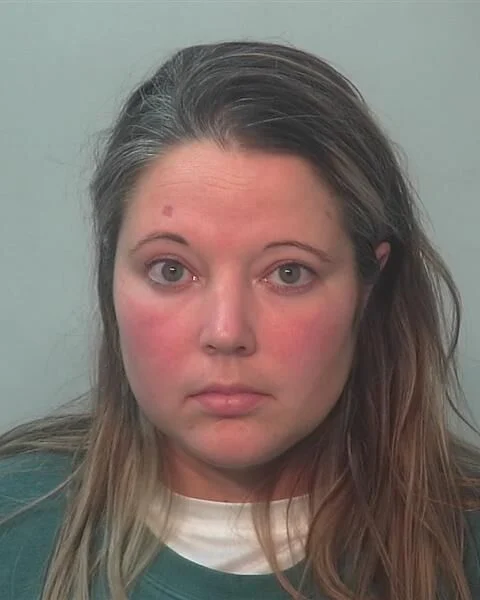
Alison Davis became the center of a murder case after the death of her husband, Kevin Davis, inside their New Haven, Indiana, home in August 2023.
From the beginning, Alison said Kevin had fallen down the stairs. Police first believed her.
That changed after medical experts raised questions about Kevin’s injuries. Four months after his death, Alison was charged with murder and jailed.
She spent 17 months behind bars awaiting trial.
In May 2025, an Allen County jury heard the prosecution’s claim that Kevin had been beaten to death and the defense argument that he died after an accidental fall.
After about six hours of deliberation, the jury found Alison not guilty.
Today, Alison is free and living with her mother and father as she tries to rebuild her life after losing her husband and spending more than a year incarcerated for his murder.
- “A Death in the Stairwell”: 48 Hours Reports on Kevin Davis & Alison Davis Case August 29 2026
- Who Was Kevin Davis & What Happened to Him? 2026 Update & Profile
Alison and Kevin Davis Were Described as a Happy Couple
People close to Alison and Kevin described a marriage built around affection and companionship.
Alison’s father, Steve Krause, said the couple called each other “babe.” Her best friend, Kasey Klemm, remembered Alison and Kevin dancing together in their kitchen.
They did not have children.
Their dog, Willow, became an important part of their household. Krause said Willow was like a child to them.
Friends described Willow as protective and capable of appearing intimidating to strangers, but said she settled once she became comfortable around someone.
That trait would later become part of the police investigation into Kevin’s death.
Alison Was 33 When Kevin Died
Kevin was 40 when he suffered the injuries that killed him.
Alison was 33.
The couple had been living together in a rented home in New Haven.
Nothing about the evening before Kevin’s death appeared to people around them to signal what was coming.
On August 11, 2023, Alison and Kevin went to a local tavern.
Friends and tavern employees later told 48 Hours that they appeared to be having a typical night together.
They left around 1 a.m.
After they arrived home, the evening changed.
Alison Admitted That She and Kevin Argued
Alison did not tell police that the couple had gone home and spent the remainder of the night without conflict.
She said she and Kevin had an argument.
Her account was that she responded by sleeping downstairs on a couch while Kevin went upstairs to their bedroom.
Willow was upstairs.
The argument would become part of the prosecution’s case because investigators came to believe it provided a possible setting for violence.
Alison maintained that it did not.
She said she went to sleep downstairs and did not attack Kevin.
Alison Said a Loud Noise Woke Her
At some point during the early hours of August 12, Alison said she woke after hearing a loud sound.
She went to investigate.
At the bottom of the staircase, she found Kevin.
He was lying face down and was unresponsive.
There was a large amount of blood.
Alison called 911.
She told the dispatcher that her husband had fallen down the stairs and that she could not turn him over.
Her explanation was immediate.
It was not a story she developed months later after becoming a suspect.
From the first emergency call, Alison said Kevin fell.
Alison Gave Police Permission to Search the House
Emergency responders rushed Kevin to the hospital.
Detective James Krueger began speaking with Alison.
She signed paperwork giving police permission to enter and search the Davis home.
That became an important detail because the later prosecution would portray Alison as the person who had attacked Kevin.
Yet on the morning of his injuries, she did not refuse police access to the house.
She did issue one warning.
Willow was upstairs in the bedroom.
Alison told Krueger that the dog was protective and that she did not know how Willow might respond to strangers.
She also expressed concern about police harming the dog.
Willow Kept a Detective Out of the Bedroom
Krueger entered the Davis home and examined the scene.
When he approached the upstairs bedroom, he could hear Willow inside.
He opened the door enough to see how the dog would react.
Willow growled and showed her teeth.
Krueger decided not to enter.
At the time, the decision did not appear to matter.
He looked through the rest of the house and came away believing that Alison’s story made sense.
He thought Kevin had suffered a tragic fall.
That first conclusion would become one of the striking elements of the case when the same investigator later concluded that Alison had committed murder.
Alison Went to Kevin’s Hospital Bed
Kevin was taken to Parkview Regional Medical Center in critical condition.
Alison went to the hospital.
Her father later described watching his daughter speak to Kevin while he remained unconscious.
She called him “babe,” the name the couple used for each other, and told him that she loved him and that she was there.
Friends said Alison appeared shocked and distraught.
Kevin’s injuries were too severe.
Doctors eventually disconnected life support.
Kevin died.
At 33, Alison became a widow.
Alison Supported Kevin’s Decision to Donate His Organs
Kevin was an organ donor.
People close to Alison recalled that she took pride in that fact even while she was dealing with his death.
The days after Kevin’s injuries were marked by grief rather than the immediate accusation of murder.
Friends of the couple said they believed he had fallen.
Police did too.
At that point, Alison was treated as the wife who had discovered her husband after a fatal household accident.
The medical evidence changed that view.
Kevin’s Autopsy Turned Alison From Widow Into Suspect
Authorities began questioning whether Kevin’s head injuries could have been caused by a fall.
Medical experts identified multiple traumatic injuries and fractures.
Investigators came to believe that those findings showed Kevin had been struck more than once rather than suffering a single accidental tumble.
That interpretation changed Alison’s position.
She had been in the home with Kevin.
She had acknowledged that they argued after leaving the tavern.
There was no identified intruder.
Police turned their attention toward her.
Detective Krueger abandoned his initial accident theory and came to believe Alison had attacked Kevin.
Police Believed Alison Had “Lost It”
Krueger developed the theory that the couple’s argument had escalated.
He believed Alison had lost control and beaten Kevin.
Authorities considered the possibility that an ordinary object had been used as a weapon.
An exercise weight was suggested.
A baseball bat was another possibility.
No weapon was ever found.
That absence became one of the major problems in the case.
Police believed Kevin had been beaten with a blunt object but could not identify the object, recover it or tie one to Alison through forensic evidence.
Alison Was Arrested Four Months After Kevin’s Death
Four months after the night police first treated as an accident, Alison was charged with murder.
She pleaded not guilty.
Indiana murder defendants face significant restrictions on bail, and Alison was held in the Allen County Jail.
Her life changed from widowhood to incarceration.
Her father said she had no criminal record and rejected the idea that his daughter had the temperament to beat Kevin to death.
Her friends also struggled to reconcile the accusation with the Alison they knew.
Still, the criminal case moved forward.
Alison Spent 17 Months in Jail
Alison remained incarcerated for approximately 17 months while she waited for trial.
The time behind bars came before any jury had determined that she had committed a crime.
Her father said she relied on her faith during the period.
Friends tried to support her from outside.
Kasey Klemm recalled Alison speaking about how much she missed Kevin.
She said Alison wanted to hear him call her “babe” again and wanted him back.
Those conversations reinforced the defense position that Alison was grieving Kevin rather than hiding responsibility for his death.
Alison’s Case Divided People Who Knew the Couple
The murder charge created divisions within the wider community.
Some people believed police.
Others believed Alison.
Friends who had known the couple expressed different levels of certainty.
Some said they could not imagine Alison killing Kevin.
Others admitted that they did not know what had happened inside the house.
That uncertainty reflected the problem the jury would later face.
No one had witnessed Kevin’s final moments.
The case depended on the interpretation of medical and physical evidence.
Alison’s Defense Said Police Had Charged the Wrong Person
Attorneys Andrew Baldwin and Max Wiley represented Alison.
They took the position that the case involved a genuine wrongful accusation.
Wiley later said that defense lawyers encounter many clients who dispute criminal allegations, but cases involving what they believe to be true innocence are rare.
He described Alison’s case as one in which authorities had the wrong person.
Baldwin also argued that the case should never have reached the point of a murder prosecution.
Their defense centered on a simple proposition.
Kevin’s injuries could be explained by a fall.
The prosecution had failed to prove otherwise.
The Defense Focused on the Staircase
The staircase became one of the most important physical elements in Alison’s defense.
Her lawyers argued that Kevin was intoxicated and had fallen.
They focused on parts of the stairway that could have caused severe head trauma as Kevin descended.
The defense presented a different medical interpretation from the one offered by the prosecution.
Where prosecution experts saw multiple blows from a weapon, the defense saw impacts caused by the staircase.
The dispute was not about whether Kevin had suffered catastrophic injuries.
Everyone agreed that he had.
The dispute was about what caused them.
The Prosecution Said Kevin Had Been Beaten
Prosecution expert Dr. Bill Smock testified that Kevin’s injuries indicated multiple blows to different parts of his head.
He told jurors that he believed Kevin was the victim of homicide.
Under that interpretation, Kevin did not die because he lost his balance and fell.
Someone attacked him.
The prosecution argued that Alison was that person.
But the state could not show jurors a murder weapon.
It could not identify the precise object used.
It could not produce an eyewitness.
Its case depended on persuading the jury that the medical evidence itself established an assault and that Alison was responsible.
Alison Did Not Testify at Her Trial
Alison’s trial began in May 2025.
She chose not to testify.
That is a constitutional right, and the state still carried the burden of proving guilt beyond a reasonable doubt.
The trial lasted four days.
Jurors heard from medical experts, investigators and people connected to Kevin and Alison.
The courtroom did not permit television cameras, although 48 Hours used a sketch artist to document proceedings.
Throughout the trial, Alison faced the possibility of spending the remainder of her life in prison.
She had already spent 17 months behind bars.
A Defense Expert Offered a Different Explanation
The defense relied on Dr. Ljubisa Dragovic to challenge the prosecution’s homicide theory.
His explanation of Kevin’s injuries proved significant for jurors.
After the trial, one juror told 48 Hours that Dragovic presented the evidence in terms the jury could understand and that his explanation made sense.
That was a serious setback for the prosecution.
If jurors accepted that Kevin’s injuries could result from a fall, the medical foundation of the murder case weakened.
The state still had no weapon.
It still had no eyewitness.
And Alison had reported a fall from the beginning.
The Jury Saw Major Gaps in the Murder Case
The case went to the jury after closing arguments.
Jurors deliberated for about six hours.
One later explained that the prosecution’s theory contained significant holes.
There was no weapon.
There was no clear explanation of where Alison was supposed to have attacked Kevin.
There was no definitive reconstruction showing how she had done it.
Those gaps mattered because a murder conviction required proof beyond a reasonable doubt.
Suspicion was not enough.
A medical opinion that homicide was possible was not enough unless jurors believed the rest of the evidence proved Alison was the killer.
They did not.
Alison Davis Was Found Not Guilty
Late on May 9, 2025, the jury returned its verdict.
Not guilty.
Alison had been acquitted.
She would not return to prison as a convicted murderer.
Her father watched her reaction as the verdict was read and described her crying with relief.
Outside the courthouse, family members celebrated.
But Alison did not walk straight out of the courtroom and into their arms.
She first had to be returned to the jail while officials processed her release.
Alison Walked Out of Jail at 2:12 a.m.
Family and friends waited outside.
At approximately 2:12 a.m., Alison emerged from the Allen County Jail.
The people waiting for her erupted.
Her father described a large group embrace filled with tears.
After 17 months of incarceration and a murder trial, Alison was free.
She described the moment as involving many emotions.
The acquittal removed the threat of a murder conviction.
It did not restore the time she had lost.
And it did not bring Kevin back.
Kevin’s Mother Accepted the Verdict
Kevin’s mother, Alta Beers, remained focused on her son.
She said she did not want Kevin to be forgotten.
But she also accepted the jury’s verdict.
She continued to describe Alison as her daughter-in-law.
That response underscored the complicated aftermath of the case.
A man had died.
His wife had been accused of killing him.
A jury concluded that the state had not proved that allegation.
The verdict ended Alison’s criminal prosecution without resolving every disagreement over exactly how Kevin suffered his injuries.
Police Chief Krueger Still Believes Alison Was Responsible
The acquittal did not persuade James Krueger.
By the time the case was revisited by 48 Hours, he had become New Haven’s police chief.
He continued to believe Kevin had been murdered and that Alison was responsible.
Krueger has focused in part on the bedroom he did not search on the morning Kevin was found.
He has wondered whether Alison placed Willow there to prevent police from entering.
Under his theory, the room might have contained the blunt object used against Kevin.
There is no evidence proving that happened.
No weapon from that room has been produced.
The Willow Theory Remains Speculation
The idea that Willow protected a hidden murder weapon has become one of the most unusual aspects of the case.
It is also important to distinguish theory from evidence.
Alison warned police about Willow before they entered the home.
She said she feared the protective dog might react to strangers and did not want anything to happen to her.
Krueger agreed not to enter the room.
Only after the case developed into a homicide investigation did that decision acquire a different significance.
He now wonders whether the dog had been used as a barrier.
The jury had no physical evidence showing that was true.
Alison Has Maintained Her Innocence Throughout
Alison did not confess.
She did not change her central account.
From the 911 call through the investigation and prosecution, she maintained that Kevin fell.
Her legal position was vindicated in the sense that a jury acquitted her of murder.
That does not mean a jury made a formal finding establishing every detail of the accident theory.
A not-guilty verdict means the state failed to prove its criminal accusation beyond a reasonable doubt.
That distinction matters.
Alison was accused of murder.
She went to trial.
She was acquitted.
Legally, she is not responsible for Kevin’s death through a murder conviction.
Where Is Alison Davis Now?
As of August 2026, Alison Davis is free and living with her mother and father.
CBS News confirmed her current situation in reporting published on August 26, 2026.
She is attempting to rebuild her life after Kevin’s death, her arrest, 17 months of incarceration and the murder trial.
Willow remains with her.
The dog that became such an unusual element of the police investigation is still by Alison’s side.
There is no indication in current reporting that Alison faces any new criminal charges connected with Kevin’s death.
Her murder prosecution ended with the 2025 acquittal.
Alison Is Trying to Build a Life Without Kevin
Freedom did not return Alison to the life she had before August 12, 2023.
Kevin is dead.
The home and marriage the couple shared are gone.
Alison also lost 17 months of her own life to pretrial incarceration.
Friends have said they hope she can regain the happiness and personality they remember from before the case.
That process involves more than recovering from jail.
Alison experienced the death of her husband, became the subject of a homicide investigation, faced public accusations of murder and spent four days waiting for a jury to determine whether she would remain free.
Her acquittal ended the legal battle.
It did not erase those experiences.
Alison’s Case Became an Example of the Importance of the Burden of Proof
Alison’s defense lawyers have pointed to the case as an example of why a criminal charge should never be confused with proof of guilt.
The prosecution had a medical theory.
Police had a suspect.
Investigators believed they understood what happened.
Yet when the evidence was tested before a jury, jurors found the case insufficient.
One juror described the prosecution’s theory as having substantial holes.
That assessment became the difference between a murder conviction and Alison returning home.
Her case is unusual within the true-crime genre because the central defendant did not end the story in prison.
She walked free.
Alison Davis’ Story Did Not End With the Verdict
The legal case ended in May 2025.
The personal consequences remain.
Alison entered August 2023 as Kevin Davis’ wife.
Within days, she was his widow.
Within months, she was a murder defendant.
She spent 17 months in jail before a jury heard the evidence.
Then, after four days of trial and about six hours of deliberation, jurors rejected the prosecution’s case.
Today, she lives with her parents and Willow while trying to rebuild a life that bears little resemblance to the one she had before Kevin’s fatal injuries.
Police Chief Krueger continues to believe his homicide theory.
Alison and her family continue to maintain that Kevin’s death was an accident.
The jury has already delivered the only criminal verdict that matters.
Alison Davis was found not guilty of murdering her husband.
As of August 2026, she remains free.
More “A Death in the Stairwell”
- “A Death in the Stairwell”: 48 Hours Reports on Kevin Davis & Alison Davis Case August 29 2026
- Who Is Alison Davis & Where Is She Now? 2026 Update & Profile
- Who Was Kevin Davis & What Happened to Him? 2026 Update & Profile
More Feature Articles
- “Evil in Eden”: 20/20 Reports on Cary Stayner, the Yosemite Murders and the Stayner Family’s Story of Horror and Heroism August 28 2026
- “The Other Side of Paradise”: Dateline NBC Revisits Sandra Galas Homicide August 28 2026
- “A Death in the Stairwell”: 48 Hours Reports on Kevin Davis & Alison Davis Case August 29 2026
- 60 Minutes Reports on “The Cap Arcona” & “Presenting the Kanneh-Masons” on August 30 2026






1 Response
[…] Who Is Alison Davis & Where Is She Now? 2026 Update & Profile […]