


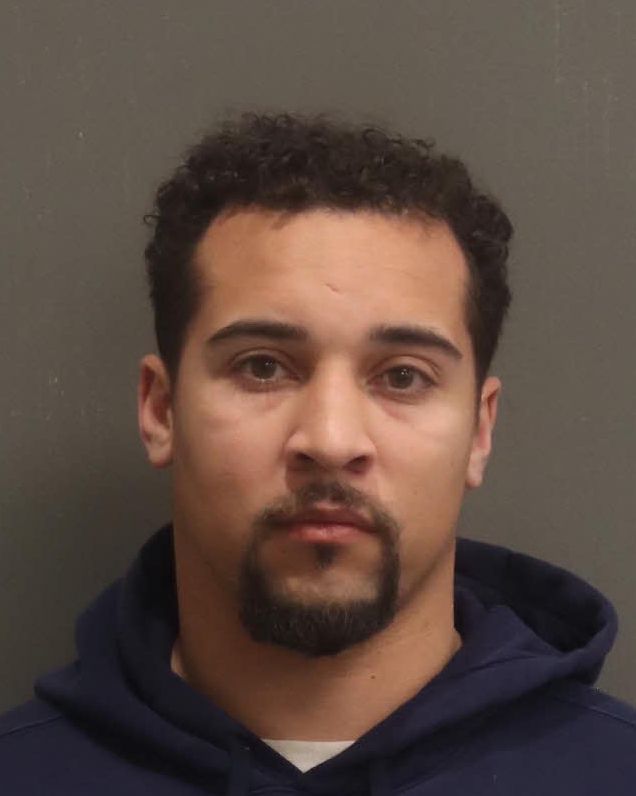
Blaise Taylor was a former college football standout and Tennessee Titans scout whose career in professional sports ended after he was accused of poisoning his pregnant girlfriend, Nashville chef Jade Benning, with cocaine. The case resulted in the deaths of Benning and their unborn daughter, Ivy, and culminated in a double-murder conviction in July 2026.
Taylor was 26 years old when Benning suffered a medical emergency during a date night at her Nashville apartment on February 25, 2023. Minutes before losing consciousness, the 24-year-old chef called her childhood friend and accused Taylor of putting something in her drink. Taylor contacted emergency services and reported that Benning appeared to be experiencing an allergic reaction.
Medical examinations established that Benning had suffered severe cocaine toxicity. Ivy died on February 27, and Benning died on March 6, her 25th birthday. Prosecutors alleged that Taylor had placed a lethal quantity of cocaine in Benning’s pink lemonade because he did not want her to continue the pregnancy.
On July 1, 2026, a Davidson County jury convicted Taylor on four murder-related counts involving Benning and Ivy. He received two consecutive life sentences on September 9, 2026. Taylor maintained his innocence, and his defence attorneys announced plans to appeal.
His case is examined in CBS’s 48 Hours episode “Jade Benning’s Final Call,” airing Saturday, October 31, 2026, at 10 p.m. ET/PT, with correspondent Natalie Morales investigating the relationship, the poisoning and the evidence that led to Taylor’s conviction.
Who Is Blaise Taylor?
Blaise Taylor is a former American football player and professional football scout who played college football at Arkansas State University before joining the Tennessee Titans’ scouting department.
Born into a family with strong connections to college football, Taylor is the son of Trooper Taylor, a longtime college football coach who served as an assistant coach at Auburn University and worked with several other major football programmes.
Taylor grew up around the sport and developed his own career as a defensive back. He became a recognised player at Arkansas State, earning leadership responsibilities and academic honours during his college career.
He later moved into football scouting, working for the Tennessee Titans for approximately four years.
His professional background became a prominent part of the case after investigators accused him of murdering Benning and their unborn daughter.
At the time of his arrest in March 2024, Taylor was working as a defensive analyst for the University of Utah football programme.
The allegations brought his football career to an end and placed him at the centre of a criminal prosecution that attracted national attention.
Blaise Taylor’s Family and Football Background
Taylor is the son of Trooper Taylor, a college football coach whose career has included positions at Auburn University, Tennessee, Oklahoma State and Duke University.
Trooper Taylor served as Auburn’s wide receivers coach and assistant head coach under Gene Chizik between 2009 and 2012, a period that included the programme’s national championship season.
Blaise grew up in an environment shaped by college football, coaching and athletic competition.
He followed a similar path into the sport, developing as a defensive back before playing at Arkansas State University.
Taylor’s family also includes his mother, Evi Taylor, and sister, Starr Taylor.
Both women participated in CBS’s 48 Hours investigation into the case, providing perspectives from his family following the murder conviction.
His family’s involvement in football attracted additional attention to the prosecution because Taylor had established a professional career within the sport before his arrest.
His College Football Career at Arkansas State
Taylor played defensive back for Arkansas State University, where he became a prominent member of the Red Wolves football programme.
He earned recognition for his performance on the field and his academic achievements, eventually becoming a team captain.
His responsibilities included defending against opposing passing attacks and contributing to the team’s defensive schemes.
Taylor’s college career provided the foundation for his transition into football operations and scouting.
He developed relationships within the sport and gained experience that helped him secure a position with an NFL franchise.
His achievements at Arkansas State became part of the character evidence presented by his defence during sentencing.
Former teammates, coaches and other people connected to his football career submitted letters describing their experiences with him.
The defence used those statements to argue that Taylor’s background and personal relationships should be considered when the court determined his punishment.
Blaise Taylor’s Career With the Tennessee Titans
Following his college football career, Taylor joined the Tennessee Titans’ scouting department.
He spent approximately four years working for the NFL franchise, gaining experience in player evaluation and football operations.
Scouting personnel assess prospective players, review game footage and provide information that helps teams make decisions about recruitment and roster construction.
Taylor’s work placed him within the professional football industry and allowed him to build on his experience as a college player.
He was working in football when he met Jade Benning in 2022.
His position with the Titans became a significant part of the public reporting surrounding the case after investigators charged him with murder.
Taylor later left the Titans and relocated to Utah, where he joined the University of Utah football programme as a defensive analyst.
He was employed in that role when authorities arrested him in March 2024.
How Blaise Taylor Met Jade Benning
Taylor met Jade Benning through the dating application Hinge in August 2022.
Benning was a 24-year-old professional chef living in Nashville and pursuing opportunities in the culinary industry.
The couple began dating during a period when Taylor was working in professional football and Benning was establishing her career.
Their relationship became more complicated when Benning learned she was pregnant.
According to evidence presented during the murder trial, Taylor did not want to become a father and encouraged Benning to terminate the pregnancy.
Benning maintained that she intended to have the baby, regardless of whether Taylor remained involved.
The couple experienced a period of limited contact following disagreements about the pregnancy.
By January 2023, they had resumed communication and were discussing preparations for their daughter’s arrival.
Prosecutors later argued that Taylor’s opposition to the pregnancy provided a motive for the poisoning that killed Benning and Ivy.
The Pregnancy That Became Central to the Murder Case
Benning was approximately five months pregnant in February 2023 and expecting a daughter she planned to name Ivy.
She had shared the pregnancy with friends and family and was preparing a nursery for the baby.
Photographs showed Benning holding ultrasound images and celebrating the prospect of becoming a mother.
Her childhood friend Nijaiha Jackson later testified that Benning was excited about the pregnancy and had been making plans for Ivy’s arrival.
The prosecution argued that Taylor had opposed becoming a father and had encouraged Benning to end the pregnancy.
According to the state’s theory, Taylor’s return to Benning’s life in early 2023 did not mean he had accepted the prospect of parenthood.
The prosecution maintained that his opposition to the pregnancy provided the motive for an intentional poisoning.
Taylor’s defence disputed that conclusion and argued that the evidence did not establish that he had administered cocaine to Benning.
The relationship history became one of the central issues jurors considered during the trial.
What Happened on February 25, 2023?
On Saturday, February 25, 2023, Taylor and Benning planned a date night at her Nashville apartment.
The couple prepared dinner and participated in a painting activity intended to create artwork for their daughter’s nursery.
Earlier that evening, Benning’s childhood friend Nijaiha Jackson and another friend visited the apartment.
The women spoke about the pregnancy and the plans Benning had made for Ivy.
Jackson later testified that Benning appeared happy and excited about becoming a mother.
After the visitors left, Taylor and Benning continued their evening together.
They painted artwork for the nursery and took photographs of their creations.
Benning’s painting featured bright colours and positive words, including love, hope and peace.
Taylor created a darker painting using black and grey tones. According to testimony and reporting from the trial, he described the image as a black hole.
The couple took photographs with their artwork before Benning began experiencing symptoms that led her to suspect something had been placed in her drink.
Jade Benning’s Final Phone Call
At approximately 9:29 p.m., Nijaiha Jackson received a telephone call from Benning.
Jackson testified that her friend sounded frightened and was confronting Taylor about something she believed had been placed in her beverage.
According to Jackson, Benning asked Taylor what he had put in her drink and complained that it tasted unusual.
Jackson recalled hearing Benning accuse Taylor of attempting to harm her because he did not want the baby.
Benning also reported that she could not feel her legs and was having difficulty moving.
During the conversation, Jackson heard Benning’s speech become slurred as her condition deteriorated.
The call lasted approximately six minutes.
Jackson’s account became one of the most important elements of the prosecution’s case because it described Benning’s condition and accusations during the period preceding her collapse.
The conversation was not presented as a conventional recording of Benning’s final words. Jurors heard Jackson’s testimony about what she recalled hearing.
Prosecutors argued that Benning’s statements demonstrated her belief that she had been poisoned without her consent.
Blaise Taylor’s 911 Call and the Medical Emergency
At approximately 9:38 p.m., Taylor called 911 and requested emergency assistance for Benning.
He told the dispatcher that his girlfriend appeared to be experiencing an allergic reaction.
Emergency responders arrived at the apartment and found Benning unresponsive.
According to testimony and reporting from the case, she was lying face down across a bed and had no detectable pulse.
Paramedics began resuscitation efforts and transported her to Vanderbilt University Medical Center.
Doctors discovered that Benning had suffered a catastrophic medical event resulting in severe brain damage.
Her condition prevented her from speaking with investigators or providing an account of what had happened after her telephone conversation with Jackson.
Medical testing identified a high concentration of cocaine in her system.
The findings raised questions about how the drug had entered her body and whether she had consumed it voluntarily.
Investigators examined Taylor’s account of the emergency, the timing of his 911 call and the physical evidence recovered from the apartment.
The Deaths of Jade Benning and Baby Ivy
Benning’s unborn daughter, Ivy, was also affected by the medical emergency.
Doctors attempted to manage the complications of Benning’s condition while monitoring the pregnancy.
On February 27, 2023, two days after Benning was admitted to hospital, Ivy died.
Benning remained hospitalised after the death of her daughter.
Her family continued receiving medical updates as doctors assessed the extent of the brain damage caused by the poisoning.
She did not recover consciousness sufficiently to communicate with investigators.
On March 6, 2023, Benning died at Vanderbilt University Medical Center.
The date was her 25th birthday.
Her death came nine days after the medical emergency at her apartment and seven days after Ivy’s death.
The deaths led investigators to examine whether the medical emergency had been caused by an intentional poisoning.
The Cocaine Poisoning Evidence
Medical evidence established that Benning died from acute cocaine toxicity.
Toxicology testing revealed a high concentration of cocaine in her system, and medical testimony addressed the severity of the poisoning.
Prosecutors argued that the amount of cocaine was inconsistent with ordinary recreational use and supported the conclusion that Benning had consumed a substantial dose dissolved in a beverage.
The prosecution alleged that Taylor placed the drug in Benning’s pink lemonade during their date night.
According to that theory, Benning consumed the drink without knowing it contained cocaine and began experiencing symptoms as the drug took effect.
The defence disputed the allegation of deliberate poisoning and argued that Benning had consumed drugs voluntarily.
Jurors were required to consider the medical findings alongside witness testimony and other circumstantial evidence.
The prosecution’s case did not depend on a witness seeing Taylor place cocaine in the drink.
Instead, prosecutors assembled evidence from Benning’s statements, medical findings, relationship history and the circumstances of the emergency.
The Missing Drink and Evidence From the Apartment
Investigators examined photographs taken during the couple’s date night to reconstruct the events preceding Benning’s collapse.
A beverage container visible in photographs became an area of interest because prosecutors alleged that Benning had consumed cocaine dissolved in pink lemonade.
According to reporting on the trial, a cup associated with the evening was not recovered when investigators searched the apartment.
The absence of the container limited the ability of forensic specialists to test the drink itself for cocaine.
Investigators also examined the condition of the apartment and evidence suggesting that cleaning had taken place.
Prosecutors argued that the physical circumstances supported their theory of deliberate poisoning and efforts to conceal evidence.
The defence challenged the conclusions drawn from the missing container and the apartment’s condition.
Because investigators did not recover the alleged poisoned drink for direct testing, the prosecution relied on other evidence to establish that Taylor had administered the cocaine.
That distinction became important during the trial, with the defence arguing that the evidence did not prove how Benning had consumed the drug.
The Testimony About an Alleged Abortion Pill Discussion
The prosecution presented testimony from a former girlfriend of Taylor concerning statements he had made about another woman’s pregnancy.
According to reporting from the trial, the witness testified that Taylor had discussed the possibility of placing an abortion pill in a woman’s drink.
The testimony was offered as part of the prosecution’s attempt to establish Taylor’s attitudes toward pregnancy and the circumstances surrounding the deaths of Benning and Ivy.
The allegation concerned a separate conversation and did not establish that Taylor had administered an abortion pill to anyone.
The defence challenged the relevance and significance of the testimony, arguing that it did not prove the alleged poisoning of Benning.
Jurors were required to evaluate the witness’s account alongside the evidence concerning the February 2023 incident.
The prosecution maintained that the testimony supported its theory of motive, while the defence argued that the case remained dependent on circumstantial evidence.
Blaise Taylor’s March 2024 Arrest
The Metropolitan Nashville Police Department investigated the deaths of Benning and Ivy over the months following the February 2023 emergency.
Detectives reviewed medical records, toxicology findings, witness statements and information about the couple’s relationship.
The telephone call to Jackson became central to the investigation because it provided an account of Benning accusing Taylor of placing something in her drink shortly before losing consciousness.
Investigators also examined Taylor’s 911 call, in which he described the medical emergency as an allergic reaction.
The medical findings established cocaine toxicity rather than an allergic reaction.
Prosecutors alleged that Taylor had deliberately placed cocaine in Benning’s beverage because he did not want her to continue the pregnancy.
In March 2024, a Davidson County grand jury returned an indictment charging Taylor in connection with both deaths.
Taylor was arrested in Utah on March 14, 2024, while working in college football.
Authorities arranged for his return to Tennessee to face prosecution.
He denied the allegations and pleaded not guilty.
The June 2026 Murder Trial
Taylor’s murder trial began in Nashville in June 2026 and continued into July.
Prosecutors presented evidence over approximately 10 trial days, including testimony from medical specialists, investigators and people who knew Benning.
One of the central witnesses was Nijaiha Jackson, who described the telephone call she received shortly before Benning lost consciousness.
Jurors heard Jackson’s account of Benning accusing Taylor of putting something in her drink, complaining about its taste and expressing concern for her baby.
Medical witnesses explained the toxicology findings and the effects of cocaine poisoning.
The prosecution also examined Taylor’s account of the emergency and the evidence concerning his relationship with Benning.
Prosecutors Jan Norman, Roger Moore and Kendall Ponchillia represented the Davidson County District Attorney’s Office.
Taylor’s defence team challenged the prosecution’s interpretation of the evidence and maintained that he had not committed murder.
The trial received national coverage, including live courtroom broadcasts by Court TV.
How Blaise Taylor’s Defence Challenged the Case
Taylor’s attorneys argued that the evidence did not prove he had administered cocaine to Benning.
The defence maintained that Benning could have consumed drugs voluntarily and that her death resulted from an overdose rather than deliberate poisoning.
They questioned the prosecution’s reliance on circumstantial evidence, including the missing drink container and the testimony concerning Benning’s final telephone call.
The defence also challenged the conclusions drawn from Taylor’s response to the pregnancy and the couple’s relationship history.
Attorneys argued that the prosecution had not produced direct evidence showing Taylor placing cocaine in a beverage.
They maintained that the state had failed to eliminate reasonable alternative explanations for how the drug entered Benning’s system.
The prosecution countered that the combination of medical evidence, Benning’s statements and the circumstances of the evening established Taylor’s responsibility.
Jurors were asked to determine whether the evidence proved the charged offences beyond a reasonable doubt.
The July 1, 2026 Murder Convictions
On July 1, 2026, a Davidson County jury found Blaise Taylor guilty on all four murder-related counts.
The jury returned its verdict in less than two hours, including a lunch break, according to the Davidson County District Attorney’s Office.
Taylor was convicted of second-degree murder in Benning’s death and first-degree premeditated murder in Ivy’s death.
He was also convicted of first-degree felony murder in connection with each death.
The verdict established his criminal responsibility for both deaths under Tennessee law.
The first-degree premeditated murder conviction concerned the unborn child, while the second-degree murder conviction concerned Benning.
The felony-murder convictions provided additional legal grounds for the jury’s findings.
Benning’s family expressed relief following the verdict and thanked prosecutors for pursuing the case.
Taylor maintained his innocence, and his attorneys indicated that they would challenge the convictions.
Blaise Taylor’s September 2026 Sentencing
Taylor returned to court on September 9, 2026, for sentencing before Judge Steve Dozier.
The hearing included victim impact statements from Benning’s family, who described the consequences of losing both Jade and Ivy.
Benning’s mother, Bridget Benning Burks, spoke about the fear her daughter experienced before losing consciousness and the pain of knowing that Jade had believed she was safe with someone she trusted.
She also described the loss of her granddaughter, whom the family had expected to welcome into their lives.
Taylor’s defence presented character evidence, including 87 letters from former teammates, coaches, friends and other supporters.
The prosecution argued that those statements did not diminish the seriousness of the crimes established by the jury’s verdict.
Judge Dozier imposed two consecutive life sentences.
The court also imposed a 22-year sentence for the second-degree murder conviction, which was merged with another count for sentencing purposes.
The life sentences represented the principal punishment imposed for the deaths of Benning and Ivy.
Taylor’s attorneys criticised the outcome and announced plans to appeal.
Where Is Blaise Taylor Now in October 2026?
As of October 30, 2026, Blaise Taylor is in Tennessee custody following his convictions for murdering Jade Benning and their unborn daughter, Ivy.
Taylor received two consecutive life sentences in September 2026 and faces a lengthy period of imprisonment.
His precise correctional facility has not been confirmed in the available reporting.
The sentencing outcome was reported as two consecutive life terms, with a separate 22-year sentence for second-degree murder merged with another count.
His defence attorney, Letitia Quinones-Hollins, stated after sentencing that the legal team intended to appeal.
The convictions and sentences remain in effect unless changed through subsequent court proceedings.
Taylor has maintained his innocence despite the jury’s verdict.
The case concluded at the trial-court level with convictions on all four murder-related counts, bringing the prosecution to an end more than three years after the deaths.
Will Blaise Taylor Ever Be Released From Prison?
Taylor’s two consecutive life sentences represent a substantial period of imprisonment under Tennessee law.
The sentences were imposed following his convictions for first-degree premeditated murder and first-degree felony murder involving Ivy and felony murder involving Benning.
The court also imposed a 22-year sentence for second-degree murder, which was merged with another count.
Published reporting has described Taylor’s punishment as two consecutive life sentences, with differing descriptions of parole eligibility.
The precise release calculation depends on the governing Tennessee sentencing provisions and the official correctional record.
Taylor’s attorneys announced plans to appeal the verdict and sentence, meaning further legal proceedings could address the convictions.
As of October 2026, no appellate decision overturning his convictions has been established in the available material.
He remains imprisoned under the sentence imposed in September 2026.
How Jade Benning’s Family Responded to the Verdict
Benning’s family attended the trial and sentencing proceedings, hearing testimony about the final hours of her life and the medical circumstances of her death.
Her mother, Bridget Benning Burks, delivered a victim impact statement describing the emotional consequences of losing both her daughter and granddaughter.
She spoke about Benning’s awareness that something was wrong during the final minutes before she lost consciousness.
The family also described the pain of knowing that Ivy would never be born and that Benning would not have the opportunity to raise her daughter.
Benning’s father, Dennis Browning, and stepfather, Lyn Burks, were among the relatives who participated in the family’s efforts to seek justice.
Following the guilty verdict, relatives expressed appreciation for the investigators and prosecutors who had pursued the case.
The sentencing provided a legal outcome but could not restore the lives lost in February and March 2023.
Benning’s family has continued remembering her as a daughter, friend and chef whose career and plans for motherhood ended before her 25th birthday.
Blaise Taylor’s Case in 48 Hours: Jade Benning’s Final Call
CBS’s 48 Hours examines Taylor’s conviction in “Jade Benning’s Final Call,” airing Saturday, October 31, 2026, at 10 p.m. ET/PT.
Correspondent Natalie Morales revisits the relationship between Taylor and Benning, the events of February 25, 2023, and the telephone conversation that became central to the criminal investigation.
The episode includes interviews with Benning’s mother Bridget Benning Burks, father Dennis Browning, stepfather Lyn Burks and childhood friend Nijaiha Jackson.
Taylor’s mother, Evi Taylor, and sister, Starr Taylor, also participate, providing perspectives from his family.
Morales interviews Davidson County prosecutors Jan Norman, Roger Moore and Kendall Ponchillia, along with defence attorneys Letitia Quinones-Hollins and Jim Sanders.
The programme examines the medical evidence, witness testimony and competing explanations presented during Taylor’s trial.
The case concluded with convictions for the deaths of both Benning and Ivy and the imposition of two consecutive life sentences.
For Taylor, the verdict marked the end of his career in football and the beginning of a lengthy prison sentence following one of Nashville’s most prominent murder prosecutions.
“Jade Benning’s Final Call” airs Saturday, October 31, 2026, at 10 p.m. ET/PT on CBS and streams on Paramount+.
More “Jade Benning’s Final Call”
- “Jade Benning’s Final Call”: 48 Hours Reports October 31 2026
- Who Was Jade Benning & What Happened to Her? 2026 Update & Profile
- Who Is Blaise Taylor & Where Is He Now? 2026 Update & Profile
More Feature Articles
- “Justice for Faith”: 20/20 Reports on Faith Hedgepeth Homicide October 30 2026
- “The Orchard”: Dateline Reports on The Disappearance of Tara Grinstead October 30 2026
- “Jade Benning’s Final Call”: 48 Hours Reports October 31 2026
- Victor Wembanyama Breaks His Silence on NBA Finals Controversy in 60 Minutes Interview November 1 2026