Who Was Edmond Safra & What Happened to Him? 2026 Update & Background
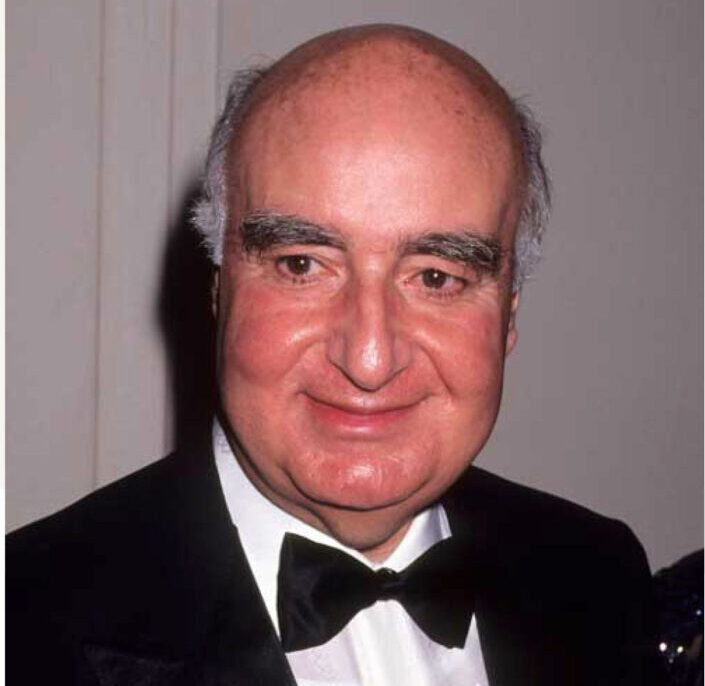
Edmond Safra built one of the world’s most powerful banking empires through discipline, secrecy, and international influence. By the late 1990s, the Lebanese-born financier had become one of the richest men in the world, overseeing billions of dollars in assets while maintaining homes across Europe and the United States. Known for his intense concern about security and privacy, Safra spent decades navigating high finance, political instability, and international banking scandals before his life ended in a devastating fire inside his Monaco penthouse in December 1999.
More than two decades after his death, the circumstances surrounding the tragedy continue to generate fascination and debate. Safra’s death transformed an already prominent public figure into the center of one of the most sensational criminal cases in modern European history. The fire not only claimed Safra’s life but also launched years of controversy, conspiracy theories, documentaries, books, and courtroom battles surrounding the actions of his American nurse, Ted Maher.
- “The Man with Two Names”: 48 Hours Revisits the Extraordinary Ted Maher Case May 16 2026
- Who Is Ted Maher/Jon Green & Where Is He Now? 2026 Update & Background
- Who Is Kim Lark & Where Is She Now? 2026 Update & Background
Edmond Safra’s Early Life and Rise in Banking
Edmond Jacob Safra was born on August 6, 1932, in Beirut, Lebanon, into a wealthy Sephardic Jewish banking family. The Safra family had long-standing financial interests throughout the Middle East and Europe, giving Edmond early exposure to international banking and commerce. His father, Jacob Safra, operated successful banking businesses, and Edmond learned the financial trade from a young age while growing up in a multilingual and politically complex environment.
As political instability increased in the Middle East during the mid-20th century, the Safra family expanded its financial operations beyond Lebanon. Edmond eventually established himself as one of the leading private bankers in the world. He became known for serving wealthy international clients, multinational businesses, and political figures who valued discretion and stability. Safra built his reputation on conservative financial management and personal relationships with clients, many of whom trusted him with enormous fortunes.
Building a Global Financial Empire
Safra’s greatest business achievement came through the growth of Republic National Bank of New York. Under his leadership, the institution became a major international banking force with operations spanning multiple continents. Republic National Bank specialized in private banking, international finance, and wealth management, attracting elite clients from around the world.
By the 1990s, Safra had accumulated a fortune worth billions of dollars. His influence stretched far beyond banking circles, and he became known for his philanthropy as much as his financial success. He donated millions to hospitals, educational institutions, Jewish organizations, and humanitarian causes. Safra and his wife, Lily Safra, supported charitable projects across Europe, Israel, South America, and the United States.
Despite his wealth and influence, Safra maintained a guarded lifestyle. Associates described him as deeply cautious and intensely focused on personal security. His concerns were not unfounded. Banking at the international level often placed him in conflict with organized crime groups, corrupt officials, and powerful financial interests.
Growing Security Concerns and International Pressure
In the years before his death, Safra reportedly became increasingly fearful for his safety. His banking institutions had assisted law enforcement investigations into suspected money laundering operations connected to Russian organized crime. Reports later indicated that Republic National Bank provided information to the FBI that contributed to investigations involving billions of dollars in illicit financial activity.
Those connections fueled widespread speculation after his death. Safra’s associates and journalists noted that he had many powerful enemies due to his financial dealings and his cooperation with investigators examining organized crime. The banker responded to these threats by surrounding himself with layers of security personnel and implementing extensive safety measures in his homes.
Safra also struggled with declining health. He suffered from Parkinson’s disease and required continuous medical care from a team of private nurses. His illness limited his mobility and increased his dependence on staff members who worked inside his highly protected residences. In Monaco, Safra lived inside a fortified penthouse apartment at La Belle Epoque, one of the principality’s most famous luxury buildings.
The Final Days Before the Fire
In late 1999, Safra was preparing for a major transition in his business empire. He had negotiated the sale of Republic National Bank to HSBC Holdings in a deal reportedly worth nearly $10 billion. The transaction represented the culmination of decades of work building one of the world’s largest private banking operations.
At the same time, Safra continued living under heavy security in Monaco. His penthouse residence functioned almost like a private fortress. The apartment featured reinforced security systems and protected rooms designed to keep intruders out during emergencies. Safra’s fear of kidnapping or assassination had become part of his daily life.
On December 3, 1999, Safra remained inside the penthouse with members of his staff, including nurses Ted Maher and Vivian Torrente. His wife, Lily Safra, and a family member were also present in the residence earlier that night. Few could have imagined that within hours, the penthouse would become the scene of one of Monaco’s deadliest and most controversial fires.
The Fire That Killed Edmond Safra
During the night, a fire broke out inside the penthouse apartment. Initial reports claimed armed intruders had entered the residence and attacked nurse Ted Maher. Maher suffered stab wounds and told authorities he fought off masked men before starting a small fire in a trash basket to trigger the building’s alarm system and summon help.
As smoke spread through the residence, Edmond Safra and nurse Vivian Torrente retreated into a secure bathroom designed to protect occupants during emergencies. Tragically, both died from smoke inhalation before firefighters could reach them. Lily Safra and another family member escaped the fire safely.
The blaze shocked Monaco and immediately triggered international headlines. Edmond Safra was one of the world’s most prominent bankers, and the bizarre circumstances surrounding his death fueled widespread speculation. Questions quickly emerged about how such a catastrophic fire could occur inside one of the most secure residences in Europe.
The Investigation and Ted Maher’s Arrest
Investigators soon focused on Ted Maher. Authorities discovered no evidence supporting his claim about intruders entering the building. Monaco prosecutors later announced that Maher confessed to setting the fire himself and admitted the stab wounds were self-inflicted.
According to prosecutors, Maher started the fire intentionally in an attempt to appear heroic and gain favor with Safra. Investigators alleged Maher feared losing his prestigious nursing position and hoped to create a dramatic rescue situation that would strengthen his standing with the billionaire. Prosecutors claimed the plan spiraled out of control and trapped Safra and Torrente inside the smoke-filled penthouse.
Maher later recanted his confession and insisted he had been framed or coerced into admitting guilt. He claimed unknown attackers targeted Safra because of the banker’s financial dealings and international connections. Those competing narratives became central to the criminal case and the years of controversy that followed.
The Trial and Public Controversy
Ted Maher’s trial became a media sensation in Monaco and around the world. Prosecutors argued Maher’s fabricated story about intruders delayed emergency responders and directly contributed to the deaths of Safra and Torrente. The defense countered that Maher never intended to kill anyone and that failures by police and firefighters worsened the disaster.
The case generated endless conspiracy theories because of Safra’s wealth and business history. Some speculated that organized crime groups targeted the banker in retaliation for his cooperation with financial investigations. Others questioned the lengthy delay before rescue crews reached the secure room where Safra and Torrente had taken shelter.
In December 2002, Maher was convicted of arson causing death and sentenced to 10 years in prison. Despite the verdict, public debate over the case never fully disappeared. Journalists, documentary filmmakers, and true crime investigators continued revisiting the evidence for years, keeping Safra’s death in the public eye long after the trial ended.
Edmond Safra’s Legacy
Edmond Safra left behind a lasting legacy in international banking and philanthropy. His institutions helped shape global private banking during the second half of the 20th century, and his charitable contributions supported hospitals, educational organizations, medical research, and Jewish cultural institutions around the world.
After his death, Lily Safra continued many of the couple’s philanthropic efforts through the Edmond J. Safra Foundation. The organization funded medical research, educational initiatives, synagogues, libraries, and humanitarian causes in multiple countries. Safra’s name remains attached to hospitals, university programs, and charitable projects decades after his death.
At the same time, the circumstances surrounding Safra’s final hours continue to overshadow parts of his legacy. The Monaco fire became one of the most discussed true crime cases involving the international elite, blending wealth, paranoia, security fears, and unresolved questions into a story that still fascinates the public today.
Why the Edmond Safra Case Still Captivates Audiences
The death of Edmond Safra continues to draw public attention because the story contains so many extraordinary elements. Safra was one of the wealthiest men in the world, living inside a fortified Monaco penthouse while surrounded by security staff and personal nurses. Yet he died in a fire started by someone working within his own household.
The case also remains controversial because Ted Maher never stopped claiming innocence. His shifting stories, dramatic prison escape, later criminal accusations in the United States, and repeated public interviews have kept the case alive through documentaries, television specials, books, and podcasts. Each new retelling revives questions about whether the official explanation fully accounts for everything that happened inside La Belle Epoque on December 3, 1999.
For many observers, Edmond Safra’s death represents more than a criminal case. It stands as a cautionary story about wealth, isolation, fear, and trust. A billionaire who spent years protecting himself from outside threats ultimately died inside one of the safest homes in Europe, surrounded by people he believed he could trust.
More “The Man with Two Names”
- “The Man with Two Names”: 48 Hours Revisits the Extraordinary Ted Maher Case May 16 2026
- Who Is Ted Maher/Jon Green & Where Is He Now? 2026 Update & Background
- Who Was Edmond Safra & What Happened to Him? 2026 Update & Background
- Who Is Kim Lark & Where Is She Now? 2026 Update & Background
More Feature Articles
- “Murder Next Door”: 20/20 Reports on Kay Parsons Homicide May 15 2026
- Dateline NBC on May 15 2026 Revisits the Alex Murdaugh Case After Convictions Are Overturned
- “The Man with Two Names”: 48 Hours Revisits the Extraordinary Ted Maher Case May 16 2026
- “She Didn’t Come Home”: Dateline Revisits Kathy Heckel’s Disappearance May 16 2026
- 60 Minutes Reports on “Betting on War”, “The Knowledge” & “Christopher Nolan” on May 17 2026