


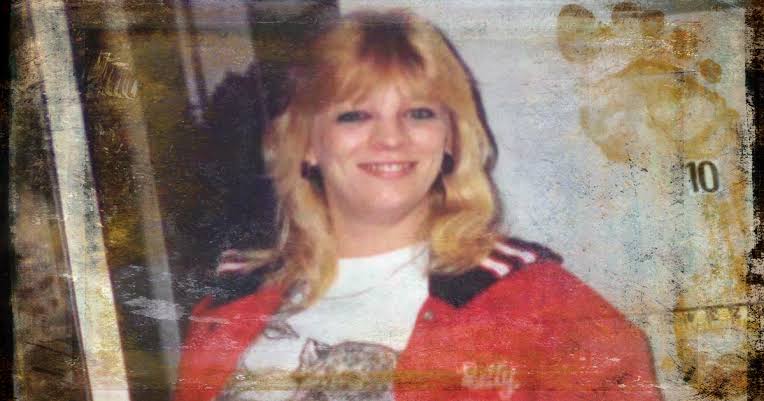
Jeanie Childs was 35 years old when she was brutally murdered inside her Minneapolis apartment in June 1993. For more than 26 years, her killing remained one of Minnesota’s most perplexing unsolved homicide cases, despite investigators recovering a wealth of forensic evidence from the crime scene. Advances in DNA technology and forensic investigative genetic genealogy eventually identified her killer, bringing justice to her family after decades of uncertainty.
Although much of the public attention has focused on the scientific breakthroughs that solved the case, those closest to Jeanie have consistently said they want people to remember the woman behind the investigation rather than simply the circumstances of her death.
- “The Footprint”: 48 Hours Investigates the Jeanie Childs Homicide on August 1 2026
- Who Is Jerry Westrom & Where Is He Now? 2026 Update & Profile
A Difficult Life Marked by Personal Struggles
Jeanie Childs grew up in Minnesota but faced significant challenges from a young age. According to her family, she began running away from home when she was around 13 years old, setting her on a difficult path that continued into adulthood.
As an adult, Childs worked as a sex worker in Minneapolis. Her family has acknowledged that she made choices they wished had been different, but they have also stressed that those decisions never defined who she was as a person. Her sister, Cindy Blumer, has said that like many people, Jeanie made mistakes, but none of them justified the violence that ended her life.
Despite the hardships she experienced, Childs maintained close family relationships. Her mother, Betty Eakman, remained devoted to her daughter and never stopped seeking answers after her murder. Family members have described Jeanie as someone they loved deeply and whose life still mattered regardless of the challenges she faced.
The Discovery of a Horrific Crime
On June 13, 1993, Jeanie Childs was found dead inside her apartment at the Horn Towers apartment complex in south Minneapolis.
The crime scene shocked even experienced investigators. Childs had been stabbed approximately 65 times during an exceptionally violent attack. The bedroom, bathroom and other areas of the apartment were covered in blood, indicating that a struggle had occurred before her death.
The autopsy revealed that the violence continued after she had died. Investigators found evidence that the killer had mutilated her body following the fatal stabbing, demonstrating the extreme brutality of the attack.
Among the evidence left behind were bloody bare footprints throughout the apartment. Detectives immediately realized they were unlikely to belong to Childs because she was wearing socks when her body was discovered. Those footprints would later become one of the most significant pieces of evidence in the case.
A Family Left Searching for Answers
Betty Eakman learned of her daughter’s death while she was working in hospice care. A television news report mentioned that a body had been removed from an apartment building she immediately recognized.
She later recalled instantly fearing that the victim was Jeanie. Her worst fears were confirmed soon afterward, beginning what became decades of grief and unanswered questions.
Eakman has spoken publicly about believing her daughter cried out for her during the attack, a thought that continued to haunt her for years. Childs’ sister has credited their mother with refusing to let the investigation fade from public attention, continually encouraging detectives to keep searching for the person responsible.
Throughout the years, the family remained determined that Jeanie would not simply become another forgotten cold case.
Why the Case Remained Unsolved for So Long
Investigators collected an extensive amount of forensic evidence in 1993, including biological samples, blood evidence and the distinctive bloody footprints.
However, DNA technology was still in its early stages. Although investigators recovered DNA from the crime scene, there was no matching profile in law enforcement databases, and the technology available at the time could not identify the unknown contributor.
Police investigated numerous leads, including individuals known to Childs, but none could be linked conclusively to the murder. As months became years, the investigation slowed and eventually became a cold case.
Fortunately, detectives preserved all of the physical evidence, believing future scientific advances might eventually provide answers that were impossible to obtain in 1993.
Modern Science Finally Identifies the Killer
The investigation gained new momentum after Minneapolis police reopened the case in 2015.
Following the success of forensic investigative genetic genealogy in identifying California’s Golden State Killer in 2018, investigators used the same approach to analyze DNA recovered from Childs’ apartment.
The technique eventually led detectives to Jerry Westrom, a Minnesota businessman who had never been identified during the original investigation. After conducting surveillance, investigators secretly recovered a discarded napkin that Westrom had used during a youth hockey game in Wisconsin.
Laboratory testing found that DNA on the napkin matched biological evidence recovered from Childs’ apartment. Additional testing using a court-authorized DNA sample confirmed the match.
Forensic investigators also compared Westrom’s footprints with the bloody footprints left at the crime scene, concluding that they matched. Together, the DNA evidence and footprint analysis became the foundation of the prosecution’s case.
Conviction Brings Long-Awaited Justice
Jerry Westrom was arrested in February 2019 and initially charged with second-degree murder before a grand jury later indicted him on first-degree premeditated murder.
His trial began in August 2022. Prosecutors argued that the DNA evidence, combined with the bloody footprints, proved beyond reasonable doubt that Westrom had been inside Childs’ apartment during the murder.
After only about two hours of deliberations, the jury found Westrom guilty. He was sentenced to life in prison with the possibility of parole after serving 30 years.
Westrom appealed his convictions, but the Minnesota Supreme Court upheld the first-degree murder conviction in 2024. The court vacated the second-degree murder conviction because Minnesota law does not allow convictions for both offenses arising from the same homicide. His life sentence remained unchanged, and the United States Supreme Court later declined to hear his appeal.
Remembering Jeanie Childs
For Jeanie Childs’ family, the conviction brought accountability but could never undo the loss they suffered in 1993.
Her mother has repeatedly emphasized that, regardless of the circumstances of Jeanie’s life, she did not deserve to die in such a horrific manner. Her family has rejected suggestions that her occupation somehow made her death inevitable, insisting that she was first and foremost a daughter, a sister and a human being whose life had value.
More than three decades after her murder, Jeanie Childs is remembered not only because her case helped demonstrate the power of modern forensic science, but because her family’s determination ensured that she would never be forgotten. Their persistence, combined with advances in DNA technology and careful preservation of evidence, transformed one of Minnesota’s longest-running cold cases into a landmark example of justice delayed, but ultimately achieved.
More “The Footprint”
- “The Footprint”: 48 Hours Investigates the Jeanie Childs Homicide on August 1 2026
- Who Was Jeanie Childs & What Happened to Her? 2026 Update & Profile
- Who Is Jerry Westrom & Where Is He Now? 2026 Update & Profile
More Feature Articles
- “Where Monsters Hide”: 20/20 Revisits the Kelly Cochran Murder Pact That Led to Two Killings July 31 2026
- “The Day Dee Disappeared”: Dateline NBC Reports on Dee Warner Homicide July 31 2026
- “The Night of the Audition”: Dateline NBC Examines Shannon Madill Burgess Homicide August 1 2026
- “The Footprint”: 48 Hours Investigates the Jeanie Childs Homicide on August 1 2026