


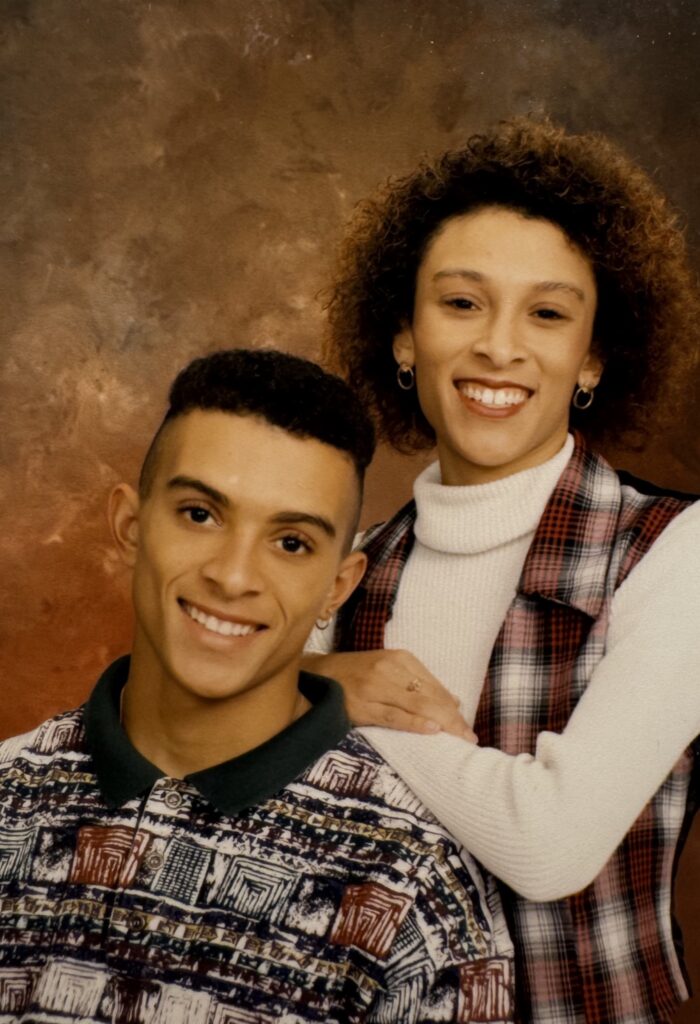
Joanna Hunter was known to her family as a caring daughter, a devoted sister, and a woman who believed deeply in helping others. Raised in Northern California, she maintained close ties with her parents and siblings, including her older brother Joe Hunter, who would later become a Sacramento fire captain. Those closest to Joanna describe her as compassionate and thoughtful, with a strong sense of responsibility toward the people she loved.
Faith played a central role in Joanna’s life. She was deeply spiritual and committed to her church community, which shaped many of her decisions as an adult. That devotion, while meaningful to her, also created pressures that complicated her ability to leave a harmful relationship. Family members have said Joanna often placed the needs and expectations of others above her own safety.
- “Joe Hunter’s Mission”: 48 Hours Revisits Joanna Hunter Case December 13 2025
- Who Is Mark Lewis & Where Is He Now? 2025 Update & Background
- Who Is Joe Hunter & Where Is He Now? 2025 Update & Background
Marriage and a Pattern of Domestic Violence
Joanna met Mark Wayne Lewis while still young, and the relationship became marked by control and violence over time. According to family accounts and later court records, Lewis had a history of domestic abuse that included physical violence and strangulation. Joanna attempted to leave the relationship on multiple occasions, seeking refuge at her parents’ home just blocks away from where she lived with her husband.
Each time Joanna left, Lewis exerted pressure that drew her back. He reportedly used religious authority and emotional manipulation, reinforcing the idea that endurance and forgiveness were expected of her. Joanna’s mother, Patricia Hunter, recalled repeated incidents of harassment, property damage, and threats during periods when Joanna tried to separate. Despite these warning signs, Joanna struggled to fully break free from the marriage.
The Days Leading Up to Her Death
In the final weeks of her life, Joanna again attempted to leave Lewis. She arrived at her parents’ home stating she felt stronger than ever and wanted to come home permanently. During that stay, she confided that Lewis had done something serious that could cost him his position in the church if revealed. Despite her parents’ pleas, Joanna felt compelled to return, believing she needed to address the situation directly.
Patricia Hunter later said that driving her daughter back was one of the most painful moments of her life. She warned Joanna that she feared she might never see her again. Days later, on October 6, 2011, Joanna was found dead in the closet of her home in Solano County, California. She was 36 years old.
A Death Ruled a Suicide Without an Autopsy
Authorities determined that Joanna had died by suicide, stating she was found hanging by the belt of a bathrobe with her feet partially touching the floor. A brief handwritten note found nearby was treated as a suicide note. No autopsy was performed, and law enforcement did not interview Joanna’s family about her history of domestic violence. The case was closed after a short review.
Her family immediately disputed the ruling. They noted inconsistencies at the scene, including an open suitcase, and said the note reflected instructions Joanna had previously given when leaving her husband, not final words. Family members also expressed shock that police never contacted them directly and did not conduct a deeper investigation despite documented abuse.
Developments After Joanna’s Death
Following Joanna’s death, Mark Lewis entered another relationship that ended with stalking and arson. In 2015, he pleaded no contest to charges involving an attack on an ex-girlfriend, which included throwing a Molotov cocktail at her home. He was sentenced to eight years in state prison. After these crimes, the Solano County Sheriff’s Office reopened Joanna’s case, though no charges related to her death have been filed.
For Joanna’s family, these later convictions reinforced their belief that her death was not a suicide. Patricia Hunter publicly stated that Joanna had been trying to leave and that Lewis could not accept that outcome. The lack of resolution in the case has remained a source of grief and frustration for the family.
Joanna’s Legacy and Lasting Impact
Joanna Hunter’s death became a catalyst for legal reform. Her brother Joe and mother Patricia worked with Alliance for HOPE International to advocate for changes in how suspicious deaths involving domestic violence are handled. Their efforts led to the passage of Joanna’s Law in California in 2024, establishing standards for investigating deaths that may conceal homicide when there is a known history of abuse.
Today, Joanna is remembered not only for her life, but for the change her story inspired. Her case has helped bring attention to what advocates call hidden homicides and has influenced how families are treated when they question official findings. For those who loved her, Joanna’s voice continues through the law that bears her name and the ongoing pursuit of truth surrounding her death.