


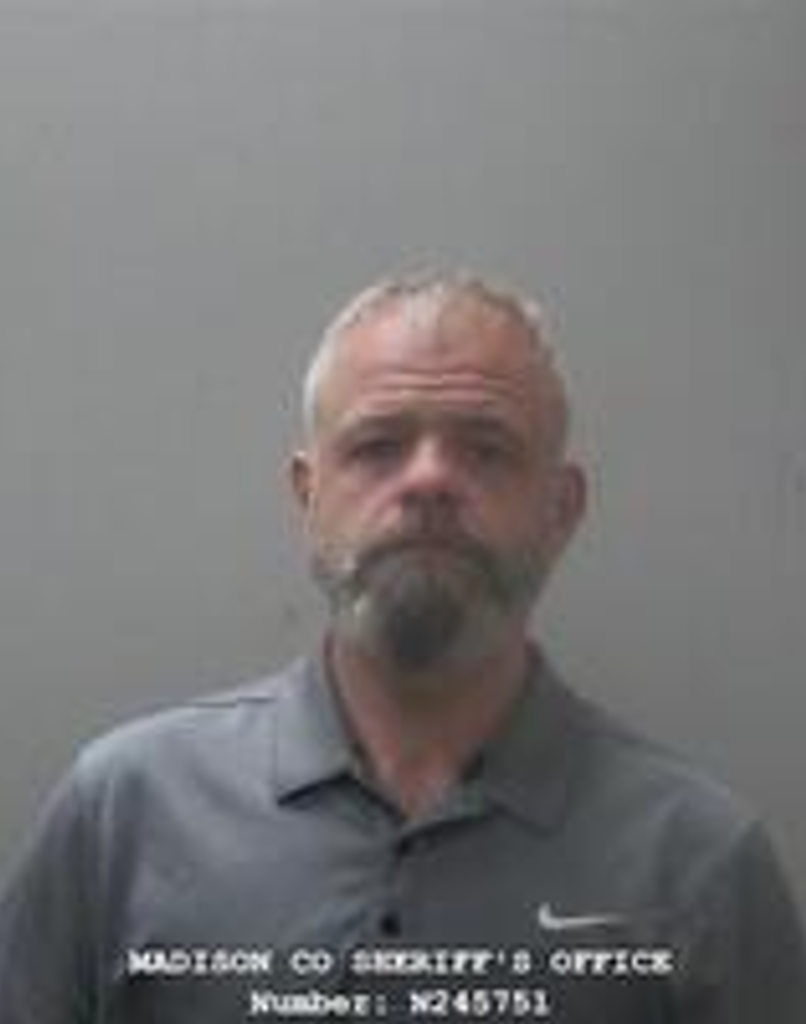
David Telton Tolbert is an Alabama man and former correctional officer serving life imprisonment without the possibility of parole for the murder of his wife, Savannah Hancock Tolbert. He claimed that Savannah had shot herself inside his vehicle in November 2022, but forensic evidence led investigators to conclude that her death was a homicide.
His case is featured in 48 Hours: What the Cameras Saw, airing Saturday, October 24, 2026, at 9/8c on CBS. Correspondent Anne-Marie Green examines the death of 37-year-old Savannah, the investigation that challenged her husband’s account and the evidence that persuaded a Madison County jury to convict him of capital murder.
Tolbert was arrested on December 9, 2022, less than a month after Savannah’s death. On May 8, 2025, a jury found him guilty of capital murder, and he received a sentence of life imprisonment without parole.
His conviction was upheld by the Alabama Court of Criminal Appeals in January 2026. The Alabama Supreme Court declined to review the case in April, leaving the verdict and sentence in place.
- “What the Cameras Saw”: 48 Hours Reports on Savannah Hancock Tolbert Homicide October 24 2026
- Who Was Savannah Hancock Tolbert & What Happened to Her? 2026 Update & Profile
Who Is David Telton Tolbert?
David Telton Tolbert is a former Alabama correctional officer who lived in the Toney area of Madison County. He became the subject of a murder investigation after his wife, Savannah Hancock Tolbert, was found dead from a gunshot wound on November 15, 2022.
Tolbert had worked for the Alabama Department of Corrections, including service as a correctional lieutenant at Limestone Correctional Facility. According to information attributed to the department, he retired from his position on February 1, 2021.
His employment in the correctional system became a notable aspect of the case because he was later sentenced to imprisonment for a capital offence. The prosecution concerned the death of his wife, rather than his conduct during his corrections career.
Tolbert’s criminal case attracted attention across northern Alabama as investigators challenged his explanation that Savannah had taken her own life. The prosecution argued that he had killed her and attempted to make the shooting appear self-inflicted.
David Tolbert’s Career as a Correctional Officer
Before his arrest, Tolbert worked in Alabama’s prison system and reached the rank of correctional lieutenant. His career included employment at Limestone Correctional Facility, a state prison in Limestone County.
The Alabama Department of Corrections reported that he retired in February 2021, more than a year before Savannah’s death. His former employment became part of public reporting after he was arrested and charged with murder.
A correctional lieutenant holds a supervisory position within a prison, with responsibilities connected to staff and institutional security. The available reporting does not establish the details of Tolbert’s assignments, employment record or reasons for retirement.
His former occupation did not determine the outcome of the murder case. The jury’s verdict rested on the evidence concerning Savannah’s death, including the forensic findings and the circumstances surrounding his account of the shooting.
David Tolbert’s Marriage to Savannah Hancock Tolbert
David was married to Savannah Hancock Tolbert, a 37-year-old woman from the Huntsville area. The couple had been married for approximately two years when Savannah died in November 2022.
Their relationship became part of the criminal investigation as detectives examined the circumstances preceding the shooting. Evidence presented during the trial addressed difficulties within the marriage and Savannah’s history of mental health treatment.
The defence argued that Savannah had died by suicide. Prosecutors maintained that David had used his knowledge of her circumstances to make a murder appear to be a self-inflicted death.
The prosecution’s argument focused on whether the physical evidence supported the account David provided to investigators. Jurors considered testimony about the marriage alongside medical findings, witness accounts and evidence from the vehicle.
What Happened on November 15, 2022?
On November 15, 2022, Savannah was found dead from a gunshot wound to the head inside a vehicle in Huntsville, Alabama. David Tolbert was at the location and reported that his wife had shot herself.
According to evidence described during the criminal proceedings, David told co-workers that Savannah was waiting outside while he attended to work-related matters. He returned inside and said that she had died by suicide in his vehicle.
The report prompted a police investigation. Officers examined the vehicle, the firearm and the circumstances surrounding the discovery of Savannah’s body.
The initial inquiry considered suicide as a possible explanation. However, investigators identified findings that raised questions about whether Savannah could have inflicted the fatal wound herself.
Those findings led detectives to investigate David’s account and assess whether the death had been staged to resemble suicide.
Why Did David Tolbert Say His Wife Had Died by Suicide?
Tolbert maintained that Savannah had shot herself while inside his vehicle. His account was central to the initial investigation and remained the defence’s explanation during the May 2025 trial.
Savannah’s history of mental health treatment became part of the proceedings. Defence attorney Bruce Gardner argued that the evidence was compatible with suicide and challenged the prosecution’s interpretation of the autopsy findings.
Prosecutors alleged that David had attempted to establish an expectation that Savannah might take her own life. They argued that her treatment history had been used to make his account appear credible.
After the conviction, Madison County prosecutor Ben Gibbons said Tolbert had tried to frame his wife’s death as suicide but had failed to account for the forensic evidence.
The jury considered the defence’s position before convicting Tolbert of capital murder. The verdict rejected his account of a self-inflicted shooting.
The Forensic Evidence That Challenged David Tolbert’s Story
One of the most significant findings concerned the location of Savannah’s fatal gunshot wound. According to the Alabama Attorney General’s Office, she had been shot in the back of the head.
Investigators questioned whether the wound could have resulted from the self-inflicted shooting described by David. Its location and angle became important elements of the prosecution’s case.
Detectives also reported finding no blood inside the vehicle where Savannah’s body was discovered. The condition of the vehicle raised questions about whether the shooting occurred in the manner described.
Investigators found no fingerprints on the recovered firearm. The absence of identifiable fingerprints was considered alongside the wound, the condition of the vehicle and other evidence.
There was also no suicide note in the vehicle. Prosecutors presented these circumstances as part of their argument that Savannah’s death had been staged.
The defence maintained that the findings did not establish murder beyond a reasonable doubt. The prosecution argued that the combined evidence contradicted David’s explanation.
The Gunshot Wound Demonstration at David Tolbert’s Trial
During the May 2025 trial, a Madison County forensic pathologist testified about the location of Savannah’s fatal wound and her experience examining firearm deaths.
The pathologist told jurors that she had performed between 200 and 300 suicide autopsies and had not encountered a gunshot suicide involving a wound to the back of the head.
Prosecutors asked her to demonstrate the position Savannah would have needed to adopt to fire the recovered weapon at the angle associated with the injury.
The pathologist struggled to position the gun in the manner required by the defence’s explanation. The demonstration became a central part of the prosecution’s presentation to the jury.
Gardner challenged the significance of the medical findings, arguing that the autopsy report classified the death as homicide but did not exclude suicide with absolute certainty.
The jury considered the demonstration alongside the other evidence before reaching its verdict.
Why Was David Tolbert Arrested?
The Huntsville Police Department investigated Savannah’s death after the November 15, 2022, shooting. As detectives examined the scene and medical findings, the initial suicide explanation came under scrutiny.
Investigators reclassified the death as a homicide and focused on whether David had killed Savannah before reporting that she had taken her own life.
On December 9, 2022, police arrested Tolbert and charged him with capital murder. The arrest followed the collection and examination of evidence that authorities considered inconsistent with suicide.
Tolbert maintained his innocence and continued to dispute the murder allegation. His case proceeded through the Madison County court system before reaching trial in May 2025.
What Happened During David Tolbert’s Murder Trial?
Tolbert stood trial in Madison County in May 2025. The prosecution presented evidence concerning Savannah’s fatal wound, the firearm and the condition of the vehicle where her body was found.
Jurors heard testimony about the couple’s relationship and Savannah’s mental health history. Prosecutors argued that David had used those circumstances to support a false account of suicide.
The forensic pathologist’s testimony became a significant part of the case. Her demonstration of the firearm position challenged the claim that Savannah could have inflicted the wound herself.
Defence attorney Bruce Gardner maintained that Savannah had died by suicide and questioned whether the state’s evidence established murder beyond a reasonable doubt.
The jury was required to determine whether the prosecution had proved the capital murder charge. After considering the evidence, it returned a guilty verdict.
David Tolbert Found Guilty of Capital Murder
On May 8, 2025, a Madison County jury convicted David Telton Tolbert of capital murder in the death of Savannah Hancock Tolbert.
The verdict followed evidence concerning the location of the gunshot wound, the firearm, the condition of the vehicle and the circumstances surrounding David’s report that his wife had taken her own life.
Prosecutor Ben Gibbons said after the trial that Tolbert had attempted to frame the death as suicide but had failed to account for the scientific evidence.
Defence attorney Bruce Gardner expressed disappointment with the verdict and maintained that his team had presented its case. He acknowledged the jury’s decision while disputing the prosecution’s conclusion.
The conviction established Tolbert’s criminal responsibility for Savannah’s murder and rejected the defence’s explanation that her death had been self-inflicted.
What Sentence Did David Tolbert Receive?
Tolbert was sentenced to life imprisonment without the possibility of parole following his capital murder conviction.
The sentence means that he cannot obtain release through the ordinary parole process. It is intended to keep him incarcerated for the remainder of his life unless a court changes the judgment.
Alabama law provides life imprisonment without parole as one of the penalties for capital murder. The sentence followed the jury’s finding that Tolbert was guilty of killing Savannah.
His defence challenged the conviction through post-trial motions and appeals, but those proceedings did not overturn the verdict.
David Tolbert’s Attempts to Overturn the Verdict
Following his conviction, Tolbert’s defence filed motions seeking a new trial or a judgment of acquittal. The requests challenged the verdict and sought to have the conviction set aside.
The motions were filed in June 2025, after the trial concluded. The defence continued to dispute the prosecution’s interpretation of the evidence and the jury’s finding of guilt.
Tolbert then pursued an appeal through the Alabama court system. His case reached the Alabama Court of Criminal Appeals, where the state’s attorneys defended the conviction and sentence.
The appeals process examined the legal challenges to the verdict rather than conducting a new jury trial. Tolbert remained subject to his life sentence while the proceedings continued.
Alabama Court of Criminal Appeals Upholds David Tolbert’s Conviction
On January 30, 2026, the Alabama Court of Criminal Appeals affirmed Tolbert’s capital murder conviction. The ruling preserved the judgment reached by the Madison County jury in May 2025.
Alabama Attorney General Steve Marshall announced the decision on February 6, 2026. His office confirmed that Tolbert had been convicted of capital murder and sentenced to life imprisonment without parole.
The Attorney General’s Criminal Appeals Division represented the state during the appeal. Assistant Attorney General Auston Neal worked on the case, while Madison County District Attorney Robert Broussard’s office had prosecuted the original trial.
The appellate ruling left the conviction and sentence intact, rejecting Tolbert’s attempt to obtain relief at that stage. <Cite refs={[“turn348198search0″,”turn348198search6”]}/>
Alabama Supreme Court Declines to Review David Tolbert’s Case
Tolbert sought further review after the Court of Criminal Appeals affirmed his conviction. His request for rehearing was denied on February 27, 2026.
He then petitioned the Alabama Supreme Court to examine the case. The petition sought review of the lower court proceedings and the conviction that had resulted from the May 2025 trial.
On April 10, 2026, the Alabama Supreme Court denied his petition for a writ of certiorari without issuing an opinion. The decision left the existing judgment in place.
The refusal to hear the appeal did not constitute a new determination of the evidence. It meant the state’s highest court would not disturb the conviction through that petition. <Cite refs={[“turn348198search1″,”turn348198search3”]}/>
Where Is David Tolbert Now in October 2026?
David Telton Tolbert is serving a life sentence without the possibility of parole at Limestone Correctional Facility in Harvest, Alabama. Local reporting in April 2026 identified the prison as his place of incarceration, and no subsequent transfer was established in the sources reviewed for this article.
Limestone Correctional Facility is a maximum-security prison operated by the Alabama Department of Corrections. It is located in Limestone County, northwest of Huntsville, and houses adult male prisoners.
The prison has an unusual connection to Tolbert’s past. Before his retirement in February 2021, he worked at Limestone as a correctional lieutenant. He later returned to the correctional system as a convicted prisoner following the murder of his wife.
His sentence provides no eligibility for ordinary parole. His conviction also survived review by the Alabama Court of Criminal Appeals and the Alabama Supreme Court during 2026.
The prison’s public information does not establish Tolbert’s daily activities, housing assignment or contact with other inmates. His confirmed legal status remains that of a prisoner serving life without parole for capital murder. <Cite refs={[“turn348198search2″,”turn348198search4”]}/>
Can David Tolbert Ever Be Released From Prison?
Tolbert’s sentence is life imprisonment without the possibility of parole. Under the judgment imposed by the Madison County court, he is not eligible for release through the ordinary parole process.
His conviction was affirmed by the Alabama Court of Criminal Appeals in January 2026. The Alabama Supreme Court declined to review his case in April, leaving the sentence in effect.
A successful future legal challenge could alter a conviction or sentence, but no such outcome has been established. The appellate proceedings described in the public record have not resulted in his release or a new trial.
As of October 2026, Tolbert remains convicted of murdering Savannah Hancock Tolbert and is expected to remain incarcerated for life under his existing sentence.
David Tolbert’s Case Featured on 48 Hours: What the Cameras Saw
David Tolbert’s conviction is examined in 48 Hours: What the Cameras Saw, reported by Anne-Marie Green. The episode airs Saturday, October 24, 2026, at 9/8c on CBS.
The investigation revisits Savannah’s death on November 15, 2022, and the evidence that caused detectives to question David’s claim that she had taken her own life.
The programme examines the physical evidence, the forensic testimony presented during the May 2025 trial and the legal proceedings that resulted in Tolbert’s conviction.
It also places the case in the context of the investigation conducted by Huntsville police and the prosecution led by the Madison County District Attorney’s Office.
The episode provides an account of how investigators established that Savannah’s death was a murder, despite the suicide explanation offered by her husband.
What Was the Final Outcome of David Tolbert’s Murder Case?
David Tolbert was convicted of capital murder on May 8, 2025, for the November 15, 2022, killing of his wife, Savannah Hancock Tolbert.
The prosecution established that the shooting was a homicide and challenged his claim that Savannah had taken her own life. Evidence concerning the wound to the back of her head, the firearm and the condition of the vehicle formed a central part of the case.
Tolbert was sentenced to life imprisonment without parole. The Alabama Court of Criminal Appeals affirmed his conviction on January 30, 2026, and the Alabama Supreme Court denied further review on April 10.
He remains imprisoned at Limestone Correctional Facility according to the most recent location reporting reviewed. The case ended with a capital murder conviction that survived the state appellate challenges brought in 2026.
48 Hours: What the Cameras Saw airs Saturday, October 24, 2026, on CBS, with streaming availability through Paramount+.
More “What the Cameras Saw”
- “What the Cameras Saw”: 48 Hours Reports on Savannah Hancock Tolbert Homicide October 24 2026
- Who Was Savannah Hancock Tolbert & What Happened to Her? 2026 Update & Profile
- Who Is David Tolbert and Where Is He Now? 2026 Update & Profile
More Feature Articles
- “Help Dale Find Dee”: 20/20 Reports on Dee Warner Homicide October 23 2026
- “Blindsided”: Brandon Boudreaux Breaks His Silence on Lori Vallow Daybell Murder Plot on Dateline NBC October 23 2026 Episode
- “What the Cameras Saw”: 48 Hours Reports on Savannah Hancock Tolbert Homicide October 24 2026
- “The Mansion Above Dale Hollow Lake”: 48 Hours Reports on Michael Harding Homicide October 24 2026