


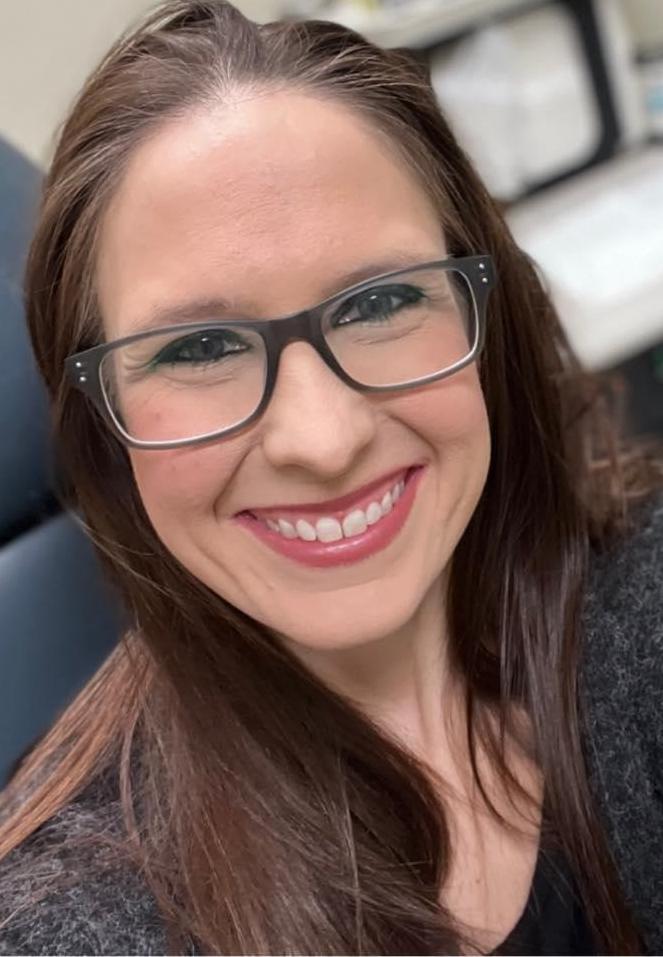
Savannah Hancock Tolbert was a 37-year-old Alabama woman whose death in November 2022 became the subject of a murder investigation after her husband claimed she had taken her own life. What began as a possible suicide case developed into a capital murder prosecution, with forensic evidence challenging the account provided by the man she had married approximately two years earlier.
Her story is featured in 48 Hours: What the Cameras Saw, airing Saturday, October 24, 2026, at 9/8c on CBS. Correspondent Anne-Marie Green examines Savannah’s death, the investigation into her husband, David Telton Tolbert, and the evidence that led a Madison County jury to convict him of capital murder in May 2025.
Savannah was found with a gunshot wound to the head inside a vehicle in Huntsville, Alabama, on November 15, 2022. David told co-workers and investigators that she had shot herself, but the location of the wound, the condition of the vehicle and findings involving the firearm raised questions about his explanation.
On May 8, 2025, David was convicted of capital murder and sentenced to life imprisonment without the possibility of parole. His conviction was upheld on appeal in January 2026, and the Alabama Supreme Court declined to review the case in April.
- “What the Cameras Saw”: 48 Hours Reports on Savannah Hancock Tolbert Homicide October 24 2026
- Who Is David Tolbert and Where Is He Now? 2026 Update & Profile
Who Was Savannah Hancock Tolbert?
Savannah Hancock Tolbert was 37 years old when she died in Huntsville, Alabama. She lived in the northern Alabama region and had been married to David Telton Tolbert for approximately two years.
Her name became known beyond her community after investigators determined that her death was a homicide rather than the suicide described by her husband. The case attracted attention because of the evidence surrounding the shooting and the courtroom testimony that challenged David’s account.
Savannah’s personal circumstances became part of the criminal proceedings. Jurors heard that she had received mental health treatment, a fact the defence raised in support of its argument that she had taken her own life.
Prosecutors argued that her husband had used knowledge of her medical history to make a murder appear to be suicide. The jury’s verdict established that David was responsible for killing her.
The distinction between Savannah’s life and the circumstances of her death is important. Her mental health history became evidence in a criminal trial, but it did not define who she was or establish that she intended to harm herself.
Savannah Hancock Tolbert’s Marriage to David Tolbert
Savannah married David Tolbert approximately two years before her death. Their relationship became a focus of the investigation after David reported that she had shot herself while waiting outside his workplace.
Evidence presented at trial examined difficulties in their marriage. Prosecutors maintained that those circumstances formed part of the background to the killing and the attempt to present Savannah’s death as suicide.
David’s defence challenged the allegation of murder and argued that Savannah had taken her own life. Her previous mental health treatment became one of the subjects considered during the proceedings.
The prosecution responded that David had attempted to influence how others interpreted Savannah’s death by presenting her as suicidal. Madison County prosecutor Ben Gibbons later described this as part of the effort to conceal the crime.
The case required investigators to look beyond the explanation given by Savannah’s husband and examine whether the physical evidence supported his account.
What Happened to Savannah on November 15, 2022?
On November 15, 2022, Savannah was found dead from a gunshot wound to the head inside a vehicle in Huntsville. Her husband, David Tolbert, was at the location and reported that she had shot herself.
According to testimony described in local reporting, David told co-workers that Savannah was waiting outside while he attended to work-related matters. He returned inside and said that she had died by suicide in his vehicle.
Police responded and began examining the circumstances of the shooting. The initial investigation considered suicide as a possible explanation because of the account David had provided.
The evidence recovered from the scene raised questions. Investigators identified a wound to the back of Savannah’s head and examined the condition of the vehicle and the firearm.
The findings did not match the explanation offered by David, according to the prosecution. Detectives began treating the death as a suspected homicide, leading to a criminal investigation focused on her husband.
Why Did Investigators Question the Suicide Explanation?
The location of Savannah’s fatal gunshot wound became one of the most important findings. Authorities reported that she had been shot in the back of the head, raising questions about whether she could have inflicted the injury herself.
Investigators also found no blood inside the vehicle where her body was discovered. The absence of expected blood evidence became part of the prosecution’s argument that the circumstances did not match David’s account.
The firearm recovered during the investigation did not yield fingerprints, according to the Alabama Attorney General’s Office. Detectives considered that finding alongside the wound and other evidence from the scene.
There was no suicide note in the vehicle. While the absence of a note does not determine whether a death was suicide or homicide, investigators included it among the circumstances examined during the case.
Prosecutors argued that the combined findings supported murder rather than a self-inflicted death. The defence maintained that the evidence did not eliminate suicide as a possibility.
The Autopsy Findings That Changed the Investigation
Savannah’s autopsy became central to determining how she died. The examination identified the fatal gunshot wound to the back of her head and provided medical findings used during the subsequent murder trial.
A Madison County forensic pathologist testified that the wound differed from the gunshot injuries she had encountered in suicide cases. She told jurors that she had performed between 200 and 300 suicide autopsies without encountering a gunshot suicide involving a wound to the back of the head.
During the trial, prosecutors asked the pathologist to demonstrate the position required for Savannah to have fired the fatal shot herself. She struggled to position the recovered weapon at the necessary angle.
The demonstration gave jurors an opportunity to evaluate the physical difficulty of the explanation advanced by the defence.
David’s attorney, Bruce Gardner, argued that the autopsy report did not exclude suicide with absolute certainty. The prosecution maintained that the medical evidence, considered alongside the scene findings, supported a homicide.
How Savannah’s Mental Health History Became Part of the Trial
Savannah had received mental health treatment before her death. That history became part of the evidence considered during David Tolbert’s murder trial because his defence argued that she had taken her own life.
Prosecutors challenged the suggestion that her medical history explained the shooting. They argued that David had used information about her circumstances to make his account appear credible.
After the conviction, prosecutor Ben Gibbons said David had attempted to create the impression that Savannah was suicidal, but had failed to account for the forensic evidence.
The prosecution’s argument centred on the circumstances of the fatal injury rather than a claim that Savannah’s treatment history could determine the manner of death.
The jury considered the defence’s suicide argument alongside the physical evidence and found David guilty of capital murder. The verdict established that Savannah’s death was the result of a criminal act.
David Tolbert’s Arrest for Savannah’s Murder
The Huntsville Police Department investigated Savannah’s death after the November 15, 2022, shooting. As detectives examined the medical findings and physical evidence, the case was reclassified as a homicide.
Investigators focused on David’s account of what happened and whether it could be reconciled with the location of the gunshot wound and the condition of the vehicle.
On December 9, 2022, police arrested David Tolbert and charged him with capital murder. The arrest came less than a month after Savannah’s death.
The charge began a legal process that lasted more than two years before the case reached a jury in Madison County.
David maintained that Savannah had died by suicide, while prosecutors prepared a case alleging that he had killed her and attempted to conceal the crime.
What Happened During the Trial for Savannah’s Murder?
David Tolbert stood trial in Madison County in May 2025. Prosecutors presented evidence concerning the shooting, Savannah’s autopsy, the firearm and the condition of the vehicle where her body was discovered.
The state argued that David had staged the circumstances of Savannah’s death to make the shooting appear self-inflicted. Jurors heard testimony about the wound and watched the forensic pathologist demonstrate the position required for Savannah to have fired the gun herself.
The defence maintained that Savannah had died by suicide and challenged the strength of the medical conclusions. Attorney Bruce Gardner argued that the evidence did not establish murder beyond a reasonable doubt.
The jury was asked to determine whether the prosecution had proved that David was responsible for Savannah’s death.
On May 8, 2025, the jury found David guilty of capital murder. The verdict rejected the defence’s account and established his criminal responsibility for the killing.
What Sentence Did David Tolbert Receive?
David Tolbert was sentenced to life imprisonment without the possibility of parole following his capital murder conviction.
The sentence means that he cannot obtain release through the ordinary parole process. His imprisonment is intended to continue for the remainder of his life unless a court changes the conviction or sentence.
The verdict followed more than two years of investigation and legal proceedings, beginning with Savannah’s death in November 2022 and David’s arrest the following month.
The conviction provided a legal determination of what happened to Savannah and rejected the account that her death had been self-inflicted.
David’s defence challenged the outcome through post-trial motions and appeals, but the conviction remained in force.
How Savannah’s Murder Conviction Was Upheld on Appeal
David Tolbert challenged his conviction after the May 2025 trial. His attorneys sought a new trial or a judgment of acquittal, but the trial court denied both requests in June 2025.
The case proceeded to the Alabama Court of Criminal Appeals, where the state defended the jury’s verdict. On January 30, 2026, the court affirmed David’s capital murder conviction.
His request for rehearing was denied on February 27, 2026. The Alabama Supreme Court declined to review the case in April, leaving the conviction and sentence in place.
The appellate decisions confirmed that David’s legal challenges had not succeeded in overturning the judgment reached by the Madison County jury. <Cite refs={[“turn708349search3″,”turn708349search4″,”turn708349search6”]}/>
Where Is David Tolbert Now?
David Telton Tolbert is serving his life sentence at Limestone Correctional Facility in Alabama. His conviction for Savannah’s murder remains in effect following the unsuccessful appeals.
Before the murder case, David had worked as a correctional lieutenant at the same prison. The Alabama Department of Corrections confirmed that he retired from that position on February 1, 2021.
His former employment became an unusual detail of the case because he was later imprisoned at the facility where he had worked. The criminal conviction arose from Savannah’s November 2022 death, more than a year after his retirement. <Cite refs={[“turn708349search1″,”turn708349search3”]}/>
Savannah Hancock Tolbert’s Story Featured on 48 Hours
Savannah’s murder is the subject of 48 Hours: What the Cameras Saw, a CBS investigation reported by Anne-Marie Green. The episode premieres Saturday, October 24, 2026, at 9/8c.
The programme examines how investigators moved from considering suicide to building a capital murder case against Savannah’s husband. The forensic evidence, including the location of the fatal wound and the condition of the vehicle, forms a central part of that account.
The episode also revisits the May 2025 trial, the testimony that challenged David’s explanation and the appeals that followed his conviction.
For Savannah’s family, the case concerns the death of a 37-year-old woman whose husband claimed she had taken her own life. The investigation established that she was the victim of murder, and the courts held David responsible.
What Was the Final Outcome of Savannah Hancock Tolbert’s Case?
Savannah Hancock Tolbert was murdered on November 15, 2022. Her husband, David Tolbert, reported that she had died by suicide, but investigators found evidence that contradicted his account.
The Huntsville Police Department arrested David on December 9, 2022. After a trial in Madison County, a jury convicted him of capital murder on May 8, 2025.
He received life imprisonment without the possibility of parole. His conviction was upheld by the Alabama Court of Criminal Appeals in January 2026, and the Alabama Supreme Court declined to intervene in April.
Savannah’s case illustrates the importance of forensic examination when a death scene raises questions about an initial explanation. Her husband was convicted after prosecutors demonstrated that the physical evidence did not support his account of suicide.
The 48 Hours investigation returns attention to Savannah herself, the circumstances of her death and the evidence that established the truth of what happened to her.
More “What the Cameras Saw”
- “What the Cameras Saw”: 48 Hours Reports on Savannah Hancock Tolbert Homicide October 24 2026
- Who Was Savannah Hancock Tolbert & What Happened to Her? 2026 Update & Profile
- Who Is David Tolbert and Where Is He Now? 2026 Update & Profile
More Feature Articles
- “Help Dale Find Dee”: 20/20 Reports on Dee Warner Homicide October 23 2026
- “Blindsided”: Brandon Boudreaux Breaks His Silence on Lori Vallow Daybell Murder Plot on Dateline NBC October 23 2026 Episode
- “What the Cameras Saw”: 48 Hours Reports on Savannah Hancock Tolbert Homicide October 24 2026
- “The Mansion Above Dale Hollow Lake”: 48 Hours Reports on Michael Harding Homicide October 24 2026