


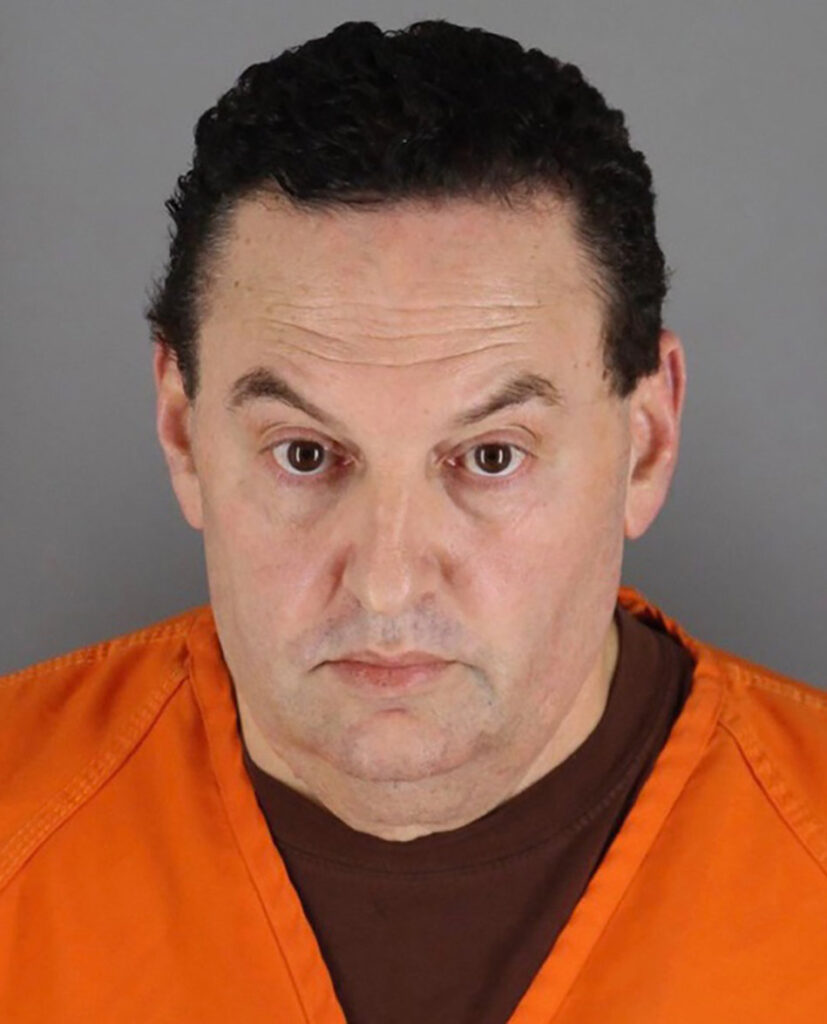
Jerry Westrom was unknown to investigators for more than 25 years after the 1993 murder of Jeanie Childs in Minneapolis. Despite extensive physical evidence collected at the crime scene, advances in forensic science had not yet reached the point where detectives could identify him. That changed in 2019 when forensic investigative genetic genealogy, combined with DNA testing and footprint analysis, linked him to one of Minnesota’s longest-running cold cases.
Westrom’s conviction attracted national attention because it demonstrated how modern DNA technology could solve crimes that had remained unsolved for decades. The case also highlighted the growing use of investigative genealogy, a technique that has transformed cold case investigations across the United States.
- “The Footprint”: 48 Hours Reports on Jeanie Childs Homicide on July 18 2026
- Who Was Jeanie Childs & What Happened to Her? 2026 Update & Profile
Jerry Westrom’s Background
Jerry Westrom was born in 1966 and grew up in Minnesota. At the time investigators identified him as a suspect, he was a businessman, husband and father who was active in youth hockey. Friends and acquaintances knew him as a hockey parent who regularly attended games involving his children.
Before his arrest, Westrom had accumulated a criminal record that included multiple convictions for driving while intoxicated. Court records also showed he had been arrested twice on allegations of soliciting a prostitute, although one of those cases was dismissed. Those prior incidents became public only after he was charged with Jeanie Childs’ murder.
The Investigation That Led to Westrom
For more than two decades, investigators had no viable suspect despite preserving significant physical evidence from the crime scene. Minneapolis police reopened the investigation in 2015, hoping advances in forensic science would produce new leads.
The breakthrough came after detectives turned to forensic investigative genetic genealogy, the same investigative method that had recently helped identify the Golden State Killer. Scientists developed a DNA profile from biological evidence recovered in Childs’ apartment and used genealogy databases to identify possible family connections.
That process eventually pointed investigators toward Westrom as a potential suspect.
The Napkin That Provided DNA
Investigators needed a direct DNA sample from Westrom without alerting him to the investigation. FBI agents and local detectives conducted surveillance while he attended a youth hockey game in Wisconsin.
During the game, investigators watched Westrom purchase a hot dog, eat it in the arena lobby and wipe his mouth with a napkin before throwing it into a public garbage can. Detectives recovered the discarded napkin and submitted it for forensic testing.
Laboratory analysis showed the DNA recovered from the napkin matched biological evidence preserved from Jeanie Childs’ apartment since 1993. Additional testing linked Westrom’s DNA to several items collected at the crime scene, including semen recovered from bedding and other biological material.
The Bloody Footprints Strengthened the Case
DNA was not the only evidence presented against Westrom.
Crime scene investigators had preserved several bloody barefoot impressions found throughout Childs’ apartment. Because Childs was found wearing socks, investigators concluded the footprints belonged to the killer.
Forensic specialists later compared known footprints taken from Westrom with the impressions documented in 1993. According to testimony presented at trial, the friction ridge detail on the soles of his feet matched the bloody footprints recovered from the apartment.
Jurors later identified the footprint evidence as one of the strongest parts of the prosecution’s case because it placed Westrom inside the apartment during the murder rather than simply showing he had been there at some earlier time.
Arrest, Trial and Conviction
Westrom was arrested in February 2019 and initially charged with second-degree murder. A grand jury later returned an indictment charging him with first-degree premeditated murder.
Throughout the investigation and trial, Westrom denied ever being inside Childs’ apartment. His defense argued investigators had identified the wrong suspect and challenged portions of the forensic evidence presented by prosecutors.
The trial began in August 2022 in Hennepin County District Court. Prosecutors presented testimony from DNA experts, forensic scientists, investigators and footprint specialists who explained how the evidence connected Westrom to the murder.
After approximately two hours of deliberation, the jury found Westrom guilty of both first-degree premeditated murder and second-degree murder.
Appeals After the Conviction
Westrom appealed his convictions to the Minnesota Supreme Court, raising several legal arguments challenging both the evidence and the trial.
In May 2024, the Minnesota Supreme Court rejected six of his seven claims. The justices upheld his conviction for first-degree premeditated murder but ruled that he could not legally remain convicted of both first-degree and second-degree murder for the same homicide. As a result, the court vacated the second-degree murder conviction while leaving the first-degree conviction and sentence intact.
Westrom later petitioned the United States Supreme Court for review, but the justices declined to hear the case. He has also sought assistance from the Great North Innocence Project while continuing to maintain his innocence.
Where Is Jerry Westrom Now?
As of 2026, Jerry Westrom remains incarcerated at the Minnesota Correctional Facility – St. Cloud, serving a life sentence with the possibility of parole after 30 years.
Under his sentence, he will not become eligible for parole until 2052, when he will be approximately 86 years old. His first-degree murder conviction remains in effect following the Minnesota Supreme Court’s decision and the U.S. Supreme Court’s refusal to review the case.
Although Westrom has continued pursuing post-conviction avenues while maintaining that he was wrongly convicted, no court has overturned the jury’s verdict. For Jeanie Childs’ family, the conviction brought the first measure of justice after waiting nearly three decades for the person responsible for her murder to be identified and held accountable.
More “The Footprint”
- “The Footprint”: 48 Hours Reports on Jeanie Childs Homicide on July 18 2026
- Who Was Jeanie Childs & What Happened to Her? 2026 Update & Profile
- Who Is Jerry Westrom & Where Is He Now? 2026 Update & Profile
More Feature Articles
- “Where Are You, Jacob?”: 20/20 Revisits the Jacob Wetterling Case July 17 2026
- “Slow Burn”: Dateline NBC Reports on Caneiro Family Homicides July 17 2026
- “Secrets of the Sliding Door”: Dateline NBC Reports on Simeonette Mapes-Crupi Homicide July 18 2026
- “The Footprint”: 48 Hours Reports on Jeanie Childs Homicide on July 18 2026