


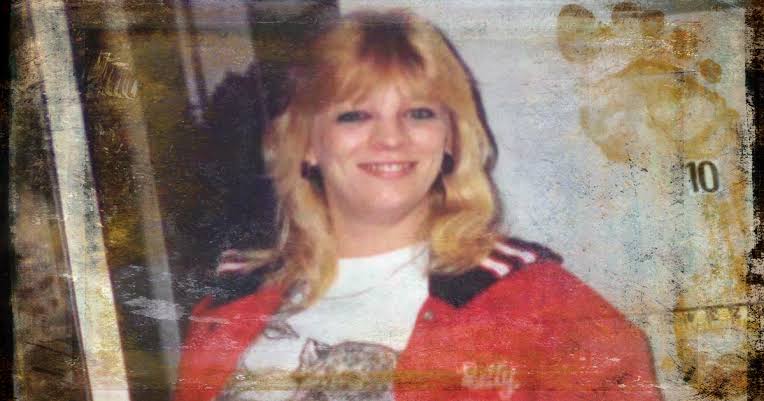
When Jeanie Childs was found murdered inside her Minneapolis apartment in June 1993, detectives were confronted with one of the most violent crime scenes they had ever investigated. Her killing remained unsolved for more than 25 years before advances in DNA technology and forensic investigative genetic genealogy identified her killer. Today, Childs’ case is remembered not only because of the forensic breakthrough that solved it, but because her family spent decades ensuring she would not be forgotten.
The investigation became one of Minnesota’s best-known cold cases, but behind the forensic evidence and courtroom proceedings was a woman whose family has consistently said she deserved to be remembered for far more than the circumstances of her death.
- “The Footprint”: 48 Hours Reports on Jeanie Childs Homicide on July 18 2026
- Who Is Jerry Westrom & Where Is He Now? 2026 Update & Profile
Jeanie Childs’ Early Life
Jeanie Childs was 35 years old when she was killed on June 13, 1993. She lived at the Horn Towers apartment complex in south Minneapolis, Minnesota.
According to her family, Childs experienced difficulties from an early age. Her sister, Cindy Blumer, said she began running away from home when she was around 13 years old. As an adult, Childs became involved in sex work, a circumstance that investigators acknowledged while examining her final days.
Despite the hardships she experienced, her family has repeatedly described her as someone they deeply loved. They have spoken publicly about wanting people to remember that she was a daughter and sister rather than defining her solely by the choices she made during difficult periods of her life.
The Final Days Before Her Death
In June 1993, Childs was living alone in her Minneapolis apartment. Investigators believe she encountered her killer inside the residence during the early hours of June 13.
While authorities have never established a definitive motive, prosecutors argued the evidence showed Childs and her attacker were together inside the apartment before the violence began. The investigation later established that the suspect’s DNA was present on several items recovered from the scene.
Exactly what triggered the fatal confrontation remains unknown. Prosecutors focused their case on proving who committed the murder rather than explaining why it happened.
A Brutal Attack
Childs was discovered after suffering one of the most violent attacks documented in Minneapolis homicide investigations during that period.
An autopsy found she had been stabbed approximately 65 times. The attack continued after she had already sustained fatal injuries, with investigators describing the scene as exceptionally bloody. Family members later said some of the injuries demonstrated the intense violence inflicted upon her body.
The apartment itself contained blood throughout multiple rooms, indicating movement during or after the assault. Crime scene investigators carefully documented every piece of evidence, knowing that advances in forensic science might one day allow additional testing.
The Clue That Changed the Investigation
Among the evidence recovered at the apartment were several bloody bare footprints left throughout the residence.
The footprints immediately attracted investigators’ attention because Childs was found still wearing socks. Detectives concluded the bloody impressions could not have been made by the victim and instead almost certainly belonged to the person responsible for her death.
Although DNA technology in 1993 could not identify a suspect, investigators preserved both the biological evidence and the footprints, believing they could eventually become critical to solving the case.
A Family That Never Gave Up
For Betty Eakman, Childs’ mother, the murder marked the beginning of a decades-long search for justice.
Eakman later recalled learning about the homicide while working in hospice care. A television news report mentioned that a body had been removed from an apartment building, and she immediately recognized it as the building where her daughter lived. She has said that moment remains one of the most painful memories of her life.
Throughout the years that followed, Eakman maintained that she would never stop seeking answers. She often spoke publicly about her belief that her daughter deserved justice regardless of the life she had lived.
Childs’ sister, Cindy Blumer, also became an advocate for keeping attention on the investigation. She challenged suggestions that Childs’ occupation somehow explained or excused the crime, emphasizing that no one deserved to die in such a violent manner.
A Cold Case for More Than 25 Years
Despite collecting extensive physical evidence, investigators were unable to identify a suspect using the forensic technology available in the early 1990s.
The case remained unsolved for decades while detectives continued preserving evidence in the hope that future scientific advances would provide new opportunities for testing. Minneapolis police reopened the investigation in 2015, and several years later investigators employed forensic investigative genetic genealogy, the same emerging technique that had recently helped identify the Golden State Killer.
That work eventually led investigators to Jerry Westrom. DNA recovered from discarded items matched biological evidence collected from Childs’ apartment, while forensic analysis concluded that Westrom’s footprints matched the bloody impressions left at the crime scene.
Justice After Nearly Three Decades
Jerry Westrom was arrested in February 2019 and later charged with first-degree premeditated murder.
During his 2022 trial, prosecutors relied heavily on the combination of DNA evidence and the bloody footprints recovered in 1993. After approximately two hours of deliberation, the jury found him guilty.
Westrom received a life sentence with the possibility of parole after 30 years. In 2024, the Minnesota Supreme Court upheld his conviction for first-degree murder while vacating a second-degree murder conviction because both convictions arose from the same homicide. His life sentence remained unchanged, and the U.S. Supreme Court later declined to hear his appeal.
Remembering Jeanie Childs
For Childs’ family, the conviction brought a measure of closure but could never erase the loss they experienced.
Betty Eakman has spoken about the lasting pain of losing a child, saying that a part of her heart disappeared with Jeanie. Cindy Blumer has echoed those feelings, explaining that families never fully recover from such a loss.
The resolution of the case also became an important milestone in forensic science. The evidence collected in 1993, particularly the bloody footprints and preserved DNA, demonstrated how careful crime scene work can remain valuable for decades. While advances in technology eventually identified Childs’ killer, her family has continued to emphasize the message they have shared since the beginning of the investigation: Jeanie Childs was a human being whose life mattered, and she deserved justice.
More “The Footprint”
- “The Footprint”: 48 Hours Reports on Jeanie Childs Homicide on July 18 2026
- Who Was Jeanie Childs & What Happened to Her? 2026 Update & Profile
- Who Is Jerry Westrom & Where Is He Now? 2026 Update & Profile
More Feature Articles
- “Where Are You, Jacob?”: 20/20 Revisits the Jacob Wetterling Case July 17 2026
- “Slow Burn”: Dateline NBC Reports on Caneiro Family Homicides July 17 2026
- “Secrets of the Sliding Door”: Dateline NBC Reports on Simeonette Mapes-Crupi Homicide July 18 2026
- “The Footprint”: 48 Hours Reports on Jeanie Childs Homicide on July 18 2026