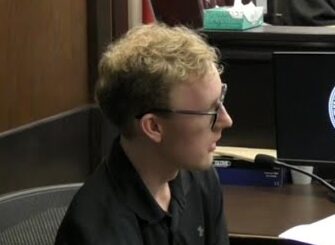
Who Is John Kogut & Where Is He Now? 2026 Update & Profile

John Kogut was one of three men convicted in the 1984 rape and murder of Theresa Fusco, a case that later became a significant example of wrongful conviction in the United States. At the time of his arrest in 1985, Kogut was a 21-year-old from Long Island who had no direct physical evidence tying him to the crime. His name surfaced during a wide police investigation that involved hundreds of interviews.
Investigators focused on Kogut after linking him to others who had been questioned in connection with the case. He was brought in for interrogation and, after many hours in custody, signed a statement that prosecutors later described as a confession. That statement became the central piece of evidence used against him at trial.
- “The Killing of Theresa Fusco”: 48 Hours Reports April 25 2026
- Who Was Theresa Fusco & What Happened to Her? 2026 Update & Profile
- Who Is Richard Bilodeau & Where Is He Now? 2026 Update & Profile
- Who Is John Restivo & Where Is He Now? 2026 Update & Profile
- Who Is Dennis Halstead & Where Is He Now? 2026 Update & Profile
The Confession and Controversy
Kogut’s confession has remained one of the most debated aspects of the case. According to records, he was subjected to extended questioning that lasted close to 18 hours. During that time, multiple versions of his statement were produced before a final version was written down by a detective and later recorded on video .
The confession contained details that prosecutors argued matched the known facts of the crime. However, critics later pointed out that it did not include information that had not already been disclosed by investigators. Kogut maintained that he was innocent and later argued that the statement was coerced under pressure during the interrogation process.
Trial, Conviction, and Prison Sentence
In 1986, Kogut was convicted of murder and rape and sentenced to 31 years to life in prison. Prosecutors relied heavily on the confession, along with forensic testimony that claimed hairs found in a co-defendant’s van were consistent with Theresa Fusco’s.
Additional testimony from informants was also presented at trial. Kogut and his co-defendants denied involvement and presented alibi defenses. Despite this, all three men were convicted in separate trials and began serving lengthy prison sentences.
Kogut ultimately spent nearly two decades behind bars. His case, like those of his co-defendants, drew attention from legal advocates who questioned the reliability of the evidence used to secure the convictions.
DNA Evidence and the Collapse of the Case
The turning point came years later with the development of modern DNA testing. Early testing excluded Kogut and the other two men from biological evidence recovered from Theresa Fusco’s body. Prosecutors initially challenged those findings, arguing that the tested samples may not have been definitive.
In 2003, an untested vaginal swab was discovered through police property records. DNA analysis of that sample again excluded all three men. As a result, their convictions were vacated, and Kogut was released after serving about 19 years in prison .
The case shifted from a closed conviction to a major wrongful conviction review, raising questions about interrogation practices and forensic evidence used in the 1980s.
Retrial and Acquittal
Despite the DNA findings, prosecutors chose to retry Kogut in 2005. The state argued that the DNA evidence could be explained by a prior encounter unrelated to the crime, while the defense focused on the unreliability of the confession and the lack of physical evidence linking Kogut to the murder.
The retrial introduced expert testimony on false confessions, a development that had not been permitted during the original trial. The defense also challenged the forensic hair evidence, arguing it was flawed and possibly contaminated.
On December 21, 2005, a judge found John Kogut not guilty after a bench trial . Shortly after, charges against his co-defendants were dismissed. The decision marked a complete reversal of the original outcome and formally cleared Kogut of the crime.
Life After Release
Following his release in 2003 and acquittal in 2005, Kogut faced the challenge of rebuilding his life after nearly two decades in prison. Reports indicate that the transition was difficult, as he had spent much of his adult life incarcerated .
He pursued legal action in connection with his wrongful conviction, though his individual civil case did not result in a successful outcome. His co-defendants were awarded damages in a separate lawsuit against Nassau County.
Where John Kogut Is Now
Public information about John Kogut’s current life remains limited. He is no longer under any criminal charges related to the Theresa Fusco case and has been fully exonerated through DNA evidence and acquittal in court.
Kogut’s case continues to be referenced in discussions about wrongful convictions, particularly those involving false confessions and disputed forensic science. His experience reflects the long-term impact of a conviction that was later overturned, and the challenges faced by individuals seeking to move forward after exoneration.
More “The Killing of Theresa Fusco”
- “The Killing of Theresa Fusco”: 48 Hours Reports April 25 2026
- Who Was Theresa Fusco & What Happened to Her? 2026 Update & Profile
- Who Is Richard Bilodeau & Where Is He Now? 2026 Update & Profile
- Who Is John Kogut & Where Is He Now? 2026 Update & Profile
- Who Is John Restivo & Where Is He Now? 2026 Update & Profile
- Who Is Dennis Halstead & Where Is He Now? 2026 Update & Profile
More Feature Articles
- “Book of Lies”: Dateline Reports on Kouri Richins Case April 24 2026
- 20/20 Pre-Empted April 24 2026 for NFL Draft Coverage on ABC
- “Down the Rabbit Hole”: Dateline Reports on Mary Ann Murphy Homicide April 25 2026
- “The Killing of Theresa Fusco”: 48 Hours Reports April 25 2026
- 60 Minutes Reports on “Ben Sasse” & “The Pigeon Mafia” on April 26 2026