


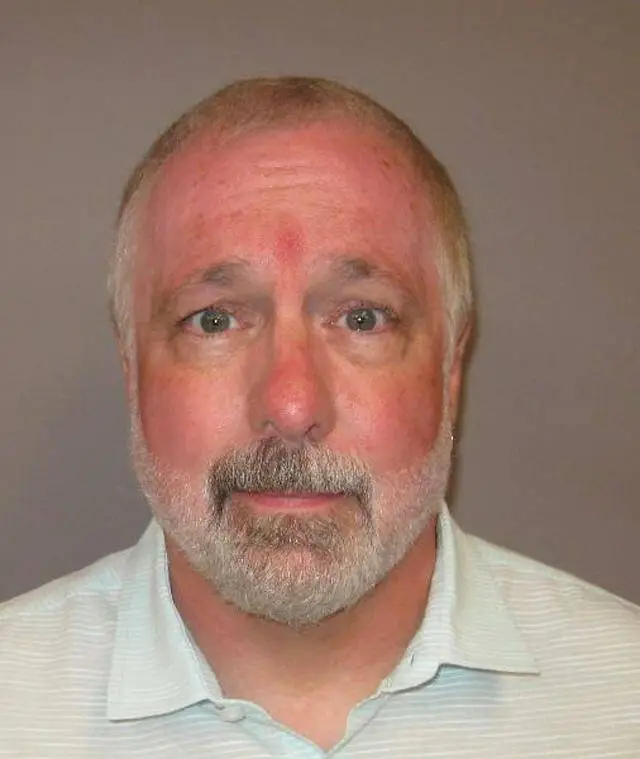
Mitchell Gaff, a convicted sex offender whose history of violence against women extended across decades, is serving a sentence of 50 years to life in prison for the murders of Judith “Judy” Weaver and Susan Vesey in Everett, Washington. The two women were killed in separate attacks during the 1980s, but their murders remained unsolved until advances in forensic DNA testing and an undercover chewing gum operation connected Gaff to the crimes.
His case is featured in the CBS true-crime series 48 Hours, in an episode titled “The Detective & the Chewing Gum Sting,” airing Saturday, October 17, 2026, at 10/9c. Correspondent Peter Van Sant examines how Everett Police Department Detective Susan Logothetti identified Gaff through decades-old evidence and obtained a DNA sample from chewing gum he discarded during a staged consumer taste test.
Gaff pleaded guilty to both first-degree murders on April 16, 2026. On May 13, he received a prison sentence that is expected to keep him incarcerated for the remainder of his life. His conviction brought a legal resolution to two investigations that had remained open for more than four decades.
- “The Detective & the Chewing Gum Sting”: 48 Hours Reports on How Mitchell Gaff Was Caught for the Homicides of Judy Weaver and Susan Vesey October 17 2026
- Who Was Judith “Judy” Weaver & What Happened to Her? 2026 Update & Profile
- Who Was Susan Vesey & What Happened to Her? 2026 Update & Profile
Who Is Mitchell Gaff?
Mitchell Gaff is an American convicted murderer and sex offender whose crimes took place in and around Everett, Washington, a city north of Seattle. His criminal history includes violent attacks against women, sexual assault convictions and two murders committed four years apart.
Gaff was identified as the killer of Susan Vesey, a 21-year-old mother murdered in July 1980, and Judith Weaver, a 42-year-old woman killed in June 1984. Both women were attacked inside their homes, restrained, sexually assaulted and strangled.
Before his murder convictions, Gaff had spent years in the criminal justice system because of other violent sexual offenses. His record included an attack on a woman in 1979 and the rape of two teenage sisters in 1984.
He also underwent psychological evaluations and was diagnosed with sexual sadism. Separate legal proceedings in 1994 and 2000 resulted in findings that he met Washington state’s criteria for classification as a sexually violent predator.
At one point, Gaff changed his legal name to Sam Price. The name change became part of the background examined during reporting on his criminal history and the investigation that identified him as a double murderer.
Mitchell Gaff’s Early Criminal History Began Before the Murders
One of the earliest documented violent offenses involving Gaff occurred in November 1979, when he attacked a 29-year-old woman named Jacqueline O’Brien in Everett.
According to court records, Gaff had noticed O’Brien while she was mowing a lawn. He targeted her and attacked her inside her garage, beating her and attempting to restrain her wrists.
O’Brien resisted and escaped. Her actions helped police identify Gaff, who was charged with assault and burglary in connection with the attack.
He received a sentence involving five years of probation and one year of work release. The punishment did not prevent him from committing further violent offenses.
During a psychological interview in 1994, Gaff acknowledged that he had intended to rape O’Brien. His admission established the sexual motivation behind an attack that had taken place approximately 15 years before the assessment.
O’Brien survived, but the experience affected her life for decades. She would return to court in May 2026 to address Gaff during sentencing for the murders of Weaver and Vesey.
Gaff Murdered Susan Vesey in July 1980
On July 12, 1980, Susan Vesey was found murdered inside her apartment in Everett. She had turned 21 the previous day and was the mother of two young children.
Her daughter, Deborah Newton, was a toddler, while her son, Joshua Vesey, was an infant. Both children were inside the apartment when the attack occurred and survived.
According to investigators and court records, Gaff entered the apartment and attacked Susan, restraining her with electrical cords before sexually assaulting and strangling her.
Gaff did not know Susan before the attack, according to his subsequent admissions to investigators.
The murder left two children without their mother and created uncertainty for Susan’s family. Police questioned several people during the original investigation, including her husband, Ken Vesey, but did not identify Gaff as the killer.
The case remained unsolved for more than 45 years. Preserved evidence from the crime scene would provide the DNA connection needed to identify Gaff decades after Susan’s death.
Judith Weaver Became Gaff’s Second Known Murder Victim in 1984
In June 1984, Judith “Judy” Weaver, 42, was murdered inside her home on Rucker Avenue in Everett.
Weaver had returned home from work before the attack. According to court records, Gaff beat her, sexually assaulted her, restrained her and strangled her.
Her wrists were bound with ligatures. After the attack, Gaff set a fire in her bedroom in an apparent attempt to destroy evidence of the crime.
Firefighters responding to the blaze discovered Weaver’s body. The investigation established that she had been murdered, but detectives were unable to identify her killer.
The case generated leads and involved questioning potential suspects. Gaff was not identified as the perpetrator during the original investigation.
The evidence collected from Weaver’s home included the materials used to restrain her. Those ligatures became central to the cold-case investigation that identified Gaff through forensic DNA testing in 2023.
Gaff Was Convicted of Raping Two Teenage Sisters
Approximately three months after Weaver’s murder, Gaff committed another violent sexual offense in Everett.
He broke into a residence and raped two teenage sisters. The attack resulted in criminal charges, convictions and a substantial prison sentence.
Gaff served approximately 21 years in prison in connection with the offenses, according to reporting by NBC News and KING 5.
His criminal history also led to assessments concerning his sexual violence and the risk he posed to others.
In separate proceedings in 1994 and 2000, juries determined that he met the legal criteria for classification as a sexually violent predator.
Gaff was confined at the McNeil Island facility, which houses individuals subject to Washington’s civil commitment system for sexually violent predators.
His previous convictions placed his DNA profile within the criminal justice system. That record would become crucial when investigators tested evidence from Weaver’s murder scene.
Why Was Mitchell Gaff Not Caught for the Murders in the 1980s?
The murders of Susan Vesey and Judith Weaver occurred before modern forensic DNA profiling became an established investigative tool.
Police examining the crime scenes in 1980 and 1984 relied on physical evidence, witness statements, interviews and other investigative methods available at the time.
Although investigators collected materials from both murder scenes, they could not use those items to conduct the type of DNA comparisons that became possible in later decades.
Gaff was not identified as a suspect in either original murder investigation, despite his criminal history involving violence against women.
The cases remained separate, and investigators questioned other people while attempting to establish who had killed the victims.
The preservation of evidence became one of the most important factors in the eventual resolution. The cords used to restrain both women retained biological material that could be examined through advances in forensic technology.
When investigators returned to the evidence decades later, DNA analysis supplied connections that had been unavailable during the original investigations.
Detective Susan Logothetti Identified Gaff Through DNA Evidence
Everett Police Department Detective Susan Logothetti played a central role in identifying Gaff as the killer of Judy Weaver.
Logothetti reviewed evidence preserved from Weaver’s 1984 murder, including ligatures used to bind her wrists.
The materials were submitted for forensic DNA testing. In November 2023, investigators obtained a match through the FBI’s Combined DNA Index System, known as CODIS.
The database comparison identified Mitchell Gaff as a potential contributor to DNA recovered from the crime scene.
The result represented a breakthrough after nearly four decades without an arrest.
Gaff’s DNA profile was available because of his previous criminal convictions. The database match allowed investigators to connect him with evidence recovered from Weaver’s murder.
Detectives wanted a fresh sample to confirm the result and strengthen the case. Rather than confront Gaff, they developed an undercover operation designed to obtain biological material from an item he would discard.
How Police Tricked Mitchell Gaff Into Chewing Gum
In January 2024, undercover investigators approached Gaff while posing as representatives conducting a chewing gum flavor survey.
The operation was presented as a consumer taste test connected to the development of a gum product for Safeway.
Gaff agreed to participate and chewed samples provided by the undercover team.
After tasting the gum, he discarded the pieces into a dish supplied by the investigators.
The officers collected the discarded gum and submitted it for forensic testing. The samples contained saliva and cells suitable for DNA extraction.
Laboratory analysis established that the DNA recovered from the gum matched evidence associated with Weaver’s murder.
The result provided investigators with a fresh biological sample connected to Gaff and supported the earlier CODIS finding.
The operation became a defining element of the case because it allowed detectives to obtain the evidence without informing Gaff that he was under investigation for murder.
Mitchell Gaff Was Arrested in May 2024
Following the DNA confirmation, police arrested Gaff in May 2024 and charged him in connection with the murder of Judith Weaver.
The arrest came approximately 40 years after Weaver had been found dead inside her Everett home.
Investigators had connected Gaff to the crime through DNA recovered from the ligatures used to restrain Weaver and the biological sample obtained during the undercover chewing gum operation.
His criminal history, including convictions for sexual violence, formed part of the background to the prosecution.
At the time of the arrest, Gaff had not been charged with Susan Vesey’s murder.
The investigation into Vesey’s death remained unresolved until Detective Logothetti reviewed the case and arranged for evidence to undergo forensic testing.
That review would establish a second DNA connection to Gaff and lead to another first-degree murder charge.
Investigators Connected Gaff to Susan Vesey’s Murder
In January 2025, Susan Vesey’s husband, Ken Vesey, contacted Detective Logothetti after the death of his brother Gerry, who had been questioned during the original investigation.
The contact prompted Logothetti to examine Susan’s case. She identified similarities between the murders of Vesey and Weaver.
Both victims had been attacked inside their homes, restrained with electrical cords, sexually assaulted and strangled.
Logothetti arranged for evidence from the Vesey investigation to be submitted to the state crime laboratory.
In April 2025, forensic specialists reported strong support for the proposition that Gaff’s DNA was present on a piece of white electrical cord used to bind Susan.
Further testing and examination continued. In March 2026, investigators received confirmation of a DNA match connecting Gaff to the Vesey evidence.
The finding established a forensic connection between Gaff and both murders.
For Susan’s family, the development identified the man responsible for a crime that had remained unresolved for more than 45 years.
Mitchell Gaff Pleaded Guilty to Both Murders in April 2026
On April 16, 2026, Gaff pleaded guilty to two counts of first-degree murder in connection with the deaths of Judith Weaver and Susan Vesey.
The pleas took place in Snohomish County Superior Court and brought the criminal prosecutions toward their conclusion.
Gaff admitted killing both women and provided details that investigators said were consistent with evidence collected during the murder investigations.
According to reporting on the case, he told investigators that he had not known either victim before the attacks.
His admissions established responsibility for crimes committed in 1980 and 1984, resolving the question of who had killed the two women.
Because Gaff pleaded guilty, the murder charges did not proceed to contested jury trials.
The remaining legal issue concerned sentencing. The court had to consider the sentencing laws applicable to offenses committed during the 1980s, along with Gaff’s criminal record and the circumstances of the murders.
What Happened at Mitchell Gaff’s Sentencing?
Gaff appeared in Snohomish County Superior Court on May 13, 2026, for sentencing.
Relatives of both murder victims attended the hearing, along with survivors and others affected by his crimes.
The court heard victim impact statements describing the loss of Susan Vesey and Judith Weaver and the decades their families had spent without answers.
Susan’s son, Joshua Vesey, addressed the court through a remote appearance. He described the impact of losing his mother when he was an infant and the uncertainty that had affected his family.
Susan’s daughter, Deborah Newton, submitted a statement about the events in her life that she had been unable to share with her mother.
Judy Weaver’s relatives also spoke about their loss. Her brother, Leon Gregory, described family members who had died without learning who had killed her.
Weaver’s daughter, Kathy Myers, described losing her mother at age 20 and the fact that her children had never known their grandmother.
The hearing included testimony from Jacqueline O’Brien, who had survived Gaff’s 1979 attack. She described the violence she experienced and the effect it had on her life.
Gaff Apologized to the Victims’ Families
Before receiving his sentence, Gaff addressed the court and acknowledged responsibility for his crimes.
He referred to drugs and alcohol as factors in his violent behavior but said that he had no excuse or defense for his actions.
His statement followed hours of testimony and victim impact statements describing the consequences of the murders.
The court also considered Gaff’s criminal history, including his convictions for sexual assault and the earlier attack on Jacqueline O’Brien.
Prosecutors sought a substantial sentence based on the seriousness of the crimes and the history of violence against women.
Defense attorneys requested the minimum sentence permitted under the older Washington sentencing laws applicable to the offenses.
The judge rejected the request for a lesser sentence, citing the severity of the murders and Gaff’s history of sexually motivated violence.
What Sentence Did Mitchell Gaff Receive?
On May 13, 2026, Mitchell Gaff was sentenced to 50 years to life in prison for the first-degree murders of Judith Weaver and Susan Vesey.
The judge considered the circumstances of both murders, Gaff’s criminal history and the decades during which the victims’ families had waited for answers.
The court also examined his history of sexual violence and concerns about his efforts to minimize or conceal the extent of his conduct during previous proceedings.
The sentence established a minimum prison term of 50 years before any potential release under the applicable legal framework.
Gaff was already an older man when the sentence was imposed, making it unlikely that he would live long enough to become eligible for release.
The punishment followed his guilty pleas and admissions in open court. There was no contested murder trial because he accepted criminal responsibility for both killings.
The outcome provided a legal resolution to two murder investigations that had remained unsolved for more than four decades.
Where Is Mitchell Gaff Now in 2026?
As of October 2026, Mitchell Gaff is serving his sentence of 50 years to life in the Washington state correctional system following his convictions for two counts of first-degree murder.
His sentence was imposed on May 13, 2026, in Snohomish County Superior Court. The available reporting does not establish his specific current prison facility.
Before his murder convictions, Gaff had spent years in prison and under civil commitment because of his previous sexual offenses.
His history included the rape of two teenage sisters, findings that he met Washington’s criteria for classification as a sexually violent predator and confinement at the McNeil Island facility.
His new prison sentence is separate from those earlier proceedings and concerns the murders of Susan Vesey and Judith Weaver.
With a minimum term of 50 years, Gaff is expected to remain incarcerated for the rest of his life.
How Old Is Mitchell Gaff?
Published accounts of Gaff’s age at sentencing contain a discrepancy.
NBC News and PEOPLE identified him as 68 in May 2026, while FOX 13 Seattle reported that he was 74.
The difference means his precise age cannot be established from those reports alone without confirmation from court or correctional records.
Regardless of the discrepancy, Gaff was sentenced to a minimum term of 50 years in prison in May 2026.
The sentence makes the prospect of release during his lifetime remote.
His age was one factor in the broader context of the sentencing, but the judge focused on the seriousness of the crimes, his history of sexual violence and the effect on the victims’ families.
Why Mitchell Gaff’s Case Became a Major Cold-Case Investigation
The investigation attracted national attention because it combined decades-old murder evidence with an unusual undercover operation.
Detective Susan Logothetti’s examination of the Weaver evidence produced a CODIS match in November 2023. The staged chewing gum taste test in January 2024 provided a fresh DNA sample that confirmed the connection to Gaff.
His arrest in May 2024 resolved the central question in Weaver’s murder investigation.
The subsequent review of Susan Vesey’s case produced another forensic connection and established that Gaff had killed two women in separate attacks four years apart.
The case also drew attention to his criminal history. Gaff had been convicted of sexual offenses and subjected to proceedings concerning his risk of sexual violence, yet his involvement in the two murders had remained unknown for decades.
The guilty pleas in April 2026 and sentencing in May brought an end to the prosecutions.
For the families of Weaver and Vesey, the outcome meant that the man responsible had been identified, had admitted his crimes and had received a prison sentence.
Mitchell Gaff’s Crimes Featured on 48 Hours
CBS examines the investigation in 48 Hours: “The Detective & the Chewing Gum Sting,” reported by Peter Van Sant.
The episode focuses on how investigators connected Gaff to Judith Weaver’s murder through preserved DNA evidence and how an undercover taste test supplied the sample needed to confirm his identity.
It also explores the connection to Susan Vesey’s murder and the years during which both families waited for answers.
The case illustrates the role of forensic advances in solving historical crimes and the importance of preserving evidence from investigations that remain unresolved.
Gaff’s admissions and sentencing brought legal closure to the two murder cases, but the consequences of his crimes continue to affect the victims’ families.
48 Hours: “The Detective & the Chewing Gum Sting” airs Saturday, October 17, 2026, at 10/9c on CBS, with the episode also available to stream on Paramount+.
More “The Detective & the Chewing Gum Sting”
- “The Detective & the Chewing Gum Sting”: 48 Hours Reports on How Mitchell Gaff Was Caught for the Homicides of Judy Weaver and Susan Vesey October 17 2026
- Who Is Mitchell Gaff & Where Is He Now? 2026 Update & Profile
- Who Was Judith “Judy” Weaver & What Happened to Her? 2026 Update & Profile
- Who Was Susan Vesey & What Happened to Her? 2026 Update & Profile
More Feature Articles
- “The Suitcase Murders”: 20/20 Reports on Steven Zelich Case & Jenny Gamez and Laura Simonson Homicides October 16 2026
- “The Betrayal of Kirby Carpenter”: Dateline NBC Reports October 16 2026
- “The Corn Rake Witness”: 48 Hours Reports on Amy Mullis Homicide October 17 2026
- “The Detective & the Chewing Gum Sting”: 48 Hours Reports on How Mitchell Gaff Was Caught for the Homicides of Judy Weaver and Susan Vesey October 17 2026
- 60 Minutes Reports on “The Vote”, “Up in the Air” & “Sacha Baron Cohen” October 18 2026