


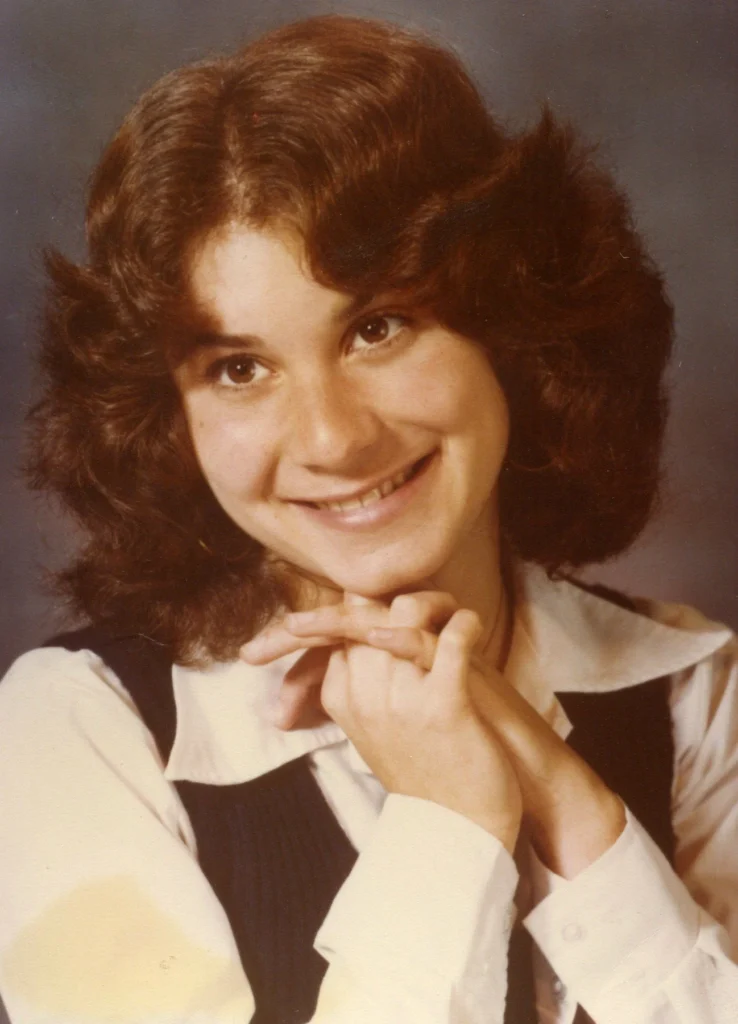
Catina Rose Salarno was an 18-year-old college freshman whose murder in 1979 devastated her family and became one of California’s most influential victims’ rights cases. Remembered as a compassionate, ambitious and family-oriented young woman, Catina had just begun pursuing her dream of becoming a dentist when her life was cut short by her former boyfriend, Steven Burns.
More than four decades later, her story continues to resonate through the work of her family, whose fight for justice helped reshape California law and strengthened the rights of crime victims and their loved ones.
- “The Boy Across the Street”: 48 Hours Investigates the Catina Salarno Murder Homicide on July 25 2026
- Who Is Steven Burns & Where Is He Now? 2026 Update & Profile
A Close-Knit Family and Big Dreams
Catina was the eldest of three daughters born to Harriet and Mike Salarno of San Francisco. Her parents were deeply involved in their community, serving as juvenile commissioners who mentored young people while raising their family in a home built on faith, kindness and service.
Her younger sisters, Regina and Nina, described Catina as the heart of the family. She was known for looking after her sisters, encouraging others and treating everyone with kindness. Friends and relatives remembered her as someone who made people feel welcome and valued.
Academically, Catina had clear goals. She wanted to become a dentist and had carefully planned her future. In September 1979, she enrolled at the University of the Pacific in Stockton, California, excited to begin college and pursue the career she had dreamed about throughout high school.
Meeting Steven Burns
When Catina was 14, the Burns family moved into the house directly across the street from the Salarnos. The two families quickly became friends, and Catina began dating Steven Burns during high school.
Burns attended an all-boys Catholic school, where he excelled as an athlete and served as captain of the football team. The Salarno family welcomed him into their lives. Mike Salarno gave Burns a job at his television business, mentored him and treated him like another son. Catina’s younger sisters also became close to him, viewing him as an older brother.
As the relationship progressed, however, Catina decided she wanted to move on. During her senior year of high school, she ended the relationship as she prepared to leave for college.
According to her sisters, Burns struggled to accept the breakup. Catina told them he had threatened to kill her if she left him. Believing the threats were simply angry words from a heartbroken teenager, neither sister informed their parents.
Starting College
In early September 1979, Catina arrived at the University of the Pacific ready to begin a new chapter.
She believed moving away from San Francisco would allow her to leave the relationship behind. Instead, she received an unexpected shock when Steven Burns appeared on campus after enrolling at the same university.
The encounter frightened Catina enough that she sought help from her father. Mike Salarno spoke directly with Burns, asking him to leave Catina alone and respect her decision to end the relationship. He hoped the conversation would allow both young people to move forward with their lives.
Catina settled into her dormitory with roommate Joanne Marks, believing one final conversation with Burns would finally end his attempts to reconcile.
The Night She Was Killed
On the evening of September 4, 1979, Burns visited Catina’s dormitory and asked her to meet him one last time. According to her roommate, Catina was reluctant but agreed because she believed it would finally bring the relationship to a close.
Burns picked her up from the dormitory around 7:45 p.m.
About two hours later, another freshman, Kevin Arlin, discovered Catina lying unconscious in a remote area of campus. She had been shot once in the back of the head. Although critically injured, she was still alive when emergency crews arrived.
Catina was rushed to St. Joseph’s Hospital, where doctors fought to save her life. She died shortly after midnight, only hours after beginning what should have been one of the happiest weeks of her college life.
She was 18 years old.
The Investigation
Police quickly learned that Steven Burns had been the last known person to see Catina alive.
Burns denied meeting her that evening and claimed he had remained in his dormitory watching Monday Night Football. Investigators searched his room and questioned him, but because they had not recovered the murder weapon, they initially lacked sufficient evidence to hold him.
After speaking with Catina’s family, detectives learned Burns had threatened to kill her if she ended their relationship. Investigators also discovered he had stolen a revolver from Mike Salarno’s television business weeks before the murder.
Two days after Catina’s death, Burns was arrested at his family’s home across the street from the Salarnos.
The Trial
Steven Burns was charged with murdering Catina and stood trial in 1980.
Prosecutors argued that Burns had planned the killing after refusing to accept the breakup. They presented evidence that he stole the gun beforehand, followed Catina to college after unexpectedly enrolling at the same university and arranged one final meeting before shooting her.
The jury ultimately convicted Burns of second-degree murder rather than first-degree murder. He received a sentence of 17 years to life in prison.
Although the conviction provided some measure of justice, the sentence also made Burns eligible for parole after serving part of his term, beginning a legal battle that would continue for decades.
A Family That Never Stopped Fighting
The Salarnos soon discovered that a life sentence with the possibility of parole required them to repeatedly appear before the California Board of Parole Hearings whenever Burns sought release.
Beginning in 1990, the family attended parole hearing after parole hearing, arguing Burns remained a danger to society. Harriet Salarno became one of California’s most prominent victims’ rights advocates, founding Crime Victims United and helping secure numerous legal reforms that strengthened the rights of victims and their families.
Her youngest daughter, Nina Salarno, became a prosecutor specializing in domestic violence and later served as District Attorney in Modoc County, dedicating her career to protecting victims.
Steven Burns Remains in Prison
Over the decades, Steven Burns appeared before the California parole board numerous times.
At his 13th parole hearing in January 2025, commissioners again concluded he remained unsuitable for release, finding he continued to minimize key aspects of the crime and had not demonstrated sufficient change in the behaviors that led to Catina’s murder.
The board denied parole for a 13th consecutive time and ordered that Burns remain incarcerated for at least another five years before becoming eligible to appear again in 2030.
Catina’s Legacy
Although Catina Salarno’s life ended after only 18 years, her impact has extended far beyond the crime that claimed her life.
Her family’s determination transformed personal tragedy into lasting legal reform. Their advocacy helped strengthen victims’ rights throughout California, ensuring families receive greater participation in criminal proceedings, sentencing and parole hearings than existed when Catina was murdered.
Today, Catina is remembered not only as a young woman whose promising future was stolen, but also as the inspiration behind changes that have given countless victims and families a stronger voice within the justice system.
More “The Boy Across the Street”
- “The Boy Across the Street”: 48 Hours Investigates the Catina Salarno Murder Homicide on July 25 2026
- Who Was Catina Salarno & What Happened to Her? 2026 Update & Profile
- Who Is Steven Burns & Where Is He Now? 2026 Update & Profile
More Feature Articles
- “First Comes Love, Then Comes Murder”: 20/20 Reports on Leslie Preer Homicide July 24 2026
- “The Mushroom Mystery”: Dateline NBC Reports on David Fouts Homicide July 24 2026
- “A Promise to Gloria”: Dateline NBC Reports on Gloria Pointer Homicide July 25 2026
- “Justine’s Voice”: 48 Hours Reports on Justine Vanderschoot Homicide on July 25 2026
- “The Boy Across the Street”: 48 Hours Investigates the Catina Salarno Murder Homicide on July 25 2026